Your lawn mower is a trusty companion, turning your yard from overgrown chaos into a perfectly manicured masterpiece. But what happens when your mower starts losing its edge?
When the transmission begins to falter, it can leave you frustrated and stuck with a lawn that’s less than perfect. Recognizing the signs that your mower’s transmission needs a rebuild can save you time, money, and a whole lot of stress.
You might wonder, is it time to give your mower a much-needed overhaul? We’ll dive into the telltale signs that your mower’s transmission needs attention and guide you through the decision-making process. Read on to ensure your lawn stays the envy of the neighborhood.
Common Mower Transmission Issues
Understanding the common mower transmission issues can save you time and money. Your mower’s transmission is essential for moving and cutting efficiently. When it starts to fail, you’ll notice changes in how your mower operates, which can lead to bigger problems if ignored.
Symptoms Of Transmission Wear
Have you ever felt your mower hesitating or slipping while driving? This can be a clear sign of transmission wear. Other symptoms include:
- Difficulty moving forward or backward
- Unusual noises like grinding or whining
- Loss of power or uneven speed
- Transmission overheating or emitting a burning smell
These symptoms often appear gradually, so paying attention to small changes can help you catch issues early. If your mower struggles on inclines or stalls under load, it’s time to inspect the transmission closely.
Causes Of Transmission Damage
Transmission damage usually comes from wear and tear, but specific actions can speed up the process. Overloading the mower, like pushing it beyond its designed limits, puts extra strain on the transmission.
Another common cause is neglecting regular maintenance, such as not changing transmission fluid or filters. Dirt and debris can also enter the system, causing internal parts to wear out faster.
- Frequent use on rough or uneven terrain
- Improper storage leading to rust or corrosion
- Sudden impacts or accidents damaging transmission components
Think about how you use your mower and if you’ve noticed any habits that might stress the transmission. Would adjusting your mowing routine help extend the life of your mower’s transmission?
Signs You Need A Transmission Rebuild
Recognizing the signs that your mower’s transmission needs a rebuild can save you time and money. Ignoring early symptoms often leads to more severe damage and costly repairs. Paying attention to how your mower behaves can help you catch problems before they get out of hand.
Slipping Or Jerking Movements
If your mower suddenly slips out of gear or moves unevenly, it could be a sign of transmission trouble. You might notice the mower hesitates or jerks when you try to accelerate. These jerking movements often indicate worn or damaged transmission components that need attention.
Unusual Noises
Strange sounds like grinding, whining, or clunking coming from your mower’s transmission should not be ignored. These noises often signal internal wear or broken parts. Have you ever heard your mower making noises that don’t seem right? It’s a clear hint that a rebuild might be necessary.
Difficulty Changing Gears
When shifting gears becomes tough or the mower won’t stay in gear, it’s a strong indicator of transmission issues. You might find yourself forcing the gear lever or noticing it slips back out. This difficulty can mean the transmission is worn or that components inside are failing.
Loss Of Power
Feeling like your mower isn’t as powerful as it used to be? A loss of power during operation can point to transmission problems. The mower might struggle on inclines or feel sluggish overall. This happens when the transmission isn’t transferring power efficiently and rebuilding may restore its performance.
When To Inspect Your Transmission
Knowing when to inspect your mower transmission is key to keeping it running smoothly. Regular checks help catch small problems early. Early fixes prevent costly repairs later. Pay attention to how your mower feels and sounds during use.
Transmission issues can cause poor performance or even total failure. Timely inspection helps maintain your mower’s power and control. Follow these guidelines to know the best times to check your transmission.
Regular Maintenance Checks
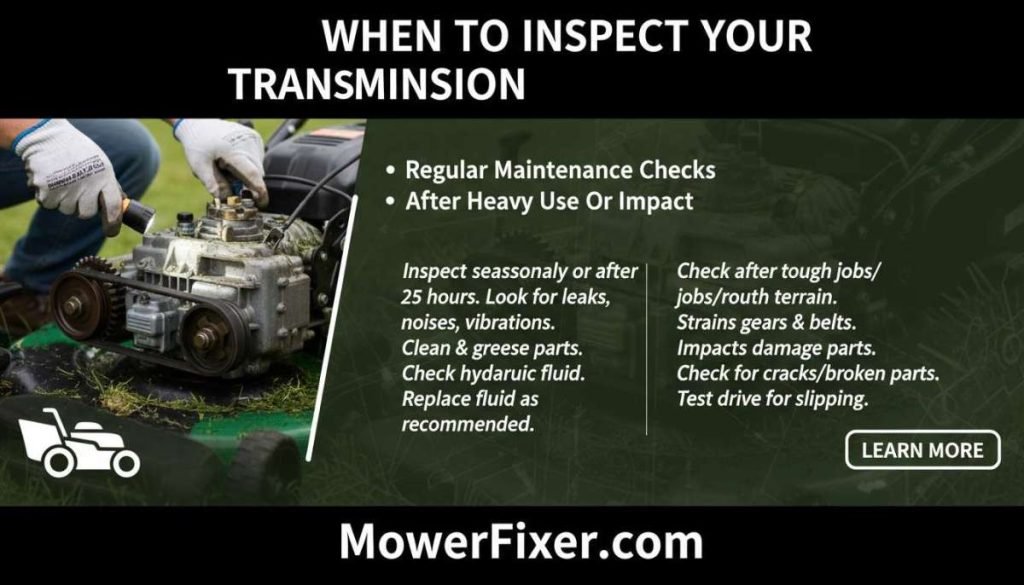
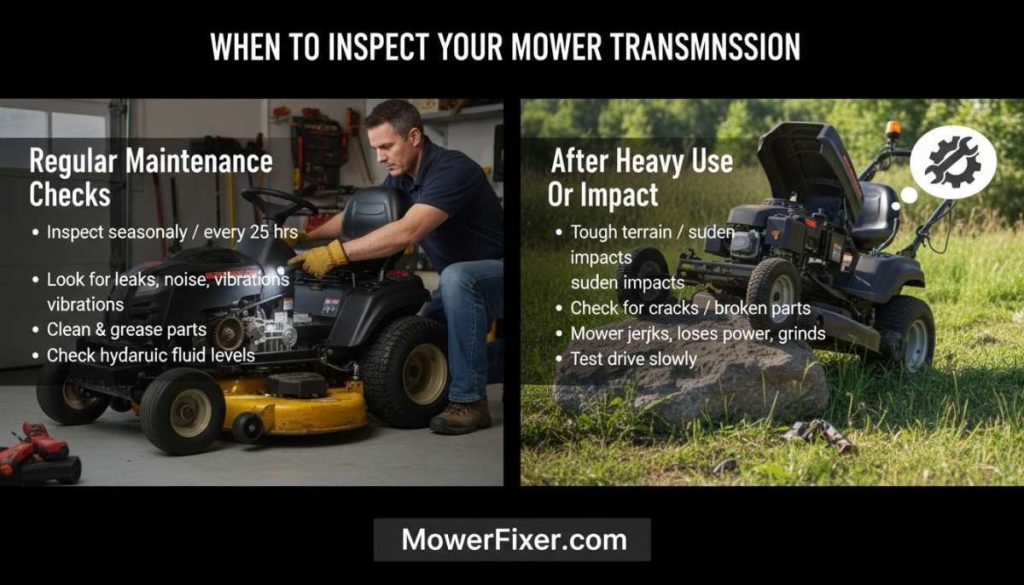
Inspect the transmission during routine mower maintenance. Check it at least once every season or after 25 hours of use. Look for leaks, strange noises, or vibrations. Clean dirt and debris around transmission parts. Grease fittings and bolts to keep parts moving smoothly.
Check transmission fluid levels if your mower uses hydraulic transmission. Low fluid can cause slipping or overheating. Replace fluid as recommended in your mower’s manual. Regular maintenance keeps the transmission parts lubricated and prevents wear.
After Heavy Use Or Impact
Inspect the transmission after tough mowing jobs or rough terrain. Heavy use strains transmission gears and belts. Sudden impacts from rocks or stumps can damage internal parts. Stop and check if the mower jerks, loses power, or emits grinding noises.
Look for cracks or broken parts on the transmission housing. Test drive slowly to detect slipping or uneven movement. Early inspection after hard use avoids bigger damage. Replace or repair parts before continuing to mow.
Steps To Prepare For A Transmission Rebuild
Preparing for a mower transmission rebuild requires careful planning. Gathering the right tools and parts ensures the job goes smoothly. Taking safety precautions protects you during the work. These steps set the foundation for a successful rebuild.
Gathering Tools And Parts
Start by collecting all necessary tools. Common tools include wrenches, screwdrivers, pliers, and a socket set. You may also need a gear puller and seal remover. Find replacement parts like gears, bearings, seals, and transmission fluid. Check your mower’s manual for exact part numbers. Organize tools and parts in one workspace to avoid delays.
Safety Precautions
Always disconnect the mower’s battery before starting work. Wear gloves to protect your hands from sharp parts. Use safety goggles to shield your eyes from debris. Work in a well-ventilated area to avoid inhaling harmful fumes. Keep the mower stable on a flat surface to prevent accidents. Follow safety instructions in the mower’s manual carefully.
Benefits Of Rebuilding Vs. Replacing
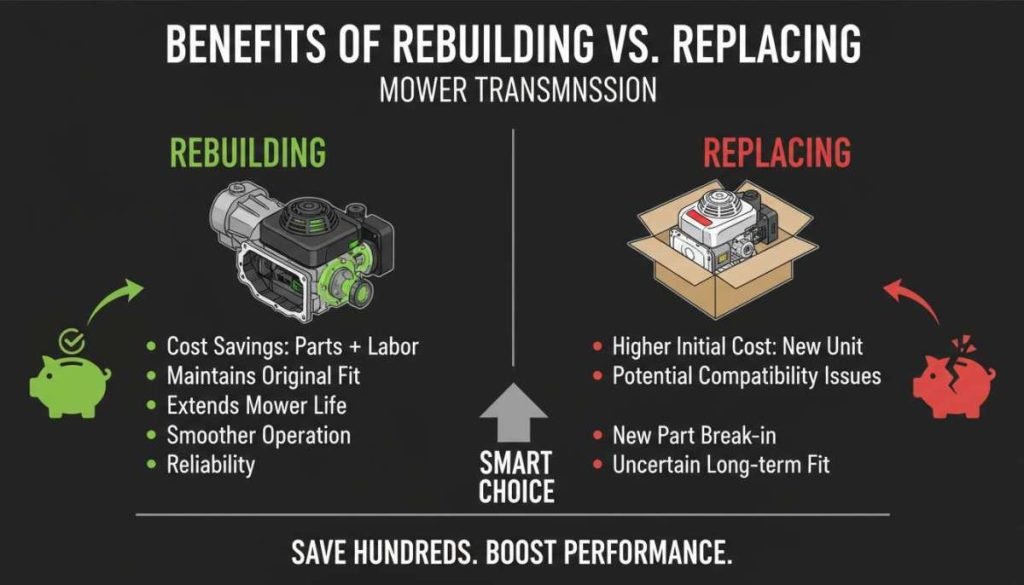
Deciding whether to rebuild or replace your mower transmission can impact your wallet and the machine’s performance for years. Rebuilding offers a middle ground that blends cost savings with maintaining the original quality of your mower. Understanding the benefits of rebuilding versus replacing helps you make a smart choice for your equipment and budget.
Cost Considerations
Rebuilding a mower transmission usually costs less than buying a brand-new one. You pay mainly for parts and labor, not for an entirely new unit.
Think about how much you spend on a new transmission versus just replacing worn-out gears, seals, or bearings. The difference can be hundreds of dollars saved.
If you’re comfortable with a bit of maintenance, rebuilding lets you stretch your mower’s life without breaking the bank. Would you rather invest that saved cash into other lawn care upgrades?
Longevity And Performance
A rebuilt transmission can perform almost like new when done right. You keep the original housing and components that fit perfectly with your mower model.
Replacing parts selectively means you address only what’s worn, preserving the transmission’s integrity. This focused repair often results in smoother operation and fewer unexpected breakdowns.
When was the last time a full replacement felt as reliable as your original mower? Rebuilding gives you that confidence without the risk of compatibility issues.
Frequently Asked Questions
When Should I Rebuild My Mower Transmission?
Rebuild your mower transmission when you notice slipping gears, strange noises, or loss of power. Early signs include uneven movement or difficulty in shifting. Addressing these issues promptly prevents further damage and costly repairs.
How Long Does A Mower Transmission Last?
A mower transmission typically lasts 5 to 10 years, depending on usage and maintenance. Regular servicing and proper operation extend its lifespan significantly. Heavy use or neglect can shorten its durability.
What Are Signs Of Mower Transmission Failure?
Signs include grinding noises, transmission slipping, mower not moving, and unusual vibrations. These symptoms indicate worn-out or damaged transmission parts. Timely inspection helps avoid complete breakdown and expensive replacements.
Can I Rebuild A Mower Transmission Myself?
Yes, if you have mechanical skills and proper tools. Follow the mower’s manual and safety guidelines carefully. Rebuilding requires patience, precision, and knowledge of transmission components.
Conclusion
Knowing when to rebuild your mower transmission saves time and money. Watch for signs like slipping gears or strange noises. Regular checks help catch problems early. Fixing issues soon keeps your mower working well. Don’t wait until damage gets worse.
A smooth-running mower makes yard work easier. Stay alert to changes in performance. Taking action at the right time protects your mower. Keep your equipment in good shape for longer use. Simple care prevents costly repairs down the road.





