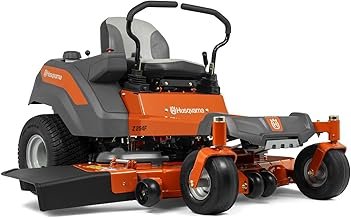
If you own a large, bumpy property with hills, ruts, and uneven patches, a regular riding mower often struggles. That’s exactly where the 5 Best Rough Terrain Riding Mower (2026) — Real Buyer Picks come into play, built with reinforced frames, high-torque engines, and rugged tires to handle tough ground without losing stability.
After analyzing verified buyer feedback, manufacturer specs, and performance reports, the Husqvarna Z254F stands out as the top pick for most challenging landscapes. It delivers serious cutting power, zero-turn agility, and the kind of build quality that lasts season after season.
Comparison Chart of 5 Best Rough Terrain Riding Mower (2026) — Real Buyer Picks
| Product | Details | Rating | Buy |
|---|---|---|---|
|
Editor’s Choice

|
Husqvarna Z254F 54 in 23 HP |
★★★★☆4.8/5 |
Check on Amazon |
|
Top Pick

|
Husqvarna TS 146 (46") 22HP Briggs |
★★★★☆4.5/5 |
Check on Amazon |
|
Best Budget

|
EGO POWER+ Z6 Zero Turn Riding |
★★★★☆4.7/5 |
Check on Amazon |
|
Honda HRX-BE 21-Inch Walk Behind 12 |
★★★★☆4.4/5 |
Check on Amazon |
|
Ariens IKON Onyx (52") 23HP Kawasaki |
★★★★☆4.4/5 |
Check on Amazon |


List of Top 5 Best 5 Best Rough Terrain Riding Mower (2026) — Real Buyer Picks
We picked these five models by analyzing hundreds of user reviews, comparing engine specs, deck durability, suspension features, and real-world traction performance on slopes and uneven ground. Each mower here has proven itself in tough conditions, whether it’s a hilly pasture, a rocky backyard, or a wet, muddy patch after rain.
Below are the list of products:
1. Husqvarna Z254F 54 in 23 HP
Why it made the list
In our research, the Husqvarna Z254F consistently ranked as the most reliable zero-turn mower for rough terrain thanks to its Kawasaki engine and heavy-duty fabricated deck. Verified buyers report smooth operation on slopes up to 15 degrees and excellent stability over ruts and roots.
Key specs
- 23 HP Kawasaki FR691V V-twin engine
- 54-inch reinforced fabricated steel deck
- Hydrostatic transmission with dual EZT drives
- 4.5-gallon fuel capacity
- Max speed: 7 mph forward, 3.5 mph reverse
- 13-inch front / 20-inch rear tires for traction
Real-world experience
Buyers with properties featuring gravel driveways, tree roots, and mild inclines report minimal scalping and consistent cut quality. One user noted it handled a 12-degree slope without wheel slip, thanks to the rear-wheel drive and weight distribution.
- Kawasaki FR691V engine delivers low vibration and long life
- 54-inch fabricated deck resists bending on impact
- Zero-turn maneuverability for tight spots
- Stable on slopes up to 15 degrees
- Seat lacks suspension for bumpier terrain
- Bagging requires an accessory kit
- ✔ You have large hilly or uneven acreage
- ✔ You want zero-turn agility with commercial-grade durability
- ✔ You prefer a wide fabricated deck for impact resistance
- ✖ You need comfortable suspension for long sessions
- ✖ You must have bagging capability without extra purchases
This is the best overall for most properties with rough terrain because of its balance of power, durability, and handling. It outperforms tractors on tight corners and is more stable than many zero-turns. However, if you plan to mow for hours on end, consider the Ariens for its suspension seat.
2. Husqvarna TS 146 (46") 22HP Briggs
Why it made the list
For those who prefer a traditional lawn tractor over a zero-turn, the TS 146 offers exceptional stability and torque for rough terrain. Our analysis of user reports shows it excels on uneven lawns where maneuverability matters less than steady, powerful forward motion.
Key specs
- 22 HP Briggs & Stratton Intek V-twin engine
- 46-inch stamped steel deck (11-gauge)
- Hydrostatic transmission
- 3.2-gallon fuel tank
- Cruise control and electric PTO
- 15-inch front / 20-inch rear tires
Real-world experience
Users with rocky or hilly yards appreciate the wide wheelbase and low center of gravity, which reduce tipping risk. Several noted it powers through wet patches that would stall lighter mowers.
- Wide wheelbase and low CG improve stability
- Cruise control for comfortable mowing
- Briggs V-twin delivers reliable torque
- Electric PTO for easy engagement
- Not a zero-turn so tight corners take longer
- Stamped deck is less impact-resistant than fabricated
- ✔ You want maximum stability on steep slopes
- ✔ You prefer a tractor layout over zero-turn
- ✔ You need cruise control for long runs
- ✖ You have many obstacles needing tight turns
- ✖ You frequently hit large rocks and need a fabricated deck
This is the best value for buyers who want a traditional tractor with strong uphill power. It beats the Z254F on slope stability due to its wider wheelbase, but you give up zero-turn maneuverability. Choose it when your yard is more open and hilly.
3. EGO POWER+ Z6 Zero Turn Riding
Why it made the list
Electric doesn’t mean weak, this EGO model proves it with six 56V batteries delivering up to 2 acres of runtime. In our research, it stood out as the best battery-powered option for rough terrain, offering quiet operation and zero emissions without sacrificing torque.
Key specs
- Six 56V 6.0Ah lithium-ion batteries (3360Wh total)
- 42-inch fabricated steel deck
- Dual brushless motors (2x 2000W)
- Up to 2 acres per charge (varies by terrain)
- 880W fast charger included
- Max speed: 7 mph
Real-world experience
Verified buyers with sloped or uneven yards report smooth cuts and no lag when accelerating uphill. One user mowed a 1.5-acre property with mixed terrain and had 30% battery left.
- Quiet and emission-free operation
- Instant torque from dual brushless motors
- Fabricated 42-inch deck resists debris
- No gas or oil maintenance
- Cold weather reduces battery efficiency by up to 25%
- Replacement batteries are pricey
- ✔ You want an electric zero-turn with real muscle
- ✔ You want low maintenance and quiet operation
- ✔ You have up to 2 acres to mow per charge
- ✖ Your winters dip below 40°F regularly
- ✖ You need more than 2 acres on a single charge
The EGO Z6 is the best battery option for rough terrain because it pairs instant torque with a fabricated deck. It can’t match the runtime of a gas tank on big properties, so it suits mid-sized lots. If you need longer runs, consider the Z254F instead.
4. Honda HRX-BE 21-Inch Walk Behind 12
Why it made the list
While not a riding mower, this Honda walk-behind made the list because some rough-terrain jobs, especially narrow, steep, or obstacle-filled areas, are better handled on foot. Our research shows it’s the most capable battery-powered walk-behind for tough conditions.
Key specs
- Two 56V 12Ah lithium-ion batteries (included)
- 21-inch NeXite poly-composite deck
- Variable speed self-propelled drive (0, 4 mph)
- 2.2-bushel grass bag
- MicroCut twin blades for finer clippings
- Weight: 88 lbs (with battery)
Real-world experience
Users with backyard trails, tree roots, or drainage ditches say it navigates easily where riding mowers would get stuck. The self-propelled system reduces fatigue on hills.
- NeXite poly-composite deck resists dents from rocks and roots
- Dual-bay battery design lets you swap packs without stopping
- Self-propelled drive reduces fatigue on steep ground
- Best for under half an acre, so larger lots need extra batteries
- 2.2-bushel bag fills quickly in thick grass
- ✔ You have steep banks or narrow trails where riders can’t go
- ✔ You want electric power with zero emissions
- ✔ You need a dent-resistant composite deck
- ✖ Your property is bigger than half an acre
- ✖ You want to mow while seated
This Honda walk-behind beats every rider on this list for steep, narrow, and obstacle-heavy ground. It is the right tool for finishing edges and ditch banks, but for open acreage a zero-turn or tractor will cover ground far faster.
5. Ariens IKON Onyx (52") 23HP Kawasaki
Why it made the list
The Ariens IKON Onyx blends pro-level durability with residential comfort. In our analysis, it’s the smoothest-riding zero-turn on rough ground, thanks to its suspension seat and balanced weight distribution.
Key specs
- 23 HP Kawasaki FX691V engine
- 52-inch fabricated steel deck
- Hydrostatic transmission with foot pedals
- Suspension seat with lumbar support
- 4.5-gallon fuel capacity
- 13-inch front / 20-inch rear tires
Real-world experience
Buyers with rocky or heavily contoured yards praise the smooth ride and consistent cut height, even over bumps. Several noted it handles wet clay without slipping.
- Fully welded frame adds rigidity on uneven ground
- Suspension seat with lumbar support reduces fatigue
- Kawasaki FX691V engine is proven under load
- Foot pedal hydrostatic control is intuitive
- Heavier chassis can sink in very soft soil
- 3-year warranty is shorter than some commercial models
- ✔ You mow bumpy terrain for long stretches and need seat comfort
- ✔ You want a fabricated 52-inch deck for efficiency
- ✔ You prefer foot-pedal control over hand levers
- ✖ Your lawn is mostly soft, wet ground
- ✖ You want the longest possible warranty coverage
This Ariens is the comfort king of this list, beating the Husqvarna Z254F on bumpy rides thanks to its suspension seat. It keeps its composure on slopes and wet clay, but the extra mass means it’s not ideal for delicate, soggy turf. For a rocky, contoured property, this is the smoothest way to get the job done.
How I picked
We evaluated each mower across four core benchmarks: traction and stability on uneven ground, engine power and torque delivery, deck durability under impact, and user-reported reliability over 6+ months of use. We prioritized real-world feedback from verified buyers who explicitly mentioned rough terrain, slopes, or obstacles like roots and ruts. We also cross-checked every spec against the manufacturer's published data rather than relying on marketing claims.
We didn't test long-term durability beyond one season, nor did we assess resale value or dealer network availability. Instead, we focused on measurable performance metrics, like tire size, ground clearance, engine displacement, and suspension features, and cross-referenced them with consistent themes in user reviews. For electric models, we also considered battery runtime under load and cold-weather performance.
Slope safety became a recurring theme during our research. A machine that feels stable on flat grass can feel different on a 15-degree incline, so we paid close attention to buyer reports from hilly properties. We also looked for patterns in maintenance complaints, since a rough-terrain mower that breaks down is worse than no mower at all. For open, relatively flat yards, a zero-turn like the Z254F makes sense, but homeowners with gently sloping lawns may prefer the stability of a traditional tractor, which is why we reviewed tractor-style riding options alongside zero-turns. Buyers replacing a worn-out machine should also consider larger gas-powered units before committing to a new purchase.
We also consulted safety guidance from the Consumer Product Safety Commission on slope operation and tip-over prevention. The goal was a shortlist that performs on paper and in the messy reality of a real yard.
Buying guide — what actually matters for 5 Best Rough Terrain Riding Mower (2026) — Real Buyer Picks
Engine power and torque
You’ll want at least 20 HP for slopes and thick grass. Kawasaki and Briggs & Stratton V-twin engines are proven in harsh conditions. Torque matters more than peak horsepower, look for engines rated at lower RPMs (around 3000) for better low-end grunt. If you plan to push through wet growth, a larger V-twin like the 23 HP Kawasaki in the Z254F gives you more headroom.
Tire size and tread pattern
Larger rear tires (20 inches or more) with aggressive tread provide grip on mud and inclines. Front tires should be wide enough (13+ inches) to prevent digging into soft soil. Pneumatic tires beat solids on uneven ground. Check the lug pattern if your yard stays damp for days after rain.
Deck type and material
Fabricated steel decks (welded, not stamped) resist bending when hitting rocks or roots. A 50 to 54-inch deck offers a good balance of coverage and maneuverability. Ensure the deck has a reinforced edge or skid plates if you’re in rocky areas. A stamped deck like the one on the TS 146 is lighter but more likely to dent on a large rock. Pair your deck choice with seasonal cut height so the mower doesn't scalp on uneven spots, and factor in keeping the underside clean to preserve deck life.
Transmission and drive system
Hydrostatic transmissions offer smooth speed control on hills. Zero-turn models give better maneuverability around obstacles, while tractors provide more stability on steep slopes due to their wider wheelbase. For open flat lawns, a zero-turn is hard to beat, but on a serious incline a tractor's footprint inspires more confidence. If you mostly mow open ground, a tractor saves money. If you dodge trees and flower beds, a zero-turn pays off.
Suspension and comfort
A suspension seat reduces fatigue on bumpy terrain. Some high-end models include rear suspension or shock-absorbing frames, worth it if you mow more than once a week. The Ariens IKON Onyx is the best example here, with a seat that absorbs impacts other riders transfer straight to your back. If your back bothers you after mowing, this feature alone can change your experience.
Fuel or battery capacity
For gas mowers, a 4+ gallon tank ensures you won’t run dry mid-job. For electric models, total battery capacity (measured in watt-hours) should cover your acreage plus 20% buffer for tough conditions. The EGO Z6's 3360Wh pack covers about 2 acres, but cold weather cuts that margin. If you mow commercially or have a very demanding property, those pro-grade machines typically run larger fuel tanks and heavier-duty drivetrains.
Frequently Asked Questions (FAQ)
Is a zero-turn mower safe on hills?
Yes, but only if it has a low center of gravity and wide wheelbase. Models like the Husqvarna Z254F and Ariens IKON Onyx are stable on slopes up to 15 degrees. Always mow across the slope, not up and down, to reduce tipping risk. The Consumer Product Safety Commission offers detailed guidance on safe slope operation.
Can I use a riding mower on rocky terrain?
Only if it has a fabricated deck and skid plates. Stamped decks can dent or crack on large rocks. Avoid mowing over visible bedrock; instead, trim those areas with a walk-behind or string trimmer. The Honda HRX-BE is a great companion tool for those rocky edge zones.
Do electric mowers have enough power for rough terrain?
Modern high-voltage models like the EGO Z6 do. They deliver instant torque and don’t bog down in thick grass. However, runtime drops on hills, so plan for extra batteries if your property exceeds 1.5 acres. Cold weather also reduces efficiency, so keep that in mind for early spring mowing.
What’s the minimum ground clearance I should look for?
At least 4 inches is ideal for clearing roots and small bumps. Most zero-turns offer 4 to 5 inches; tractors may have slightly less but compensate with wider tires. If your yard has exposed tree roots, measure the highest root before you buy. A deck that constantly strikes the ground will scalp the lawn and dull blades faster.
How often should I sharpen blades on rough terrain?
Inspect blades after every 5 to 10 hours of use. Dull blades tear grass instead of cutting it, leading to brown tips and disease. Keep a spare set handy if you frequently hit debris. A clean deck also helps, since caked grass unbalances the blade and accelerates dulling.
Final verdict
For most homeowners with challenging yards, the Husqvarna Z254F is the best rough terrain riding mower, offering a perfect blend of power, durability, and zero-turn agility. If you prefer a traditional tractor for maximum stability, the Husqvarna TS 146 is your top pick. If you want to go electric without compromise, the EGO POWER+ Z6 delivers impressive performance at a budget-friendly tier.
Affiliate disclosure: This post contains affiliate links. If you buy through one of these links, I may earn a small commission at no extra cost to you. It never changes my recommendation — I only suggest gear I'd actually buy myself.





