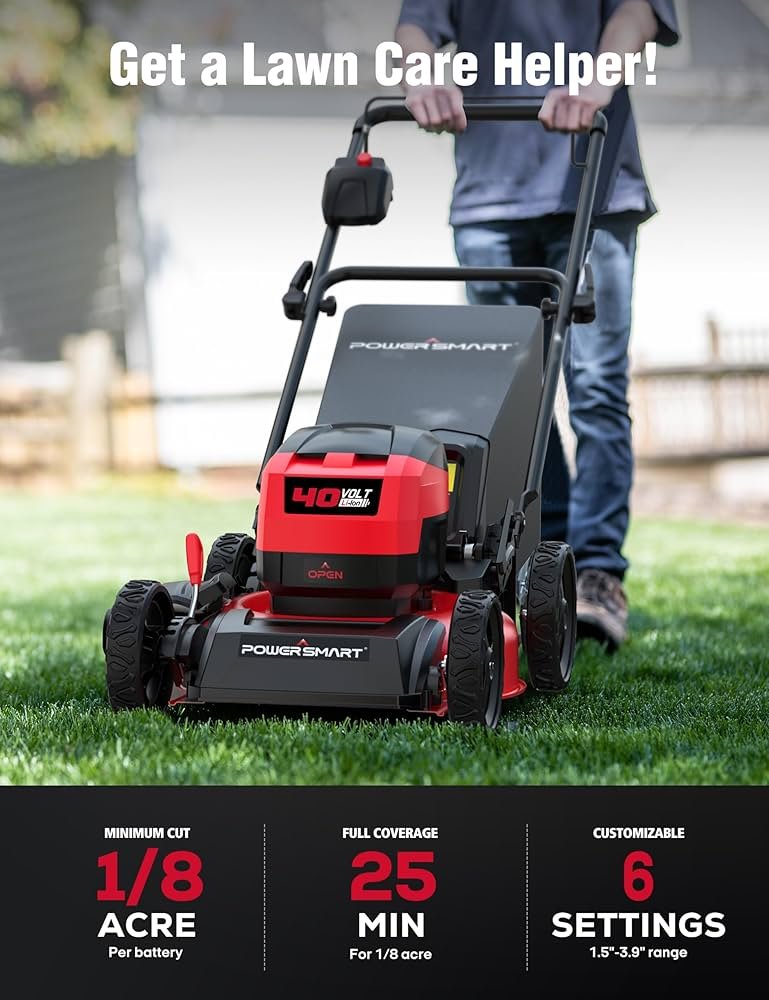
If your current mower is a chore to push, requires constant tinkering, or guzzles fuel, the switch to a Power Smart model might have crossed your mind. The short answer is yes—Power Smart lawn mowers are a legitimate and solid choice for the right homeowner. They dominate the budget-to-midrange electric and gas market, offering exceptional value without the flagship price tag.
In this 2026 review, we’ll look at how Power Smart compares to big names like EGO and Ryobi, where they cut corners, and exactly who should buy one. Let’s see if they’re the missing piece to your lawn care setup.
Power Smart Lawn Mower Features Overview
When cramming a lot of value into a sub-$500 mower, brands have to make choices. Power Smart skews heavily toward simplicity and functionality over luxury. Here’s what that means for you at ground level.
Design and Build Quality: Lightweight and Practical
Most Power Smart mowers feature a durable polymer deck rather than heavy steel. This fiberglass-reinforced composite isn't prone to rusting—a huge plus for longevity if you don’t always remember to dry your deck after washing. The trade-off is that polymer can crack under severe impact, so you'll want to avoid hitting curbs or large exposed tree roots at speed.
Ergonomics get a lot of attention too. Handles fold flat for upright storage, and the lightweight design (typically 35 to 50 pounds for electric models) makes them manageable for most users to lift into a shed or truck bed. These compact machines are among the best-mower choices for small-lot safe operation thanks to their predictable turning radius.
Motor and Battery Technology
Power Smart has moved almost exclusively to brushless motors in recent years. This is a massive upgrade—brushless motors generate less friction, run cooler, and typically last twice as long as their brushed counterparts. Their 40V and 80V series offer different tiers of torque, with 80V models starting to approach gas-equivalent cutting power.
Battery performance in 2026 models has improved dramatically. Most electric models now come with a 4.0 Ah battery standard, providing roughly 45 minutes of runtime under normal conditions. On grass that’s damp or very thick, expect that to shrink to around 30 minutes. Here are some other power specs to watch for:
- Voltage options: 40V for flat, smaller yards; 80V for thicker grass and mild slopes.
- Charging time: Most 4.0 Ah batteries recharge in under 2 hours.
- Self-propelled drive: Available on higher-tier models to eliminate pushing effort.
Cutting Width and Height Adjustments
Single-lever height adjustment is standard across the lineup, typically offering 6 to 7 positions ranging from 1.5 to 4 inches. This isn’t the tool-free, infinite dial you’ll find on premium models, but it’s just as functional for seasonal changes. For the ideal cutting height for your specific grass type, you can check our specific seasonal guidance for the proper summer grass height to avoid scalping your lawn.
Deck sizes generally range from 18 inches on the entry-level push models up to 21 inches on the self-propelled versions. A 21-inch deck is the sweet spot for covering ground efficiently without losing maneuverability in tight flower beds.
Performance Review: How Well Do They Actually Cut?
The million-dollar question isn't whether the mower is nice to push—it's whether it leaves your lawn looking like a golf course or a choppy mess.
Cutting Performance on Different Grass Types
Power Smart mowers excel on common residential turf like Bermuda, Fescue, and Kentucky Bluegrass. They provide a clean, consistent cut when the blades are sharp and the grass isn't overly wet. The 3-in-1 design allows you to mulch, bag, or side-discharge, giving you flexibility depending on the season.
However, they do have limits. If you let your grass get ahead of you and it reaches 6+ inches, you'll hear the motor strain. In these cases, you'll need to make multiple passes, cutting high first, then lowering the deck to finish. This is standard behavior for mid-range electric mowers, but it's worth noting if your mowing schedule is irregular. If you regularly deal with overgrowth and a massive yard, you may want to consider the endurance of gas-powered options for large yards instead.
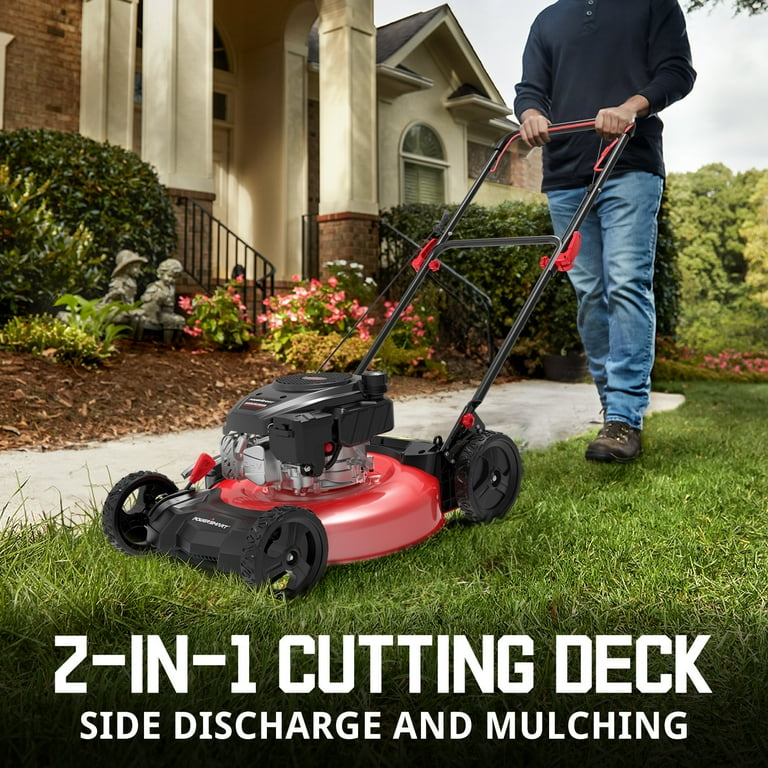
Credit: www.walmart.com
Power Smart's electric mowers feature lightweight frames and tool-free height adjustments.
Noise Levels and Neighborhood-Friendliness
One of the biggest perks of their electric lineup is the acoustic footprint. While a gas mower hits 95 decibels or higher, Power Smart’s electric models operate in the 78–82 decibel range. That’s roughly the volume of a normal conversation or a vacuum cleaner. It means you can mow early on a Saturday morning without starting a neighborhood feud.
Included Features That Make Life Easier
- LED Headlights: Standard on most 2026 models, excellent for evening mowing.
- Mulch Plug: Included in the box, so you don't have to buy it separately.
- Rear Bag: Designed with a clear plastic top so you can see when it's full.
Benefits of Choosing Power Smart in 2026
Beyond the upfront asking price, there are structural advantages to going with Power Smart that save you time and money over the life of the mower.
Eco-Friendly Operation Without Sacrificing Power
With rising fuel costs and stricter emissions regulations in many states, electric mowers have shifted from a niche to the norm. According to the Environmental Protection Agency, gas lawn mowers contribute significantly to ground-level ozone pollution. Power Smart’s electric motors produce zero direct emissions, radically cutting your carbon footprint while sparing your lungs from gas fumes.
Cost Savings: Electric vs. Gas
The math is simple on maintenance. You aren't buying spark plugs, air filters, oil, or gasoline. The annual cost to run an electric mower is usually around $10 to $15 in household electricity—pretty trivial compared to the $50–$75 a season it costs to fuel a comparable gas mower.
Here’s a quick cost breakdown:
| Expense Item | Power Smart (Electric) | Gas-Powered Equivalent |
|---|---|---|
| Annual Fuel/Oil | $0 | $50–$75 |
| Spark Plug & Filter | $0 | $15–$20 |
| Annual Maintenance Labor | 0 hours | 2–3 hours |
| 5-Year Total Est. Cost | ~$200 | ~$500+ |
Low Maintenance Requirements
If DIY engine repair isn't your idea of a good time, you'll love the simplicity of the electric drivetrain. Just clean the deck after heavy use and resharpen the blade once a season. To keep your mower's underside performing efficiently, follow these best ways to clean your mower deck to prevent anaerobic buildup that kills suction.
Power Smart vs. Other Leading Brands
To say Power Smart is "great" requires context. How do they stack up against the premium players that dominate the market?
Price vs. Features
Power Smart's whole value proposition is offering 85% of the features of a $700 mower for half the price. They lack the luxury "creature comforts" like cruise control or LED touchscreens, but they keep the mechanical essentials—robust motors and reliable switches—intact.
Durability and Warranty
This is where they differentiate from premium brands. Power Smart typically offers a 2-year warranty on the mower and a 1-year warranty on the battery. In contrast, EGO offers a 5-year warranty on its powerhead and 3 years on batteries. It’s a trade-off: you save money upfront, but the safety net is thinner.
Customer Satisfaction Ratings
Online reviews are generally positive on retail sites like Amazon and Walmart, with an average rating hovering around 4.2 to 4.5 stars. Most negative reviews highlight battery degradation after two seasons of heavy use—a common industry-wide issue, but one that disproportionately affects budget buyers.
Common Problems and How to Troubleshoot Them
Knowing what might go wrong before it happens allows you to fix these mowers quickly, frequently without needing replacement parts.
Battery and Charging Issues
Symptom: You're losing power halfway through a 30-minute mow. Solutions:
- Hot battery cutoff: The motor controller shuts down to prevent damage. Let it cool for 30 minutes.
- Check voltage: If your charger's light turns green immediately, the battery may have an unbalanced cell. Try leaving it on the charger for 12 hours to rebalance before considering a replacement.
Blade Shredding and Performance Decline
Symptom: Grass looks ragged and frayed at the tips. Solutions:
- Sharpen or replace: You should swap the blade at least once a season. A dull blade tears grass, inviting disease.
- Clean the deck: Thick caked-on grass reduces airflow, causing the mower to leave clumps. Scrape it clean to restore deck vacuum.
Pro Tips to Get the Most Out of Your Power Smart Mower
Getting the maximum lifespan out of your mower requires a bit more skill than just pulling the cord. Here are the maintenance and operation tricks pro landscapers use on their own equipment.
Optimal Mowing Techniques
- Never cut more than 1/3 of the blade: Cutting too short stresses the root system and encourages weeds, as highlighted in research from the University of Minnesota Extension.
- Mow when it's dry: Wet grass clumps and clogs the deck, forcing the motor to work harder.
- Vary your pattern: This eliminates ruts and soil compaction.
Storage and Care for Winter
You don't have to winterize an electric motor, which is a huge blessing compared to gas. Here's your checklist:
- Remove the battery and store it indoors at room temperature (58°F–77°F).
- Empty the bagger and wipe down the entire unit to remove dirt and sap.
- Treat the blade with a light coat of WD-40 or spray lubricant to prevent corrosion during dormant periods.
- Store the mower vertically if space is tight, taking advantage of the folding handle.
When to Replace Blades or Batteries
If your mower deck is hitting the top of your gas tank cap, you might be overdue for an upgrade. For the battery, if you notice the runtime dip below 50% of its original capacity, it’s time for a replacement cell. A good rule of thumb: after 3–4 seasons, the lithium cells begin to age out. If you're looking to upgrade the whole platform, check out some of the best-rated cut lawn mowers currently dominating 2026 tests.
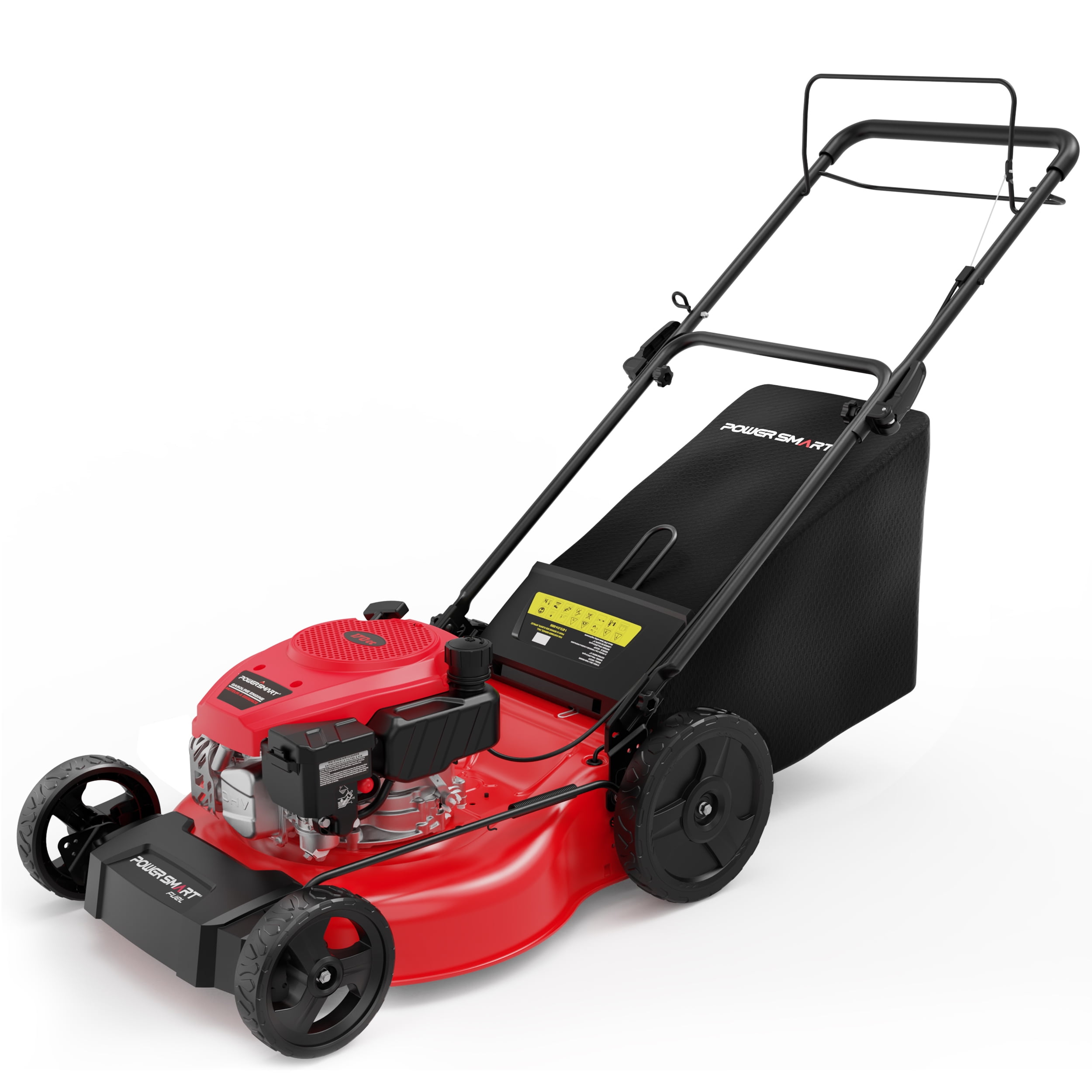
Credit: www.walmart.com
For larger yards, Power Smart offers gas self-propelled models alongside their electric options.
Frequently Asked Questions
Are Power Smart lawn mowers reliable for home use?
Yes. They are reliable for the average suburban or homeowner. They hold up very well for 2 to 3 years under normal use, provided you maintain the blade and keep the battery indoors. They are ideal for yards up to 1/3 of an acre.
How long does the battery last on a Power Smart mower?
The runtime varies by model and blade engagement, but a standard 4.0 Ah battery gives around 45–60 minutes on a flat lawn. On thicker or wet grass, that drops to 25–30 minutes.
Are Power Smart mowers easy to maintain?
Remarkably so. They feature brushless motors that never need oil changes, air filters, or carburetor service. Routine maintenance consists of sharpening the blade and scraping debris off the underside of the deck.
Do Power Smart mowers handle thick or tall grass well?
They handle moderately thick grass and typical weekly growth well. For neglected, overgrown lawns, you will need to make slower, multiple passes. If your yard frequently gets out of hand, consider their gas 21-inch models specifically.
How does Power Smart compare to EGO?
EGO is generally regarded as the premium tier with a better battery ecosystem and warranty. Power Smart offers similar raw cutting force at 80V but lacks the same range of accessories and long-term warranty coverage.
Verdict: Should You Buy a Power Smart Lawn Mower?
| Criteria | Score (out of 5) | Notes |
|---|---|---|
| Value for Money | 4.5 | Hard to beat the feature-to-price ratio. |
| Cut Quality | 4.0 | Excellent for the class; not quite premium-tier. |
| Ease of Use | 4.8 | Lightweight, easy start, simplified controls. |
| Battery Life | 3.8 | Standard runtime, but charging is slow-ish. |
| Warranty Support | 3.5 | Shorter coverage than competitors like EGO. |
| Overall | 4.2 | A best-in-class budget option with limitations. |
Power Smart is the best choice for homeowners tackling small to medium-sized lawns who want a tool-free, low-cost, and eco-conscious mower. We would specifically recommend their 80V line for anyone with standard suburban grass who wants the feel of electric without the pitfall of an underpowered 40V system. These are easy-going machines that prioritize readability and ease of use over flagship power.
If you have a sprawling, hilly acreage or let the grass grow for weeks at a time, your money is better spent on a higher-horsepower gas model or a heavy-duty commercial unit. The best mowers for medium-sized lots should fit exactly the profile where the Power Smart shines. Take a look at your yard, run the math, and get ready for a significantly easier mowing season in 2026.





