Are you tired of dealing with car problems that seem impossible to diagnose? One common issue might be hiding right under your nose—your spark plugs.
These little components are crucial for your car’s performance, and when they malfunction, it can lead to a range of issues. But how can you tell if a spark plug is the culprit? Enter the spark plug tester, a handy tool that can save you time, money, and a lot of frustration.
You’ll discover how to use a spark plug tester effectively. By the end, you’ll have the confidence to tackle this task like a pro, ensuring your vehicle runs smoothly and efficiently. Ready to get started? Let’s dive in and uncover the secrets to maintaining your car’s heart—the engine.
Choosing The Right Spark Plug Tester
Choosing the right spark plug tester is essential to accurately diagnose ignition issues in your vehicle. The market offers a variety of testers, each designed for specific needs and skill levels. Picking one that fits your routine and technical comfort can save you time and frustration during troubleshooting.
Types Of Spark Plug Testers
You’ll find several types of spark plug testers, each serving different purposes:
- Basic Inline Testers:These plug directly into the spark plug wire and allow you to see if a spark is present. They are simple and affordable but don’t measure spark strength.
- Ignition Analyzer Testers:These provide detailed information like spark intensity and timing. They are perfect if you want deeper insights but tend to be pricier and more complex.
- Multifunction Testers:Combining several tools, these testers check spark plugs, ignition coils, and even battery health. They’re handy if you work on different parts of the ignition system.
Think about what you need most. Do you want a quick yes/no spark check, or a detailed performance analysis? Your choice depends on your experience and the depth of diagnosis you want.
Features To Consider
Not all spark plug testers are created equal. Focus on these features to find the right fit for you:
- Ease of Use:Look for clear indicators like LED lights or audible signals. If you’ve ever struggled with tiny, hard-to-read displays, you know how frustrating it can be.
- Compatibility:Ensure the tester works with the type of ignition system in your vehicle, whether it’s conventional, coil-on-plug, or distributor-based.
- Durability:Consider testers made with sturdy materials. A tool that can withstand drops and rough handling lasts longer and saves you money.
- Safety Features:Some testers include insulated grips or protective covers to prevent electrical shocks. This is crucial if you’re working around high voltage.
- Portability:Compact and lightweight testers are easier to carry around, especially if you do roadside repairs or work in tight spaces.
Have you ever bought a tool that looked great but felt awkward to use? Prioritize comfort and intuitive design. This makes your testing process smoother and less time-consuming.
Credit: qmcc.org
Preparing For The Test
Before you jump into testing your spark plug, setting up properly can save you time and prevent mistakes. Preparing for the test means having everything ready and understanding the safety steps involved. This way, you avoid interruptions and stay protected while checking your spark plug’s condition.
Gathering Necessary Tools
Start by collecting all the tools you’ll need to make the testing smooth and effective. You’ll want a reliable spark plug tester, a wrench or socket set to remove the spark plug, and a clean rag to wipe off any dirt or oil.
Don’t forget a pair of gloves to keep your hands clean and protected. Having a small flashlight handy can also help you see clearly, especially if you’re working in a dim garage or under the hood. Preparing these tools ahead means you won’t waste time looking for them mid-test.
Safety Precautions
Safety should always come first when working with engine parts. Make sure the engine is completely cool before you start; a hot engine can cause burns or damage the spark plug tester.
Disconnect the battery to prevent accidental sparks that could lead to injury or fire. Wear safety glasses to protect your eyes from debris or sudden sparks during testing.
Ask yourself: Are you working in a well-ventilated area? Proper airflow helps avoid inhaling harmful fumes. Taking these simple safety steps keeps the process safe and stress-free.
Removing The Spark Plug
Removing the spark plug is a key step before using a spark plug tester. It allows you to check the spark plug’s condition and diagnose engine issues. Doing this carefully prevents damage and ensures accurate testing.
Locating The Spark Plug
Find the spark plug on your engine first. It usually sits on the cylinder head. Look for a thick wire connected to a metal part. This wire is called the spark plug wire or ignition cable.
In some engines, the spark plug may be hidden under a cover. Remove any covers or parts blocking your view. Use a flashlight to see clearly if needed.
Using The Correct Tools
Use the right tools to remove the spark plug safely. A spark plug socket with a rubber insert holds the plug tightly. This prevents it from falling or breaking.
Attach the socket to a ratchet or wrench. Turn the spark plug counterclockwise to loosen it. Avoid using too much force to prevent damage.
- Spark plug socket (usually 5/8 or 13/16 inch)
- Ratchet or wrench
- Extension bar (optional, for hard-to-reach plugs)
- Flashlight (optional)

Credit: www.amazon.com
Connecting The Spark Plug Tester
Connecting the spark plug tester is a crucial step in diagnosing engine issues. This process ensures you get accurate readings and understand the health of your spark plugs. Taking time to connect it properly can save you hours of guesswork and unnecessary part replacements.
Attaching The Tester To The Spark Plug
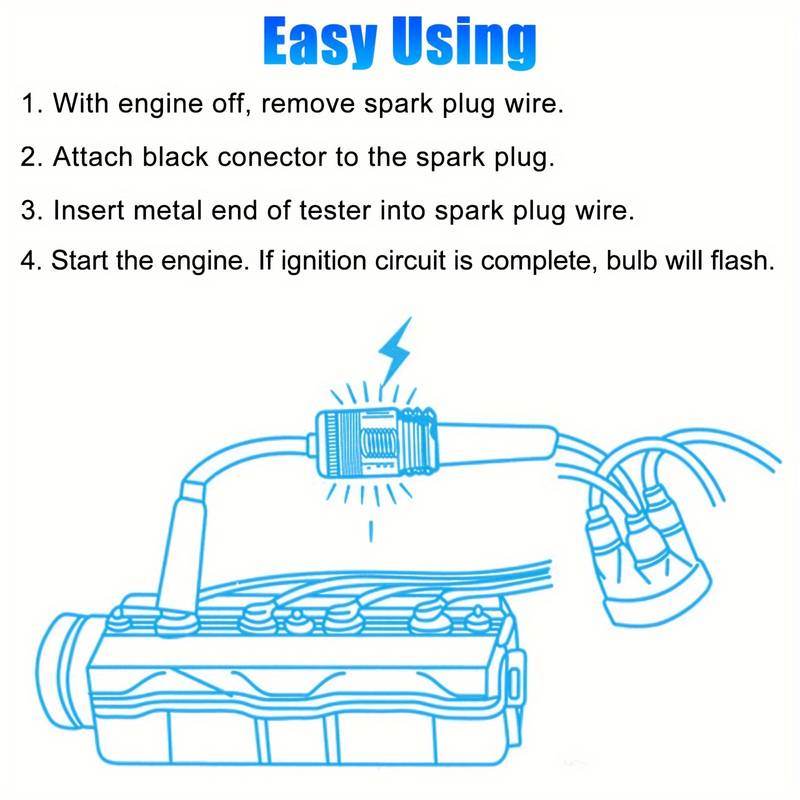
Start by removing the spark plug wire from the spark plug carefully. You don’t want to damage the wire or the plug during this step.
Next, firmly attach the tester’s clip or connector to the spark plug. Make sure it fits snugly, so you get a solid electrical connection.
If the tester has a boot similar to the spark plug wire, push it onto the spark plug until it clicks or feels secure. A loose connection can give false readings and lead you astray.
Setting Up The Tester
Once attached, connect the tester’s other end to the ignition wire or coil, depending on your tester type. This completes the circuit and allows the tester to monitor the spark.
Check the tester for any switches or settings before turning on your engine. Some testers let you adjust voltage or sensitivity—set these according to the manufacturer’s instructions.
Before starting the engine, ensure all connections are tight and there is no chance of the tester slipping off. Have you ever started a diagnosis only to realize a loose connection caused all the confusion?
Performing The Spark Plug Test
Performing a spark plug test is a straightforward process that helps you quickly identify if your spark plug is firing correctly. This test saves you from guesswork and unnecessary replacements. Let’s walk through the key moments during the test so you know exactly what to look for.
Starting The Engine
Before you begin, ensure the spark plug tester is securely connected to the spark plug and grounded properly. This setup allows you to safely observe the spark without risking electric shock.
When you start the engine, watch the tester closely. The engine should crank smoothly without hesitation if the spark plug is functioning well.
Have you noticed how an engine sounds different when a spark plug misfires? That moment tells you a lot about your vehicle’s health.
Observing The Tester Results
Look for a strong, blue spark inside the tester window. A bright, consistent spark means your spark plug is doing its job.
If the spark appears weak, yellow, or inconsistent, it signals a problem. This could be due to worn electrodes or carbon buildup.
Sometimes, no spark appears at all. This usually points to a faulty plug, ignition coil, or wiring issue.
Remember, the color and strength of the spark are clues that guide your next step—whether it’s cleaning, adjusting, or replacing parts.
Interpreting Tester Results
Understanding the results from your spark plug tester is key to diagnosing engine issues accurately. Each spark pattern tells a story about the health of your spark plug and, ultimately, your engine’s performance. Knowing what to look for saves you time and money on unnecessary replacements or repairs.
Identifying A Good Spark
A good spark appears as a strong, consistent blue or white flash across the electrode gap. It should be steady, without flickering or hesitation. If the spark is bright and regular, your spark plug is firing correctly and delivering energy efficiently to ignite the fuel-air mixture.
Think about the last time you noticed smooth engine starts and quick acceleration—that’s often the result of good sparks doing their job right. A healthy spark ensures your engine runs smoothly and uses fuel efficiently.
Detecting Faulty Spark Plugs
A weak, yellow, or intermittent spark signals trouble. It might be caused by worn electrodes, carbon buildup, or cracks in the ceramic insulator. These issues disrupt the spark’s strength and consistency, leading to misfires or rough engine performance.
Sometimes, the spark won’t appear at all, which is a clear sign the spark plug or ignition system needs attention. Have you experienced your engine stalling or struggling to start? Checking for a faulty spark plug with your tester can pinpoint the problem quickly.
- Look for uneven or inconsistent sparks.
- Check for discoloration or weak intensity.
- Note any absence of spark entirely.
Interpreting the tester results correctly helps you decide whether to clean, repair, or replace your spark plugs. Don’t underestimate the power of a simple spark to keep your engine running at its best.
Troubleshooting Common Issues
Troubleshooting common issues with a spark plug tester helps find problems in your engine’s ignition system. The tester shows if the spark plug produces a strong, steady spark. This guides you to fix or replace parts quickly. Understanding the signs of no spark or weak spark saves time and effort during repairs.
No Spark Indications
No spark means the spark plug is not creating any spark at all. This often points to a disconnected wire or a dead battery. The tester will show no glow or flash in the spark gap. Check the spark plug wire for damage or loose connections. Also, inspect the ignition coil and battery voltage. If all parts seem fine, the spark plug may be faulty and need replacement.
Weak Or Irregular Sparks
Weak or irregular sparks show as faint or flickering light in the tester. This can cause engine misfires or poor performance. Dirt, oil, or carbon buildup on the spark plug can weaken the spark. The spark plug gap might be too wide or too narrow. Check and clean the spark plug carefully. Replace it if the spark remains weak. Also, test the ignition coil and wires for proper function.
Maintaining Spark Plug Testers
Maintaining your spark plug tester is key to getting accurate readings and extending its lifespan. Neglecting upkeep can lead to faulty results, which might make you replace parts unnecessarily or miss real issues. Simple care routines keep your tester reliable and ready whenever you need it.
Cleaning And Storage Tips
After each use, clean your spark plug tester gently with a soft cloth to remove dirt and grease. Avoid harsh chemicals that could damage the sensitive parts inside. Keeping the tester dry is just as important; moisture can cause corrosion or electrical faults.
Store your tester in a cool, dry place away from direct sunlight and extreme temperatures. Using a protective case helps prevent dust buildup and accidental drops. Have you noticed how a clean, well-stored tool feels more reliable every time you pick it up?
Regular Calibration
Calibration ensures your spark plug tester gives precise readings. Over time, components can drift from their original settings, so checking calibration every few months keeps you on track. Some testers come with built-in calibration features, while others may require professional servicing.
Keep a simple log of your calibration dates and results. This habit helps you catch issues early and know when to recalibrate or replace parts. How often do you check your tools to make sure they’re performing at their best?

Credit: www.amazon.com
Frequently Asked Questions
What Is A Spark Plug Tester Used For?
A spark plug tester checks the spark plug’s ability to generate a spark. It helps diagnose ignition problems without removing the plug from the engine, saving time and effort during vehicle maintenance.
How Do I Connect A Spark Plug Tester?
Connect the tester to the spark plug wire and ground it to the engine. This setup allows you to safely observe the spark without electrical hazards or engine damage.
Can A Spark Plug Tester Detect Weak Sparks?
Yes, a spark plug tester reveals weak or inconsistent sparks. This helps identify faulty plugs or ignition issues early, ensuring better engine performance and fuel efficiency.
How Often Should I Use A Spark Plug Tester?
Use a spark plug tester during regular maintenance or if the engine misfires. Regular checks prevent ignition problems and maintain smooth engine operation.
Conclusion
Using a spark plug tester helps find engine problems fast. It shows if the spark plug works well or needs replacement. Testing saves money by avoiding bigger repairs later. Always follow safety steps to avoid injury. Practice a few times to get comfortable with the tool.
Regular checks keep your engine running smooth and strong. Now, you know how to use a spark plug tester right. Give it a try and keep your vehicle healthy. Simple, quick, and effective.





