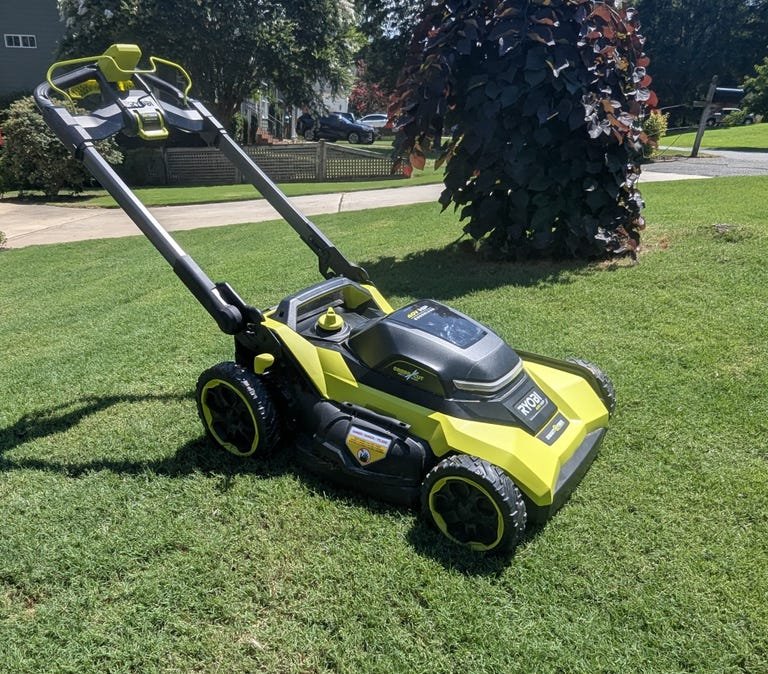
Ryobi mowers are everywhere at big-box home improvement stores, and they are almost always cordless. They offer instant start, shared battery technology, folding handles, and a price that undercuts many premium competitors. But “good” depends on your yard, your expectations, and how realistic you are about battery power.
The short answer is yes—Ryobi lawn mowers are genuinely good for most average-sized home lawns. They are quiet, low-maintenance, and easy to live with. They are not the best choice for acre-sized properties, extremely thick grass, or commercial use. This review digs into real-world performance, the best models for different yards, how Ryobi compares with other brands, and what owners actually say.
The Short Answer: Should You Buy a Ryobi Mower?
Ryobi mowers are a practical fit for homeowners who want a reliable electric mower without spending premium money.
Buy a Ryobi if:
- Your lawn is under half an acre.
- You want a push-button start instead of pulling a cord.
- You already own Ryobi 18V ONE+ or 40V tools.
- You value quiet operation and no gas, oil, or spark plugs.
- You want a compact mower that stores flat or upright.
Skip a Ryobi if:
- Your lawn is a full acre or larger.
- You regularly cut thick, wet, or neglected grass.
- You need a mower for commercial or frequent heavy use.
- You prefer the raw cutting power and unlimited runtime of a gas mower.
The sweet spot for Ryobi is the typical residential yard, especially if you are already using the company’s battery platform.
How the Ryobi Brand Earned Its Reputation
Company Background
The Ryobi name dates back to a Japanese manufacturing company founded in 1943. In North America, the Ryobi power tool and outdoor equipment brand is managed under license by Techtronic Industries, the same parent group behind brands like Milwaukee. That corporate backing matters because it gives Ryobi access to serious manufacturing and battery development resources.
Today, Ryobi mowers are primarily electric. Unlike Honda, Toro, or Craftsman, Ryobi does not lean on gas engines. The brand has staked its outdoor equipment lineup on battery power and corded electric motors, and that is exactly what makes it popular—and occasionally limiting.
The Battery Ecosystem Is the Real Draw
One of the biggest reasons homeowners choose Ryobi is the shared battery system.
The 18V ONE+ platform powers dozens of tools, including drills, saws, fans, and small mowers. The 40V platform handles larger outdoor equipment, and the 80V platform runs Ryobi’s riding and zero-turn mowers. If you already have Ryobi ONE+ tools, the same batteries often work with the small push mower.
That ecosystem saves money and storage space. It also means you can grab a fully charged battery from another tool when the mower runs low. You can verify current model availability and battery specs on Ryobi's official site.
Battery-powered Ryobi mowers cover most standard home lawns comfortably.
Credit: www.protoolreviews.com
What Owners Say
Real-world feedback is generally positive, but it is not universal.
Owners consistently praise Ryobi mowers for how easy they are to start. There are no pull cords, no primer bulbs, and no choking. Many users also mention the quiet operation and light weight, which make mowing feel less like a chore.
Common complaints focus on battery runtime and power in difficult conditions. Some owners say the battery drains fast when cutting dense, damp, or tall grass. Others mention plastic components wearing out after a few seasons. The pattern is clear: Ryobi mowers perform best on routinely maintained lawns in small to medium yards.
Key Features of Ryobi Lawn Mowers
Battery Life and Power
Ryobi mowers run on 18V, 40V, or 80V lithium-ion batteries depending on the model. Higher voltage generally means more cutting power, but the battery’s amp-hour rating also matters.
In typical conditions, a 40V Ryobi mower with a standard battery will run for roughly 30 to 60 minutes of active mowing. That is enough for many quarter- to half-acre lots, but not for huge lawns. Wet grass, slow walking speed, bagging, and dense growth all reduce runtime.
An important detail: 18V and 40V batteries are not interchangeable. Make sure you buy the mower model that matches the battery platform you already own. If your lawn is close to the upper limit of what a battery can handle, buying a second battery is the simplest solution.
Build Quality and Materials
Ryobi mowers are built to a price, and you can see it in some of the components. Many models use sturdy polymer decks and simple controls rather than heavy steel and premium bearings.
That does not mean they are cheaply made. The materials are designed to resist rust and hold up to normal seasonal use. The folding handles are genuinely handy, and most mowers stand upright for storage in a garage corner. Just do not expect the same heavy-duty feel as a commercial-grade machine.
Cutting Performance
For a typical home lawn, Ryobi mowers cut cleanly and evenly. Most current models use brushless motors, which deliver better torque and longer runtime than older brushed designs. Sharp blades and sensible mowing speed matter more than brand.
The cutting-height adjustment is simple and quick, usually with one lever. That makes it easy to adapt during the season. If you are unsure what height to use in hot weather, adjusting your cutting height can protect the grass from heat stress.
Ryobi mowers also offer mulching, bagging, or side-discharge configurations depending on the model. Mulching works well when you mow regularly and the grass is dry. If you let the lawn get too tall, clippings tend to clump and you may need to empty the bag more often.
Ease of Use
This is where Ryobi shines.
There is no oil to check, no fuel to mix, and no spark plug to replace. Press the start button, squeeze the bar, and the mower is running. The machines are quieter than gas mowers, which makes late-afternoon mowing more neighbor-friendly.
Most Ryobi mowers are also lighter than comparable gas models. That makes them easier to push on flat ground, easier to turn in tight gardens, and easier to lift into a shed or truck.

A typical Ryobi electric mower from a retail listing highlights the compact, battery-operated design.
Credit: www.homedepot.ca
How Ryobi Compares With Other Mower Brands
Ryobi competes mainly with other battery-electric brands and entry-level gas mowers. It does not try to outwork Honda’s gas lineup or EGO’s premium battery machines.
| Brand | Power Type | Strong Suit | Price Position |
|---|---|---|---|
| Ryobi | 18V/40V/80V battery, corded | Best value in the battery ecosystem | Budget to mid-range |
| EGO | 56V battery | Higher power for larger battery lawns | Premium |
| Toro | Gas and battery | Superior cut quality, popular self-propel | Mid to premium |
| Honda | Gas | Thick grass, long-term durability | Premium |
Price vs. Value
Ryobi mowers typically cost less than EGO, Toro, or Honda equivalents. That lower price is part of the reason they sell so well.
The value gets better if you already own Ryobi batteries and tools. You are not paying for a new battery system from scratch. For someone starting fresh, the total price of a mower plus extra batteries can get close to a more premium competitor.
Power and Performance
Ryobi mowers handle normal grass well, but they are not the strongest tools in the shed. If you let your lawn grow into a jungle, a gas mower from Toro or Honda will plow through it faster. EGO battery mowers also tend to produce more power and longer runtime, but they cost more.
The trade-off is straightforward: Ryobi gives up some peak performance in exchange for convenience, lower weight, and a friendlier price.
Warranty and Support
Warranty coverage varies by model and by year of purchase. Most Ryobi outdoor power tools include a limited warranty that covers defects and battery issues, but you should confirm the exact terms on the product listing before buying.
Replacement parts and batteries are widely available through the retailer where you buy the mower. That is a real advantage. Ryobi parts are easier to find than parts for some smaller battery brands.
Pros and Cons of Ryobi Lawn Mowers
Advantages
- Lightweight and easy to maneuver.
- Push-button start with no pull cords.
- Quiet operation with no exhaust fumes.
- Low maintenance compared to gas mowers.
- Excellent battery compatibility across many Ryobi tools.
- Good cutting performance for small to medium lawns.
- Easy storage with folding handles.
Limitations
- Battery runtime may not be enough for large yards.
- Struggles with thick, wet, or overly tall grass.
- Some plastic components feel less durable over time.
- Higher-voltage batteries and chargers add cost.
- No gas-powered option for buyers who want one.
- Bagging capacity can be small on some models.
Best Ryobi Mowers for Different Yards
Small Yards: 18V ONE+ Push Mowers
If your lawn is small, the Ryobi 18V ONE+ push mower is an excellent option. It is compact, lightweight, and easy to store. The cutting deck is smaller than full-size mowers, which is fine for tight spaces and quick touch-ups.
Best of all, it uses the same ONE+ batteries as a huge range of Ryobi tools. Many homeowners already own those batteries for a drill or trimmer.
If you are shopping across multiple brands, these compact electric options are also worth a look. And before your first cut, it is smart to review the basics of mowing a compact yard safely.
Medium Yards: 40V Brushless Self-Propelled Mowers
For a quarter-acre to half-acre lawn, the Ryobi 40V brushless self-propelled mower is the model most people should consider.
It offers enough power for normal grass, a wider deck for fewer passes, and a self-propelled drive system that removes most of the pushing effort. The brushless motor is more efficient and lasts longer than older motor designs.
This is the middle of Ryobi’s lineup, and it is the best balance of price, runtime, and capability. If you want to compare it with other machines, these medium-sized lawn recommendations provide a solid benchmark.
Large Yards: 80V Riding Mowers and Realistic Limits
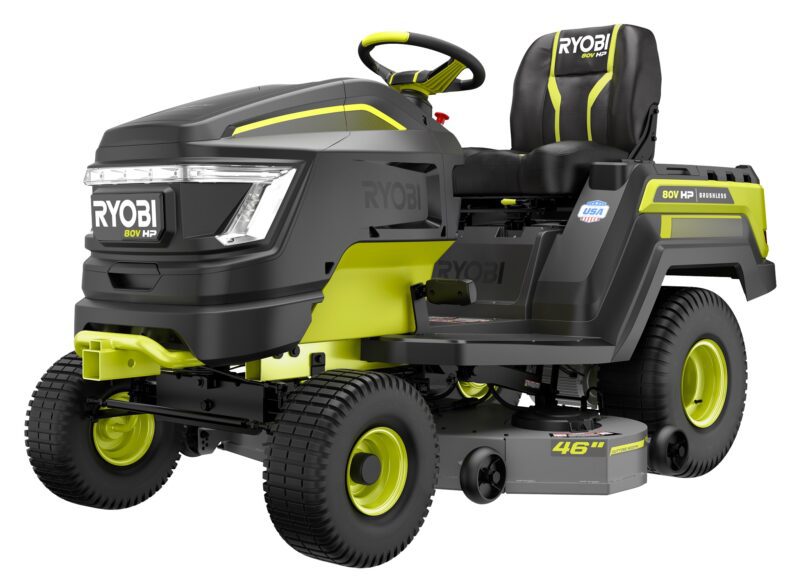
Ryobi also makes 80V riding and zero-turn mowers for larger properties. These machines are genuinely impressive, with comfortable seats, smooth electric operation, and no gas engine noises.
They are also expensive and heavy because the battery pack is huge. For a large, flat lawn, an 80V Ryobi riding mower can work beautifully. For a bumpy, hilly, or very large property, gas models for large properties are still the more predictable choice.
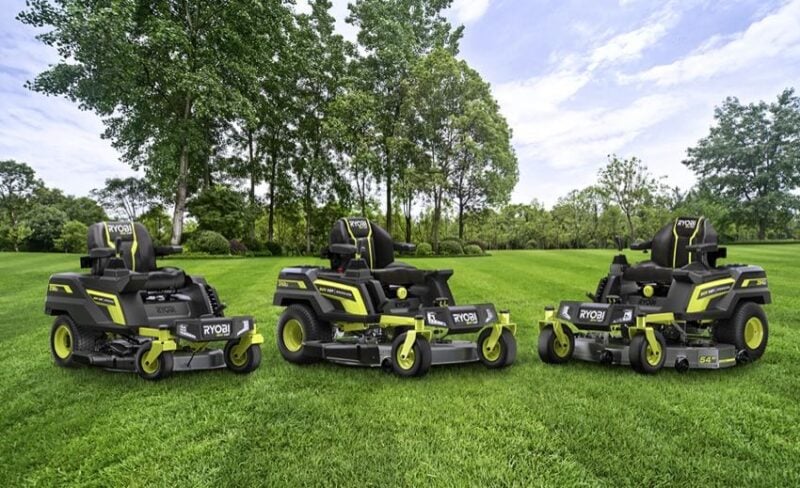
Ryobi’s 80V riding mowers extend the battery platform to much larger lawns.
Credit: www.protoolreviews.com
Maintenance Tips for Longevity
Battery Care
- Store batteries in a cool, dry place when not in use.
- Avoid leaving a battery completely dead for weeks at a time.
- Use only the charger made for your battery platform.
- Keep battery contacts clean and free of debris.
- Remove the battery from the mower during storage.
Blade and Deck Upkeep
A sharp blade makes a huge difference in cut quality. If grass looks torn or brown at the tips, the blade is likely dull. Check the blade every few weeks during the mowing season.
Before doing any blade work, always remove the battery. Sharpening the blade with a file or grinder is straightforward, but replacing it is safer if you are not comfortable. You should also make a habit of cleaning the underside regularly so built-up grass does not reduce airflow and leave clumps on the lawn.
Storage Recommendations
Never store the mower out in the rain. Moisture is the biggest enemy of electric lawn equipment.
Clean grass clippings off the deck after each use, fold the handle down, and store the mower in a shed, garage, or covered area. With basic care, a Ryobi mower should last for years of normal home use.
Frequently Asked Questions
Are Ryobi lawn mowers reliable for home use?
Yes, most owners find them reliable for regular residential mowing. They have fewer parts than gas mowers, so there is less that can go wrong. The most common issue is battery wear over time, not the mower itself.
How long does a Ryobi lawn mower battery last?
In normal conditions, a battery charge usually lasts between 30 and 60 minutes of active cutting. Runtime depends on the mower model, battery capacity, grass height, and your walking speed. Buying a second battery is the easiest way to extend your mowing session.
Can a Ryobi mower handle thick grass?
Ryobi mowers can handle moderately thick grass if the blade is sharp and you do not push the mower too fast. For very tall, wet, or dense grass, you may need multiple passes. In those conditions, a more powerful gas mower will still do the job faster.
Are Ryobi 18V and 40V batteries interchangeable?
No. The 18V ONE+ system and the 40V outdoor power system use different battery mounting points and voltages. You must match the battery to the correct mower.
Should I buy a corded or cordless Ryobi mower?
For medium lawns, cordless is worth the extra money. For small lawns and a limited budget, a corded mower provides unlimited runtime but you will manage the extension cord. If you already own Ryobi batteries, cordless is the better choice.
Final Verdict
Are Ryobi lawn mowers any good? Yes, for the right homeowner.
A Ryobi mower is an honest, convenient, and budget-friendly machine for small to medium residential lawns. It starts instantly, runs quietly, stores easily, and fits naturally into the Ryobi tool ecosystem. If you are tired of gas engine maintenance and do not have a massive property, it is genuinely one of the best value choices available.
The limitations are real, though. Battery runtime, thick grass, and long-term durability under heavy use are the main concerns. If your lawn is large, steep, or rarely mowed, a bigger gas mower will save you time and frustration.
For most people with an average yard, a Ryobi mower is not just good enough—it is the right call.





