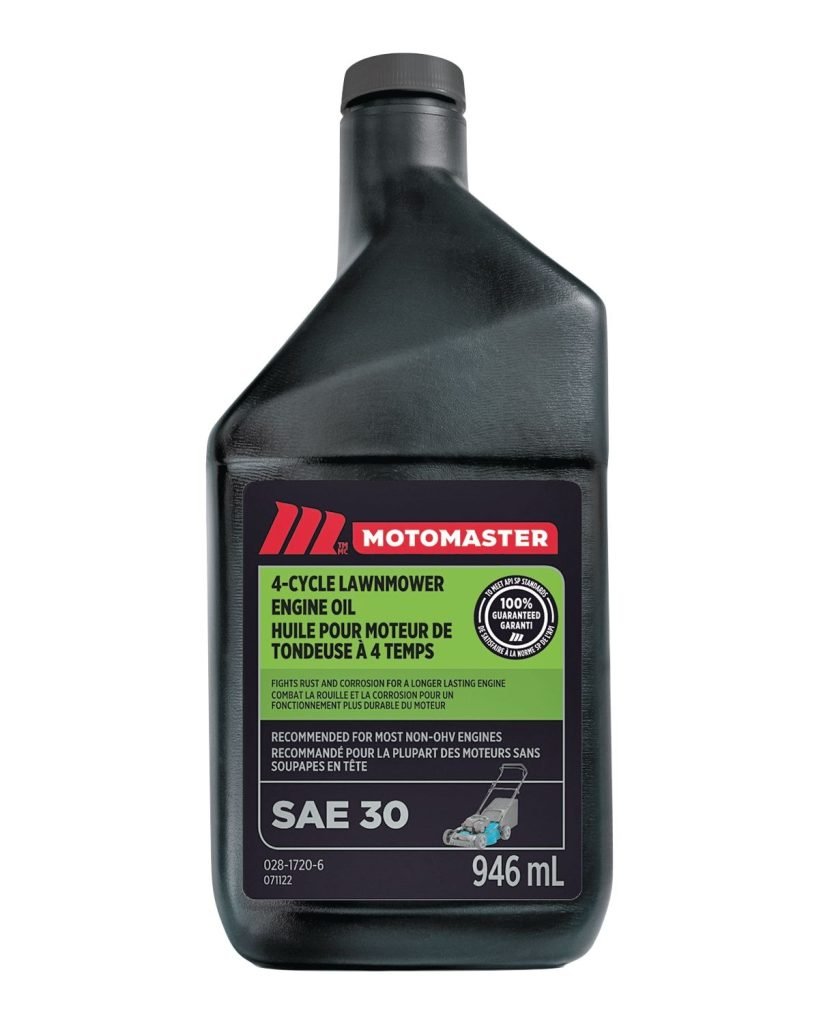
There is no single “best” engine oil that works perfectly in every mower, but there is always one best oil for your mower: the viscosity and type listed in its owner’s manual. Most walk-behind and riding mowers use small, air-cooled four-cycle engines that run hotter and work harder than car engines, so the oil you pour matters more than most owners realize.
For warm-weather mowing on a standard push mower, SAE 30 is the classic choice. For cooler starts, longer oil life, and harder use, a synthetic 10W-30 is usually the smarter pick. This guide breaks down what those numbers mean, which oils are worth buying, how to change the oil, and the mistakes that shorten engine life.
Why Engine Oil Choice Matters More Than You Think
Lawn mower oil does four jobs:
- Lubricates moving metal parts so they don’t grind against each other
- Cools the engine by carrying heat away from hot surfaces
- Cleans by suspending dirt, carbon, and metal particles until the oil is changed
- Seals the gap between the piston rings and cylinder walls
Many push mowers have no oil filter. That means the oil itself has to hold onto the harmful particles until you drain it. If you use the wrong oil — or run old oil too long — those particles stay in circulation and act like sandpaper inside the engine.
Small air-cooled engines also reach higher operating temperatures than most people expect. The wrong oil can thin out, oxidize, and turn into sludge. That leads to hard starting, overheating, smoke, and eventually expensive repairs.
Decoding the Numbers: SAE 30, 10W-30, and What the “W” Means
The first thing to understand is viscosity. Viscosity is simply how thick or thin an oil is, and it changes with temperature.
The numbers on an oil bottle are set by SAE International, the standards body that defines engine oil grades. On a 10W-30 oil, the “10W” describes cold-weather flow, and the “30” describes flow at normal operating temperature. The “W” stands for winter, not weight.
| Viscosity | What It Means | Best Use |
|---|---|---|
| SAE 30 | A single-grade oil with one hot-temperature rating | Classic warm-weather mower oil; very common in small engines |
| 10W-30 | A multigrade oil that flows like a 10W in cold weather and a 30W when hot | The most versatile choice; starts more easily in cool weather and protects well in heat |
| 5W-30 | Even thinner cold-flow rating | Best for very cold starts, but only if the mower’s manual allows it |
If you mow only in warm months and your manual says SAE 30 is acceptable, straight SAE 30 will serve you well. If you store the mower in an unheated shed and mow early or late in the season when temperatures drop, 10W-30 is usually the better choice because it flows more quickly on cold mornings.
But the label doesn’t stop at viscosity. Look for the API service rating, usually shown in a circular “donut” on the bottle. Your owner’s manual will list the minimum rating the engine needs. Newer ratings are designed to be backward-compatible, so an oil that meets a modern rating will also satisfy an older engine.
Conventional vs Synthetic vs Synthetic Blend
There are three main types of oil sold for small engines.
Conventional oil is refined from crude oil. It is cheap, familiar, and perfectly fine for light-duty mowing in moderate climates. The tradeoff is that it breaks down faster under extreme heat, so it needs to be changed more often.
Synthetic oil is chemically engineered from high-quality base oils. It stays stable in higher heat, flows better in cold weather, resists sludge, and lasts longer. The downside is price. For a homeowner with a small lawn, full synthetic can feel like overkill. For someone with a large property, hilly ground, or a commercial mower, it is a smart investment.
Synthetic blend oil is a mix of both. It gives you some of the heat resistance of synthetic at a more reasonable price. Many mower owners find that a blend is the sweet spot for normal backyard use.
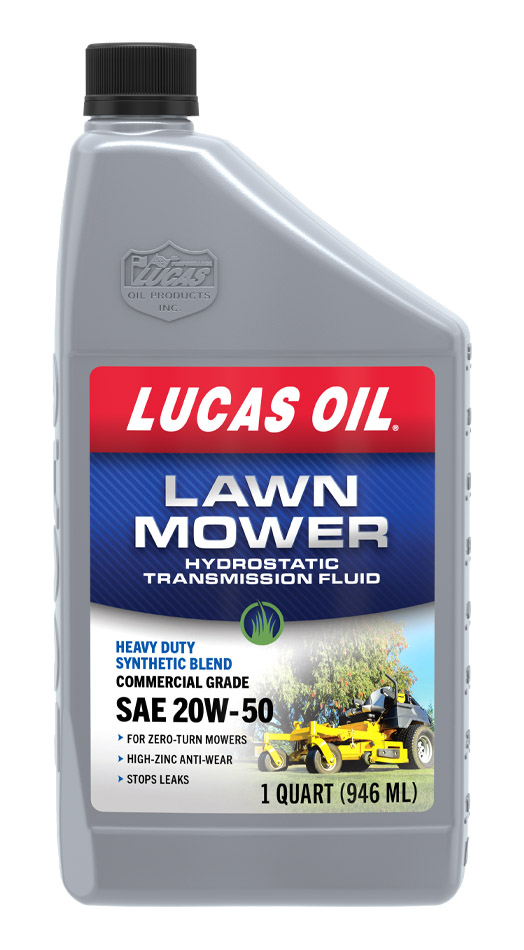
Check the SAE viscosity and the API service rating before choosing a bottle.
Image source: www.lucasoil.com
Top Engine Oil Picks for Lawn Mowers
The Default Pick: SAE 30 Conventional Oil
For most standard four-cycle lawn mowers used in warm weather, SAE 30 conventional oil remains the default recommendation. Brands such as Briggs & Stratton, Valvoline, and Shell make dependable versions that are widely available.
If your mower is used for a normal-size yard, mowed once a week during the growing season, and kept in a garage, SAE 30 is all you need. It is affordable, easy to find, and proven in millions of small engines.

A familiar pick for warm-season mowing: Briggs & Stratton SAE 30 four-cycle oil.
Image source: www.homehardware.ca
The Smarter Upgrade: Synthetic 10W-30
If you want one oil that works in spring, summer, and fall, synthetic 10W-30 is hard to beat. It starts flowing instantly in cool weather, yet it holds up to the high heat of an air-cooled engine when summer temperatures climb.
Synthetic oil is especially useful if you:
- Mow for longer than an hour at a time
- Cut thick, tall grass that puts heavy load on the engine
- Run a larger gas mower or a riding mower in hot conditions
- Store the mower in a shed where temperatures swing widely
It costs more per quart, but it also extends the time between changes and reduces internal engine deposits. Many owners find the extra protection worth the price.
Best for Honda and Other Overhead Valve Engines
Honda small engines, and most modern overhead valve engines, are built with tighter tolerances than older engines. Honda strongly recommends its own full synthetic 10W-30 oil, which is formulated to reduce deposits and keep valve train components clean.
If you have a Honda mower, using a high-quality synthetic that meets Honda’s specifications is the safest route. That advice applies to other modern engines too. The brand on the fuel tank matters far less than the oil spec printed near the fill cap, even on Honda and John Deere models.
At-a-Glance Comparison
| Oil | Type | Best For | Notes |
|---|---|---|---|
| Briggs & Stratton SAE 30 | Conventional | Warm-weather push mowers | Budget-friendly and easy to find |
| Synthetic 10W-30 | Full synthetic or blend | All-season use, hot or cold conditions | Better heat resistance and longer life |
| Honda Full Synthetic 10W-30 | Synthetic | Honda and overhead valve engines | Reduces valve deposits and wear |
| Budget SAE 30 | Conventional | Light duty in mild climates | Fine if changed regularly |
Choosing Oil by Climate and Workload
Your local climate should influence your oil choice more than any marketing claim.
- Hot summer regions: SAE 30 or 10W-30 both work, but synthetic 10W-30 gives better protection when the engine runs hot for long periods.
- Cool spring and fall temperatures: 10W-30 is the easy winner because it flows faster than SAE 30 at lower temperatures.
- Very cold conditions: If you need to start and run a mower below about 40°F, check the manual for a 5W-30 option.
- Heavy use: A larger gas mower that spends hours on a big property will run hotter and generate more wear. Full synthetic oil is worth the extra cost here.
- Flat, fast work: If you mow with commercial-level zero-turn machines, those engines deserve top-quality synthetic oil because they often operate at high RPM for long stretches.
The common thread is simple: don’t copy your neighbor’s oil choice. Match the viscosity to your climate and the oil quality to your workload.
How to Check and Change Lawn Mower Oil
Check the Level Before Every Few Uses
Checking oil takes less than a minute. Park the mower on level ground, switch off the engine, and wait a few minutes for the oil to settle. Pull the dipstick, wipe it clean, insert it fully, and pull it out again. The oil should sit between the “full” and “add” marks.
If the level is low, add a small amount of the correct oil through the fill tube. Do not overfill. It is easier to add a little more than to drain out the excess.
Step-by-Step Oil Change
Most small mowers need an oil change at least once per season. If you mow a large yard, in dusty conditions, or during a long growing season, consider changing it twice per season. Some manufacturers also list an hour-based interval, and some new mowers require an early first oil change after break-in. Always follow the manual when it gives a specific interval.
Here is the reliable DIY sequence:
- Run the engine for a few minutes to warm the oil, then turn it off.
- Disconnect the spark plug wire so the engine cannot accidentally start.
- Place a drain pan under the oil drain plug. If your mower has no drain plug, you will need to tip the mower to pour the oil out.
- When tipping the mower, keep the carburetor and air filter side facing up to avoid flooding them.
- Remove the drain plug or open the drain valve and let the old oil drain completely.
- Replace the drain plug securely.
- Add fresh oil through the fill hole using a funnel.
- Check the dipstick, add more if necessary, and reinstall the dipstick.
- Reconnect the spark plug wire before you start the mower.

Keep a labeled bottle of the correct viscosity in your shed for quick top-ups.
Image source: www.ebay.ca
Do Not Skip the First Spring Oil Check
Before you launch into your early-season routine, always confirm the oil level and condition. Oil left sitting all winter can separate, absorb moisture, and pick up acids. If the oil on the dipstick looks dark, gritty, or smells like fuel, change it before the first mow.
Dispose of Old Oil the Right Way
Never pour used mower oil onto the ground, down a drain, or into a storm sewer. Oil is a serious water pollutant. Collect the old oil in a clean, sealed container and take it to a local recycling center, auto parts store, or household hazardous waste collection site. The EPA’s used-oil guidance emphasizes that proper handling and recycling keep used oil out of the environment and allow it to be re-refined into useful products.
Common Oil Mistakes That Cost You an Engine
Using the Wrong Viscosity
Dropping any bottle of motor oil into the mower because it is on sale is a costly mistake. A 5W-20 oil meant for a modern car may be too thin for an air-cooled small engine. Use the viscosity recommended in the manual, not the one that happens to be in your garage.
Overfilling or Underfilling
Too much oil causes the crankshaft to whip the oil into foam. Foam does not lubricate properly, and pressure can build up inside the engine. Too little oil leaves parts dry and running hot. Both conditions can lead to serious damage.
Add oil gradually, check the dipstick as you go, and never rely on the entire bottle fitting.
Waiting Too Long Between Changes
Oil does not last forever. Even if you only mow 20 hours a season, the oil still absorbs moisture and picks up combustion byproducts. A yearly oil change is cheap insurance. On a commercial mower that runs daily, skip the annual plan and follow the hour-based maintenance schedule.
Ignoring the Owner’s Manual
The manufacturer tested your specific engine to determine which oil will protect it best. Ignoring that guidance can reduce performance, increase wear, and even void your warranty. The manual is not a suggestion — it is the final word.
Keeping the Rest of the Mower in Good Shape
Fresh oil protects the engine, but it cannot do everything. A well-maintained mower also needs a clean deck, sharp blade, clean air filter, and proper mowing habits.
Every few hours, clear away stuck clippings from the underside of the deck. Built-up grass traps moisture and accelerates rust. During hot, dry weather, you may also want to raise the cutting height so the lawn stays healthier.
Oil keeps the engine spinning smoothly, but the blade does the cutting. A clean deck and a sharp blade improve the mowing finish, while fresh oil makes sure the engine has the power to keep that blade moving week after week.
Frequently Asked Questions
What oil is best for a standard lawn mower engine?
For most four-cycle push mowers used in warm weather, SAE 30 is the standard choice. If you want easier cold starts and wider temperature protection, use a 10W-30. Check the manual for the exact specification.
Can I use synthetic oil in an older lawn mower?
Yes. Synthetic oil is compatible with older engines and can actually help reduce sludge and wear. It will not fix an engine that is already burning oil or knocking, but it is not harmful.
How often should I change lawn mower oil?
Most homeowners should change the oil at least once per season. If you mow a large property, mow in dusty conditions, or use the mower commercially, change it more often. Follow the hour-based interval listed in your owner’s manual when one is provided.
Can I use car engine oil in a lawn mower?
Only if the viscosity and API service rating match what the mower manual requires. However, oil designed specifically for small air-cooled engines is usually a better match because it is formulated to handle higher operating temperatures.
Conclusion
The best engine oil for your lawn mower is the oil that matches your engine’s requirements, your climate, and the way you actually use the machine. For most warm-weather backyard mowing, SAE 30 conventional oil gets the job done. For cooler starts, heavier workloads, and better long-term protection, synthetic 10W-30 is the most reliable all-around choice.
Fresh, correctly measured oil keeps the engine cool, clean, and well lubricated. Combined with a simple seasonal oil change and basic mower maintenance, it is the easiest way to make your mower start faster, cut better, and last for many more seasons.





