A great push lawn mower should make mowing feel almost effortless—clean cuts, easy starts, and no wrestling with tangled cords or heavy machines. But with gas, battery, corded, and manual reel models all claiming to be the best, how do you choose? This guide breaks down the top push mowers for 2026, explains what actually matters when you push one across your grass, and helps you match a mower to your yard without overpaying for features you won't use.
Types of Push Lawn Mowers: Which One Fits Your Yard?
Push mowers fall into four main categories. Your lawn size, terrain, and tolerance for maintenance determine which one deserves your money.
Manual Reel Mowers
Reel mowers use a spinning cylinder of blades against a fixed bedknife, creating a scissors-like cut. They are completely silent, emission-free, and require only your muscle power. Best for small, flat lawns under 2,000 square feet. Modern designs from brands like Fiskars and Greenworks have improved leverage so they don't feel like pushing a boulder. The trade-off: they struggle with tall, thick, or wet grass, and the blades need occasional sharpening.
Corded Electric Mowers
Corded models deliver consistent power with a simple plug-and-go setup. They are lighter than gas mowers, start instantly, and produce zero emissions. The catch is the cord itself—typically 50 to 100 feet—which forces you to plan your mowing pattern carefully or juggle extension cords. They suit small, tidy yards that are free of obstacles.
Battery-Powered Mowers
Battery mowers have become the default choice for most homeowners. Modern lithium-ion packs run 30 to 60 minutes per charge, and with dual-battery or interchangeable systems, you can extend that to cover a half-acre. They are quiet enough for early morning mowing, require minimal maintenance, and have improved dramatically in cutting power over the last several years. For small to medium lawns, they now outperform many gas models.
Gas-Powered Mowers
Gas mowers remain the heavy-duty option for large, thick, or uneven lawns. Engines range from 140cc to 190cc, and self-propelled models eliminate the physical exertion of pushing. They offer endless run time as long as you have fuel, and they handle wet, tough grass better than electrics. The downsides are real: fuel mixing, oil changes, air filter replacements, spark plug checks, noise, and emissions. If you have more than half an acre of challenging terrain, gas still makes sense.

The main push mower categories: reel, corded, battery, and gas. Each suits a different yard condition.
Key Features That Actually Matter
Ignoring the marketing hype, these five features separate a mower you'll enjoy from one you'll dread using.
Cutting Width and Deck Material
Cutting width determines how many passes you make. A 20-inch deck covers a bit more than a 21-inch deck, but the real question is the deck material itself. Steel decks dent and rust but are sturdy; aluminum decks are lighter and corrosion-resistant; plastic decks are cheapest but flex and crack over time. For most lawns, a 21-inch steel or aluminum deck with a mulching baffle is the sweet spot.
Height Adjustment
You need between 5 and 10 height settings, preferably single-lever rather than adjusting each wheel separately. The range should cover 1.5 to 4 inches so you can raise the cut in summer heat and lower it in spring. A mower that only adjusts 2 to 3 inches will limit your lawn's health. Learn how to adjust your cutting height by season to avoid stressing your grass during hot months.
Self-Propulsion Drive
If your yard slopes, exceeds 3,000 square feet, or you simply want less physical strain, self-propulsion is worth the extra cost. Rear-wheel drive offers better traction on hills, while front-wheel drive is lighter and more maneuverable on flat ground. All-wheel drive exists on premium models but is overkill for most users. The drive system should have variable speed control so you can walk at your natural pace.
Weight and Maneuverability
A gas mower can weigh 70 to 90 pounds, while a battery model is often 40 to 50 pounds. Heavier mowers feel more stable on hills but are brutal to push when the battery dies or the gas runs out. Look for large rear wheels (8 inches or more) for easier rolling, and front wheels that swivel for tight turns around flower beds.
Noise and Vibration
Electric and battery mowers operate around 75 decibels—about as loud as a vacuum cleaner. Gas mowers run 90 dB or higher, which can damage hearing with prolonged exposure. If you mow early or live close to neighbors, noise is a real consideration.
Top Manual Reel Mowers of 2026
Reel mowers are a niche choice, but they solve specific problems: tiny yards, strict noise ordinances, and a desire for zero emissions.
Best for Small Lawns: Greenworks 14-Inch Reel Mower
This lightweight model handles yards up to 1/4 acre. The 14-inch cutting width, five-blade reel, and adjustable height from 1 to 2.5 inches make it practical for regular trims. The cutting cylinder is ball-bearing mounted for smoother rolling, and the 60-inch handle folds for storage. At roughly 15 pounds, it's easy to carry to any part of the yard. Expect clean cuts on grass under 3 inches tall.
Best Eco-Friendly Pick: Fiskars StaySharp Max
The Fiskars StaySharp Max uses an "inertia drive" system that doubles blade speed, so you can cut taller, thicker grass with less effort. It features a 18-inch cutting width, rust-resistant stainless steel blades, and a patented height adjustment from 1.5 to 4 inches. It costs more than standard reel mowers, but it approaches the ease of an electric mower while remaining completely manual. You'll still need a cordless trimmer for edges, but for a flat, small lawn, this is as good as reel mowing gets.
Best Electric Push Mowers
Electric mowers have overtaken gas in terms of sales for small to medium lawns. Here are the standouts in both categories.
Top Corded Models: Greenworks 21-Inch 12-Amp
A corded mower gives you unlimited run time with zero charging anxiety. The Greenworks 21-inch 12-amp model delivers 5,500 RPM of blade speed, which is enough for regular cuts. It has a steel deck, single-lever height adjustment from 1.4 to 3.5 inches, and a 50-foot cord. The main limitation is reach—you'll likely need two extension cords to cover a typical suburban front yard. It's best for compact lawns where you can start from the middle and work outward.
Top Battery Models: EGO Power+ 21-Inch Select Cut
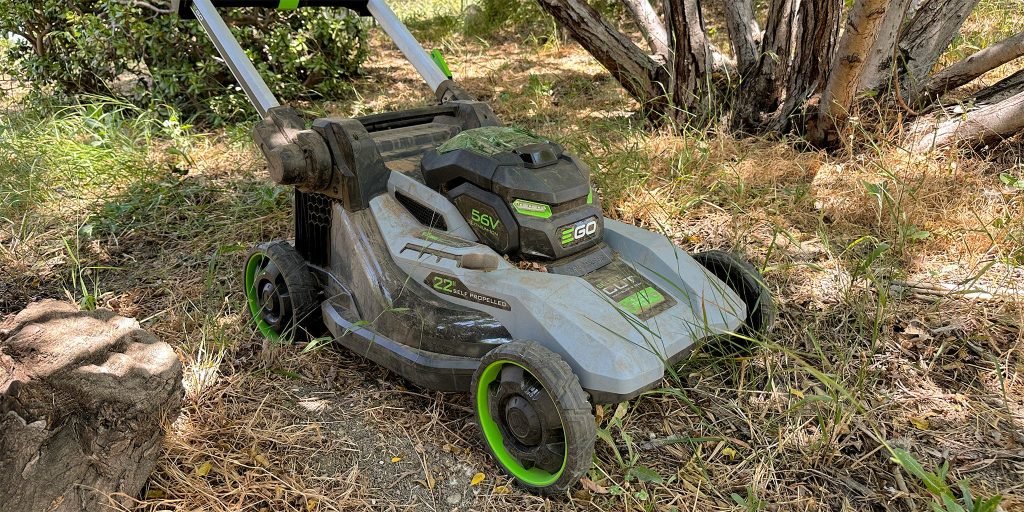
EGO's 56-volt system sets the standard for battery mowers. The 21-inch Select Cut features a dual-blade system that shreds clippings finer for better mulching, plus a 48-inch LED light for early or late mowing. Battery runtime is 30 to 45 minutes on a 5Ah pack, and the self-propelled version with a 7.5Ah battery covers up to half an acre. What makes it special is the instant start, variable speed, and consistent power that doesn't bog down in thick grass. Buy the bare tool if you already own EGO batteries, or get the kit with two chargers.
For smaller yards, a lighter battery model like the Ryobi 40V or the best electric mower for a small yard can save money without sacrificing cut quality.
Leading Gas Push Mowers
Gas still dominates for large properties and commercial-grade durability. Here are the best in two price brackets.
High Performance: Honda HRX217VKA
The Honda HRX217VKA has been a benchmark for years, and 2026 models remain unchanged in all the right ways. Its 190cc GCV200 engine starts easily and runs quietly for a gas mower. The MicroCut twin blades create a fine mulch that decomposes quickly, reducing grass clippings by 90 percent. The Versamow system lets you switch between mulching, bagging, and discharge without tools. The steel deck is protected by a lifetime warranty, and the proven Honda reliability means this mower will outlive your current lawn.
Budget-Friendly: Craftsman M105
If you don't need self-propulsion or premium features, the Craftsman M105 delivers dependable performance at a reasonable price. The 140cc Briggs & Stratton engine starts reliably, the 21-inch steel deck cuts cleanly, and the 7-position height adjustment covers most spring and summer needs. It's not the most powerful mower on hills, but on a flat lawn under a quarter acre, it's an honest workhorse. You sacrifice dual blades and premium ergonomics, but you save significant cash.

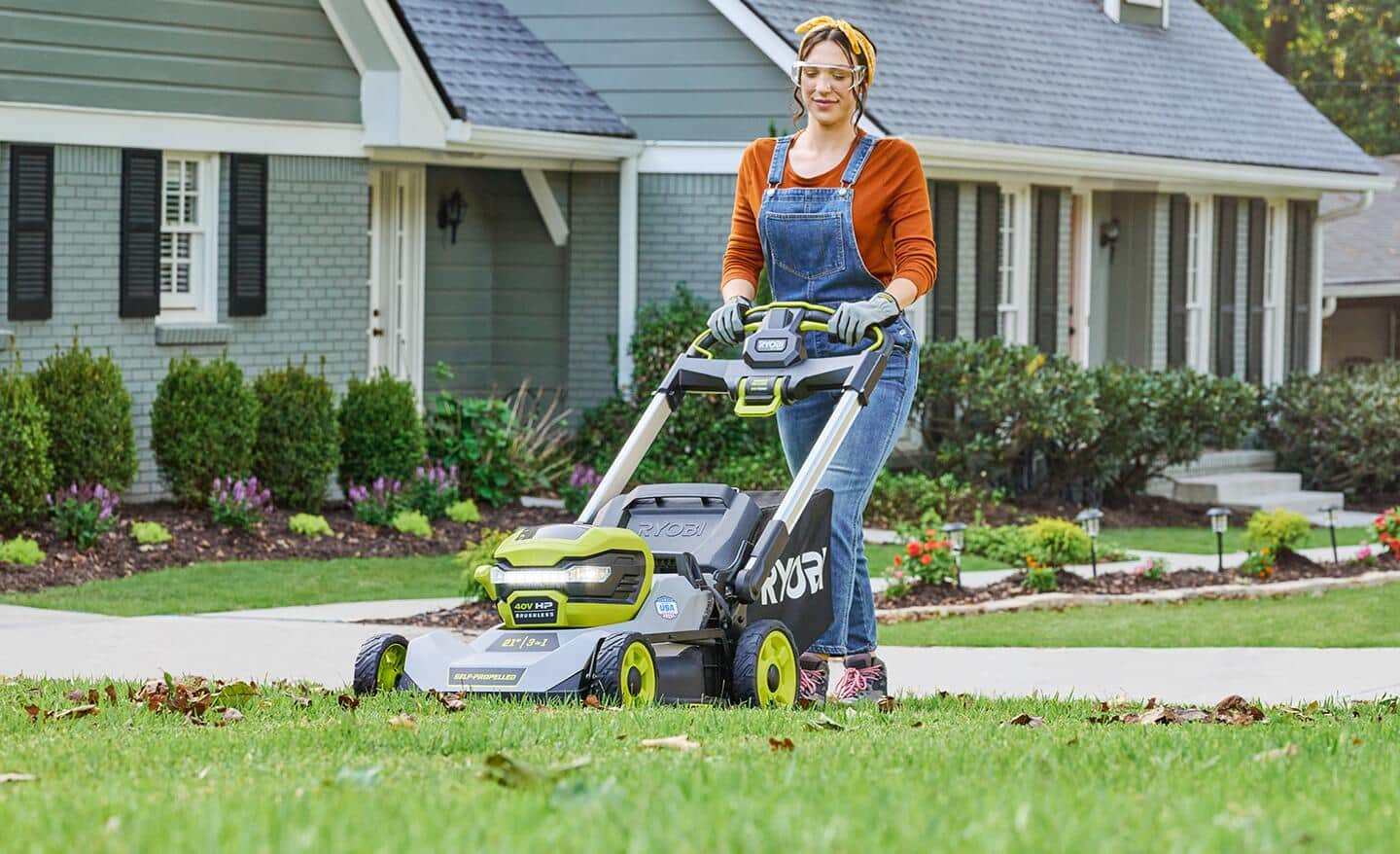
Battery mowers like this Ryobi 40V model combine self-propulsion, mulching, and quiet operation for medium-size yards.
How to Choose the Right Push Mower for Your Lawn
Matching a mower to your property requires more than picking a random model. Walk your yard and measure the actual turf area, note any slopes, and consider your physical comfort.
Assess Lawn Size and Terrain
Under 2,000 square feet: A manual reel mower or a corded electric will suffice. The space is small enough that a cord reaches, and the effort is minimal.
2,000 to 5,000 square feet (about a quarter to half acre): A battery mower with a 21-inch deck and self-propulsion is ideal. You'll finish in 30 to 45 minutes, and one battery charge or two batteries covers the area.
Over 5,000 square feet: Gas mowers or high-capacity battery systems with 10Ah or larger batteries are necessary. Self-propulsion becomes essential unless you enjoy a workout. Also consider whether a riding mower might be better because you can cover large areas faster—gas mowers for large yards remain the most cost-effective option for heavy-duty work.
For medium-size lots, a versatile battery mower is often the best fit, but you can also compare models built specifically for medium yards to see what's available.
Consider Power Source Trade-offs
- Gas gives you power and run time but demands maintenance: oil changes, air filter cleaning, spark plug replacements. You also need to store fuel properly.
- Battery offers low maintenance and quiet operation but requires planning around charge time. Most modern batteries charge in 30 to 60 minutes.
- Corded provides unlimited runtime but limits your range and creates tripping hazards. It's cheapest to buy and repair.
- Manual costs nothing to run and is the most environmentally friendly, but it's only practical for small, flat lawns.
Think honestly about your lawn's condition. If you have Bermuda or zoysia that grows aggressively in summer, you'll need frequent mowing, which favors a battery or gas model.
Evaluate Budget Versus Features
Price ranges vary widely:
- Manual reel: $100–$250
- Corded electric: $150–$300
- Battery basic: $300–$500
- Battery self-propelled: $500–$800
- Gas basic: $250–$400
- Gas self-propelled premium: $700–$1,200
Pay for features that matter to you. A bagging system is helpful if you collect clippings, but mulching blades plus a proper mowing schedule eliminate the need to bag. If you have a sloped lot, rear-wheel self-propulsion is non-negotiable—you won't be able to push a 90-pound gas mower uphill in July.
For the best cut quality, consider a mower with a twin-blade or high-lift blade design because they reduce clumping. And if you maintain your equipment properly, cleaning the mower deck after each use extends the life of any mower.
Maintenance and Safety Tips for Push Mowers
Owning a mower is a commitment. With regular care, a good push mower lasts 10+ years. Here's how to keep yours running smoothly.
Routine Cleaning and Blade Care
After each use, remove grass clippings from the deck and underside with a stiff brush or plastic scraper. Avoid spraying water directly onto the engine or electric motor. A caked layer of wet grass reduces air circulation, encourages rust, and dulls blades faster.
Sharpen your blades at least once per season, or every 20 hours of use. Dull blades tear grass instead of cutting it, leading to brown tips and increased disease pressure. Replace blades that have cracks, bends, or significantly worn edges.
Keep the correct fluid level if you own a gas mower—check oil and fuel before each session. A clean air filter is crucial; you can change the air filter yourself in minutes. For battery models, store batteries at partial charge in a cool, dry place during winter.
Safe Operation Practices
Always wear closed-toe shoes with good traction and safety glasses. Clear the lawn of stones, sticks, wires, and toys before mowing—projectiles from a spinning blade can cause serious injury.
Mow across slopes, not up and down, to maintain stability. For battery and gas self-propelled models, you should never pull the mower backward while the blade is engaged. Stop the blade and turn off the engine before removing clogs or adjusting the cutting height.
If you have a gas mower, store fuel in an approved container away from heat sources. Maintaining a proper mowing schedule reduces stress on both you and the machine.
Frequently Asked Questions
What features define the best push lawn mowers?
The best models combine easy start, adjustable cutting heights, a durable deck, adequate power for your grass type, and either cordless battery operation or reliable gas propulsion. For electrics, battery run time and charging speed are critical. For gas, engine reliability and ease of maintenance matter most.
Are electric or gas push mowers better in 2026?
For yards up to half an acre, battery mowers are now the better choice for most people—quieter, zero emissions, lower maintenance, and they cut nearly as well as gas. Gas still wins for large or thick lawns, steep terrain, and those who refuse to wait for a recharge.
How do I maintain a push lawn mower?
Clean the deck after every use, sharpen the blade at least yearly, and for gas models change the oil and air filter per the manual. For battery mowers, keep contacts clean and store batteries in a climate-controlled space.
What lawn size suits a push mower?
A standard push mower handles up to half an acre efficiently if it has self-propulsion. Beyond that, a riding mower or zero-turn is more practical. For very small yards under 2,500 square feet, a manual reel mower works without any power source.
A well-maintained lawn shows clean, even stripes if you overlap passes correctly with a properly adjusted mower.
Conclusion
The best push lawn mower is the one that fits your yard, your body, and your budget. For most homeowners in 2026, a battery-powered self-propelled mower with a 21-inch deck offers the best combination of convenience, quiet operation, and cut quality. If you have a tiny flat lawn, a manual reel mower saves money and avoids all maintenance. For large or demanding terrain, a gas mower remains the proven champion.
Before you buy, measure your lawn, assess slopes, and list the features you truly need. A reputable mower is a long-term investment, and with modern options like EGO, Honda, Greenworks, and Ryobi, you can't go wrong if you match the machine to the grass. The perfect lawn starts with the right tool in your hands.





