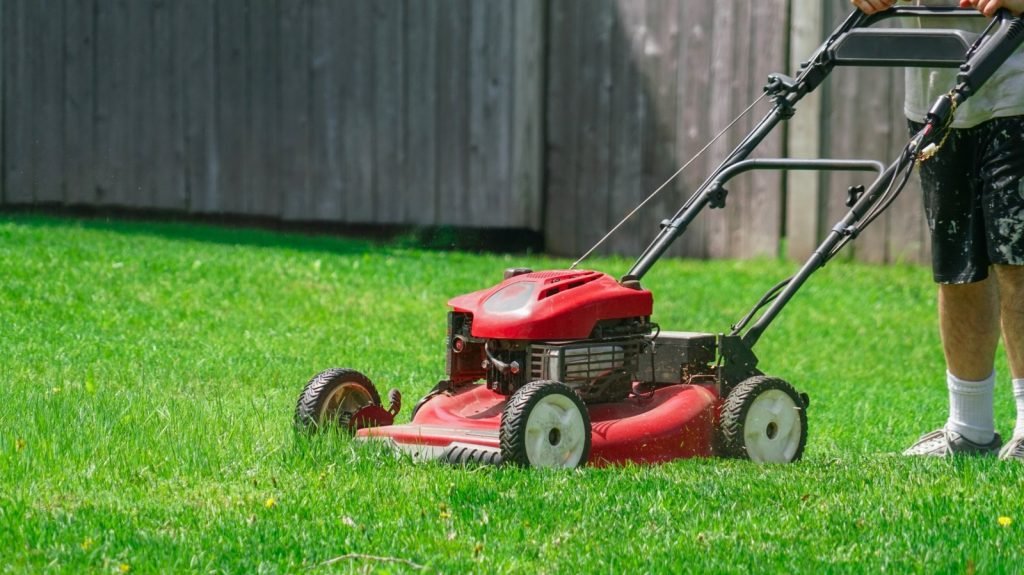
Standing at the pump with a red gas can in your hand, you have probably asked yourself: what gas do you use for lawn mowers? The short answer is simple. Most mowers run best on fresh, 87-octane regular unleaded gasoline with no more than 10% ethanol (E10). Two-stroke engines need fresh gas mixed with two-cycle oil at the ratio printed on the engine. Premium fuel is only necessary when your owner's manual explicitly requires it.
Getting this right affects how easily your mower starts, how evenly it cuts, and how long the engine lasts. Getting it wrong leads to hard starts, clogged carburetors, and repair bills you could have avoided. For more on this, see our guide on best gas lawn mower for large yard.
The Short Answer: Match the Fuel to the Engine
Before you buy anything, identify your engine type. Small engines have narrow fuel passages and tiny carburetor jets. The wrong fuel, or fuel that has gone stale, leaves deposits that block those passages and create frustrating performance issues.
| Engine type | Fuel to use | What to avoid |
|---|---|---|
| Four-stroke push, walk-behind, or riding mower | Fresh 87-octane regular unleaded with no more than 10% ethanol; ethanol-free (E0) is even better | E15, E30, old gasoline, mixed gas |
| Two-stroke mower or equipment | Fresh gasoline mixed with 2-cycle oil at the ratio in the manual (commonly 50:1 or 40:1) | Guessing the ratio, unmixed gas, fuel that has sat all winter |
| High-performance or commercial engine | 89–91 octane if the manual specifies premium | Regular gas when the manual says premium isrequired |
| Any engine, all types | Fresh fuel mixed with a quality fuel stabilizer if storing beyond 30 days | Ethanol-rich blends (E15+), diesel, contaminated fuel |
Understanding Octane Ratings
Octane measures a fuel's resistance to knocking during combustion. It is not a measure of power or cleanliness. A higher octane rating does not make a mower run better unless the engine is designed for higher compression. For more on this, see our guide on best mower small lawn safe operation.
- 87 octane — the standard for virtually all residential lawn mower engines. It delivers reliable performance and is the most affordable option.
- 89 or 91 octane — only necessary when your engine's manual specifies it. Ignoring that specification can cause knocking, detonation, and increased wear.
- Premium does not mean premium performance — in a small four-stroke engine designed for 87, premium can actually cause carbon buildup over time. Paying more for fuel your engine does not need is wasted money.
Will a higher octane gas make your mower cut faster or give you a better stripe? No. The engine's design determines power output. Octane only affects combustion stability.
Why Ethanol Content Matters More Than Octane
If you want to protect your mower, focus on the ethanol percentage rather than the octane number. Nearly all standard pump gasoline in the U.S. contains up to 10% ethanol (E10). That small amount usually works fine in small engines if the fuel is fresh. The problems start when the mower sits. For more on this, see our guide on best lawn mower for medium yard.
Ethanol is hygroscopic, which means it pulls moisture out of the air. That moisture settles in the fuel system, corrodes metal components, and causes phase separation where the fuel separates into layers. Once that happens, the gas is ruined and the sticky residue clogs carburetor jets.
The Environmental Protection Agency has published guidance on ethanol fuel blends, and they clearly distinguish between E10 and higher blends like E15. E15 is now available at many pumps, but it is not approved for small engines, motorcycles, or lawn equipment. Always read the pump label before filling your can. For more on this, see our guide on best electric lawn mower for small yard.
Best Gas Options for Long-Term Storage
If you want peace of mind during the off-season, prioritize fuel quality before winterizing. Here are the options ranked by how well they handle storage:
- Pure gasoline with a fuel stabilizer — ideal for most homeowners. Use fresh gas and add a stabilizer before your final mow of the season.
- Ethanol-free (E0, or recreational) gas — available at select stations and marinas. It costs about 25 cents more per gallon but eliminates most fuel-system corrosion issues.
- Premium branded gasoline — not better for your engine's combustion, but many top-tier fuel brands include additional detergent packages that help keep the fuel system clean. If you use premium only for the additive package, make sure it is fresh and stabilized.
The worst choice? Filling the tank halfway and leaving the mower in a shed for six months with E10 gas inside. That is the recipe for a carburetor rebuild.
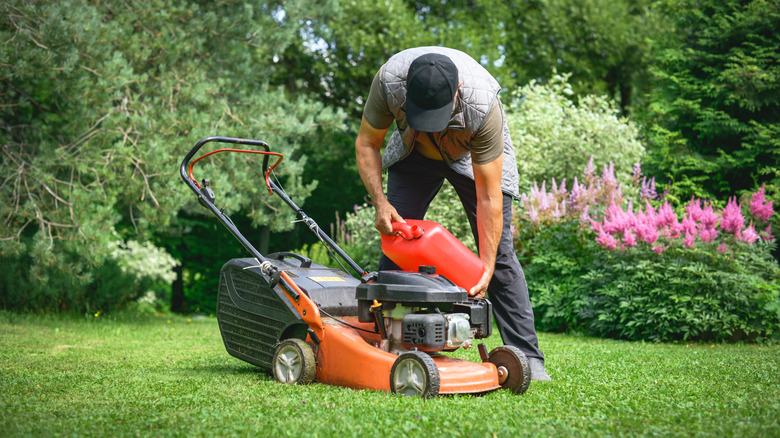
Check the pump label carefully — blends with more than 10% ethanol are not approved for small engines.
Credit: www.schilllandscaping.com
Two-Stroke Engines: Get the Mix Right
Many handheld mowers, trimmer attachments, and older push mowers run on two-stroke engines. These engines need oil mixed into every tank of gas because they have no separate oil reservoir—the oil in the fuel lubricates the crankshaft, piston, and bearings. For more on this, see our guide on best way to advertise lawn care.
Common mix ratios:
| Ratio | Oil per gallon of gas | Typical use |
|---|---|---|
| 50:1 | 2.6 oz | Most modern engines (Echo, Stihl, Husqvarna) |
| 40:1 | 3.2 oz | Many older engines and some current models |
| 32:1 | 4 oz | Older engines and some heavy-duty applications |
| 25:1 | 5.1 oz | Classic/vintage engines |
Use the ratio your manual specifies. Too much oil causes smoking, fouled spark plugs, and carbon buildup. Too little oil causes catastrophic engine seizure—and it does not happen gradually. One tank at the wrong ratio can destroy a cylinder within minutes.
Mix the fuel in a separate, approved container. Do not pour oil into the mower's tank and add gas on top. You cannot guarantee proper mixing that way.
Fuel Maintenance Tips That Save Money
Good fuel habits are the cheapest maintenance you can give a mower.
Use Fresh Fuel Within 30 Days
Gasoline begins oxidizing immediately after it leaves the refinery. Within 30 days, the volatile compounds start breaking down, especially in warm conditions. After 90 days, stale fuel loses enough combustibility to cause hard starting and rough running. After six months, it can form varnish and gum.
If you regularly use your mower through the growing season, fill the tank with fresh gas every few weeks. At the end of the season, empty the tank or run the engine dry. Storing a mower with a full tank of fresh, stabilized fuel is also acceptable—it prevents condensation from forming inside the empty tank.
Use a Fuel Stabilizer Correctly
Stabilizers extend fuel life significantly. But the key is to add them when the gas is fresh, not after it has already begun to break down.
- Add the stabilizer to the gas can before you fill it with fuel
- Run the mower for a few minutes after filling so the treated fuel reaches the carburetor
- Plate stabilizers protect up to 12 months; some brands claim longer, but seasonal servicing is still a good idea
Keep the Fuel System Clean
Dirt, debris, and water are the enemies of a clean fuel system. Inspect your fuel cap seal for cracks. Check that the fuel can's spout is free of dirt before pouring. If you suspect water in the gas—look for a cloudy or separated appearance—drain the tank immediately before running the engine. Water in the combustion chamber can cause severe internal damage.
For deeper upkeep, familiarise yourself with the deck and underbody. A clean mower deck cuts more efficiently and reduces rust. Many engine problems that get blamed on fuel actually start with a neglected chassis and cooling fins.
Common Fuel Mistakes to Avoid
Skip these errors and you will save hours of weekend frustration and avoid several trips to the repair shop.
Using E15 or Higher Blends
Not all gas is safe for a lawn mower. Fuels containing 15% or 30% ethanol (E15, E30) are increasingly common at high-volume stations. They are designed for flex-fuel vehicles only. Small engines are not equipped to handle the corrosive nature of higher ethanol content. One tank of E15 can swell rubber seals, corrode aluminum, and clog jets.
Always read the label on the pump. If it says "contains up to 15% ethanol, do not use in small engines," heed that warning and find another station.
Mixing Old and Fresh Gas
When your gas can is half full and you top it off on a hot day, the older gas is now part of the new tank. The already-degraded fuel will degrade the fresh fuel faster. Plus, condensation can form in a partially full can, funneling water into your mower. The best practice is to use up the old gas before adding new. If you do not want to waste it, pour it into your car's tank if your car is designed for that blend—a car's larger engine and fuel system tolerate slightly stale fuel better than a small engine.
Ignoring Engine Specifications
Your mower's manual is the authoritative source. If it lists a specific octane or ethanol requirement, follow it. If it says nothing about premium, use regular. If you have lost the manual, most manufacturers publish them online, searchable by model number.
Storing Fuel in Unsafe Containers
Only use fuel containers that are certified for gasoline storage. Pressurized containers, glass jars, or old beverage bottles are unsafe and illegal in many municipalities. Gasoline vapors are heavier than air and can travel along the floor to an ignition source—a pilot light, a furnace, an electrical outlet. Store filled cans in a shaded, ventilated outdoor shed, never inside your living space.
If your stored fuel looks cloudy, darkened, or has visible sediment, do not pour it into your mower.
Credit: www.hunker.com
Alternative Fuels and Power Sources
Gasoline is the traditional fuel for lawn mowers, but it is not the only option. By 2026, the alternative market has expanded considerably.
Propane-Powered Mowers
Propane mowers burn cleaner than gasoline and produce far fewer emissions. They also eliminate the stale-fuel problem entirely—propane does not degrade in the tank. Commercial mowing crews often use propane because the fuel is cheaper and engines stay cleaner longer. The trade-offs are more complex equipment, the need for specialized tanks, and a limited selection of models. If you have a large property and a propane supply nearby, a propane mower is a solid consideration.
Electric and Battery-Powered Mowers
Battery technology has advanced dramatically in recent years. Modern lithium-ion mowers offer 45–90 minutes of runtime and cut cleanly on medium-sized lawns. They have no fuel system at all, which means zero carburetor cleaning, zero stale gas, zero exhaust fumes, and significantly quieter operation. For small yards, an electric mower that fits your space is a practical alternative to worrying about fuel quality altogether. Many owners keep a set of batteries charged and swap them mid-season for unlimited runtime.
Biofuels
Biodiesel and plant-based ethanol blends are renewable options. They burn cleaner than petroleum gasoline, but they come with mixing and compatibility considerations. Some small-engine manufacturers approve E10 or E20 blends; almost none approve biodiesel for standard four-stroke mowers because it can degrade rubber components. If you are drawn to biofuels, check your manual carefully and buy from a brand that clearly states its compatibility with small engines.

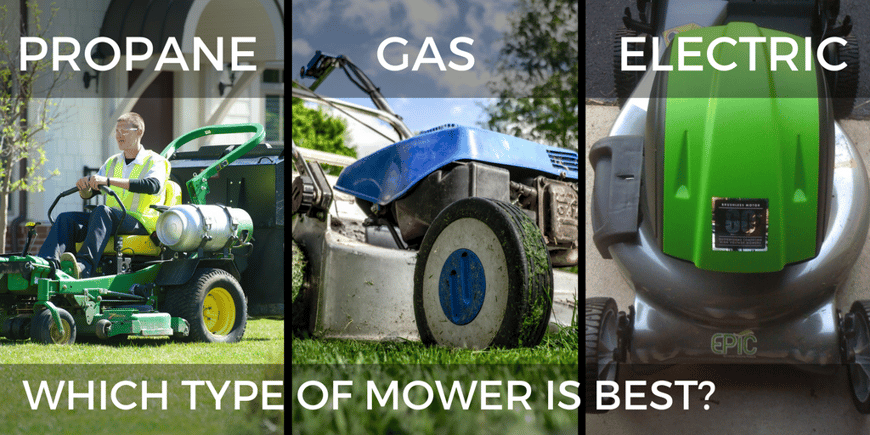
Electric and propane mowers eliminate the fuel-stability headaches that come with gasoline.
Credit: medium.com
Seasonal Fuel Management
Spring
When you pull the mower out of storage, check the fuel that has been in the tank all winter. If you stabilized it in the fall, it should be fine. If you did not, drain the old gas and refill with fresh fuel. Install a new spark plug while you are at it. This is also an ideal time to review seasonal lawn care practices like your mowing schedule for spring so your yard starts the season strong.
Summer
Hot weather accelerates fuel oxidation. If you mow weekly, this is rarely a problem—you are using gas fast enough. But if you skip a few weeks, the fuel in the tank can stale quickly. Keep the tank as full as possible to reduce the air space where condensation forms, and always start the season with a full tank of fresh fuel.
Fall
Autumn is the time to adjust your cutting height and prepare for winter storage. Before the last mow, add a fuel stabilizer, run the mower for five minutes, then shut it off. You can either drain the tank or leave it full with stabilized fuel—both are acceptable, but an empty tank is safer if you are storing the mower in a garage that might get hot in summer.
Frequently Asked Questions
Can I use regular car gasoline in my lawn mower?
Yes, as long as it is E10 or lower and fresh. The 87-octane regular gas you pump into your car is the same fuel recommended for most small engines, provided it does not contain more than 10% ethanol.
Is premium gas ever worth it for a lawn mower?
Only if your engine's manual specifies it. For the vast majority of residential mowers, premium gas provides zero measurable benefit and costs extra. If you want better protection, spend that money on a good fuel stabilizer instead.
How long can I keep gasoline for my mower?
Unstabilized gasoline should be used within 30 days. With a quality stabilizer, you can extend that to about 12 months. After a year, the fuel is too degraded for safe use in a small engine.
How do I know if my mower takes mixed gas?
Check for an oil-fill cap. Four-stroke engines have a separate oil reservoir and a dipstick or fill cap. Two-stroke engines have only a gas cap and a fuel/oil mix. Your manual will clarify, and the mix ratio is usually printed directly on or near the fuel cap for two-stroke models.
What happens if I accidentally put mixed gas in a four-stroke mower?
The engine will smoke heavily, foul the spark plug, and likely stall. Stop it immediately, drain the tank, and refill with fresh, unmixed gasoline. The engine may recover after a plug cleaning or replacement, but persistent smoking indicates internal damage. Always double-check before filling.
Final Thoughts
Choosing the right fuel for your lawn mower is not complicated once you understand the basics. Use fresh, 87-octane regular unleaded gas with no more than 10% ethanol. Add a fuel stabilizer if the mower will sit. Mix two-stroke oil according to the manual. Avoid E15 or higher blends. Keep your fuel system clean and your mower will start on the first pull season after season.
This single habit—paying attention to what goes into your tank—does more for engine longevity than any other routine maintenance step. It protects your carburetor, your spark plug, your cylinder, and your wallet. Pair it with a regular deck cleaning routine, proper seasonal maintenance, and addressing any repair issues early, and you will get years of dependable use out of your equipment.
Your lawn benefits from a mower that runs cleanly and cuts evenly, too. A well-maintained mower produces a crisp cut that keeps your grass healthy all summer long. That makes the small effort worthwhile.





