Buying a lawn mower should be simple, but the number of models, deck sizes, power sources, and price points makes it easy to overthink. The truth is, no single mower is best for everyone. The right choice depends on your yard size, slope, storage space, and whether you prefer gas, battery, or corded power.
This guide helps you narrow the field. You will learn which mower type fits your property, which features actually matter, and how the top 10 lawn mowers compare across categories. You will also find practical maintenance and safety advice so the mower you buy lasts for years. For more on this, see our guide on best gas lawn mower for large yard.
How to Match a Mower to Your Yard Size
Use your yard size as the starting point. It eliminates half the options immediately.
- Under ¼ acre: A lightweight push mower or a compact battery/corded model is usually enough. Sharp corners and flower beds matter more than raw power.
- ¼ to ½ acre: A self-propelled mower with a 21-inch deck saves time without the cost of a ride-on.
- ½ to 1 acre: A wide-deck walk-behind, like a 30-inch model, or a small riding mower makes sense. This is also where battery mowers with two batteries become practical.
- Over 1 acre: A riding mower or zero-turn mower is worth the investment. Pushing a mower for more than an hour gets old fast.
If your lawn sits between these ranges, look for our curated mid-sized yard picks before you commit to either extreme.
Lawn Mower Types Explained
Modern lawn mowers fall into four broad categories. Each one solves a different set of problems.

Pick the mower type that matches your terrain and the time you want to spend cutting grass.
Credit: ca.style.yahoo.com
Push Mowers
Push mowers are the simplest, lightest, and least expensive option. They suit small, flat lawns where maneuverability matters more than cutting speed.
Manual reel mowers are quiet and emission-free, but they struggle with tall or thick grass. Gas and electric push mowers give you more cutting power while still being easy to store. If your property is flat and compact, a push mower keeps the job simple. For more on this, see our guide on best zero turn mower for flat lawns.
Self-Propelled Mowers
Self-propelled mowers move forward on their own, so you only guide the handle. That makes them ideal for medium lawns, gentle slopes, and anyone who does not want to fight the mower uphill.
There are three drive styles:
- Front-wheel drive: Good for flat ground and easy to turn.
- Rear-wheel drive: Better for slopes because it pushes from the back.
- All-wheel drive: Best for steep or uneven terrain.
Most models also let you adjust ground speed, so you can walk at a comfortable pace while the mower does the heavy work. For more on this, see our guide on best mower small lawn safe operation.
Riding Mowers and Lawn Tractors
Riding mowers save significant time on lawns larger than half an acre. You sit while the machine does the moving, and wider decks cut more grass in each pass.
Traditional lawn tractors work well for open yards and general towing. Zero-turn mowers turn on the spot and are much faster around trees and flower beds. If you have a mostly flat property, the speed difference is dramatic. For more on this, see our guide on best lawn mower for medium yard.
Robotic Mowers
Robotic mowers are the closest thing to a “set it and forget it” lawn routine. You install a boundary wire, set a schedule, and the mower cuts small amounts of grass throughout the week.
They work best on well-defined, obstacle-free lawns. They are not ideal for steep slopes or yards with lots of garden features. But for a consistent, hands-off cut, they are hard to beat. For more on this, see our guide on best electric lawn mower for small yard.
Key Features to Consider Before Buying
Once you know which type fits, compare the features that affect daily convenience and long-term cost.
Cutting Width and Height
Wider decks finish faster but are heavier and harder to maneuver. A 21-inch deck is the standard for walk-behinds. A 30-inch deck is a serious step up in coverage. A 42-inch or wider deck is common on riding mowers.
Cutting height adjustment matters just as much. Many mowers offer a single lever that adjusts all wheels at once. Others make you adjust each wheel separately. Also remember that grass needs different heights in different seasons. Setting the right seasonal cutting height prevents stress and keeps your lawn healthier.
Power Source
Your power source determines maintenance, noise, and daily convenience.
- Gas mowers: Deliver strong power and unlimited run time as long as you have fuel. They need oil changes, air filter care, and spark plug checks.
- Battery mowers: Are quiet, clean, and low-maintenance. Newer models can handle medium lawns on a single charge, and some accept a second battery for larger yards.
- Corded mowers: Are cheap and consistent, but the cord limits your range and can be annoying around trees and garden beds.
Battery technology has improved fast. For compact properties, electric options for compact yards now match older gas mowers in cut quality without the fumes.
Mulching, Bagging, and Side Discharge
The best mowers give you more than one way to handle clippings.
- Mulching: Chops clippings into fine pieces and returns nutrients to the soil.
- Bagging: Collects clippings for a clean look and is essential if you have thick grass that needs multiple passes.
- Side discharge: Moves clippings quickly when the grass is long.
If you have trees, a mower with decent bagging performance makes fall cleanup easier. Bagging clippings or leaves with the mower saves hours compared to raking.
Maneuverability and Weight
Lightweight mowers are easier to push, lift, and store. Heavier mowers often have more durable decks and stronger engines. The right balance depends on your own strength and terrain.
A self-propelled drive removes most of the physical effort, so weight matters less. If you have a small gate, garage, or shed, check the folded dimensions before you buy.
The Top 10 Lawn Mowers at a Glance
The mower market changes quickly, but these models have remained strong reference points for several seasons. Use the table below to compare categories, then read the detailed reviews to decide.

Mowers succeed in different categories, so compare them against your own yard conditions.
Credit: www.cnet.com
| Category | Model | Type | Best For |
|---|---|---|---|
| Best Overall | Honda HRX217VKA | Gas walk-behind | Premium performance and longevity |
| Best Budget | Greenworks 20-Inch 3-in-1 | Corded electric | Tight budgets on small lawns |
| Best Small Lawn | Sun Joe MJ401E-PRO | Corded electric | Compact yards and tight storage |
| Best Large Lawn | Toro TimeMaster 21199 | Self-propelled gas | Wide-cut speed without a ride-on |
| Best Electric | EGO Power+ LM2142SP | Battery self-propelled | Quiet, fume-free mowing |
| Best Gas-Powered | Craftsman M105 | Gas walk-behind | Simple, dependable run times |
| Best Riding | John Deere E100 | Lawn tractor | Comfortable mowing on big yards |
| Best Robotic | Worx WR140 Landroid | Robotic mower | Hands-off maintenance |
| Best Lightweight | Black+Decker BESTA512CM | Electric walk-behind | Easy lifting and storage |
| Best Tough Terrain | Husqvarna HU800AWDH | All-wheel-drive gas | Hills and uneven ground |
Detailed Reviews of the Top 10 Lawn Mowers
Best Overall: Honda HRX217VKA
The Honda HRX217VKA is the walk-behind that other brands try to beat. It combines a powerful engine, a durable deck, and a clean, even cut in both mulching and bagging modes. The cutting heights are easy to adjust, and the mower feels solid without being exhausting to use.
It costs more than most walk-behinds, but owners tend to keep it for a very long time. If you want one high-quality mower that will handle most yards for the next decade, this is the safest pick.
Best Budget-Friendly Option: Greenworks 20-Inch 3-in-1 12 Amp Electric Corded Mower
This Greenworks mower proves you do not need a huge budget to get a clean cut. It has a 20-inch deck, a strong corded motor, and offers mulching, bagging, and side discharge.
The cord is the main limitation. You need an outdoor outlet and enough extension cord reach to cover the whole yard. But for flat, small-to-medium lawns, it is one of the best values available.
Best for Small Lawns: Sun Joe MJ401E-PRO 14-Inch 13-Amp Electric Mower
Tight yards call for compact machines. The Sun Joe MJ401E-PRO has a narrow 14-inch deck, which makes it easy to turn around trees, flower beds, and fence corners. It is light enough to lift over steps or store on a wall hook.
Its smaller deck means more passes on a larger lawn, so this is not a machine for open spaces. On a small patch of grass, though, it is quick and efficient.
Best for Large Lawns: Toro TimeMaster 21199
The Toro TimeMaster is the bridge between a standard walk-behind and a riding mower. Its wide deck covers significantly more grass per pass than a typical 21-inch mower, and the self-propelled drive keeps the pace comfortable.
It also has the features homeowners need for a bigger property: reliable starting, adjustable cutting heights, and strong bagging performance. If you want the speed of a ride-on without the storage space and maintenance, this is the answer. For even larger properties, compare it with the best large-yard gas models available today.
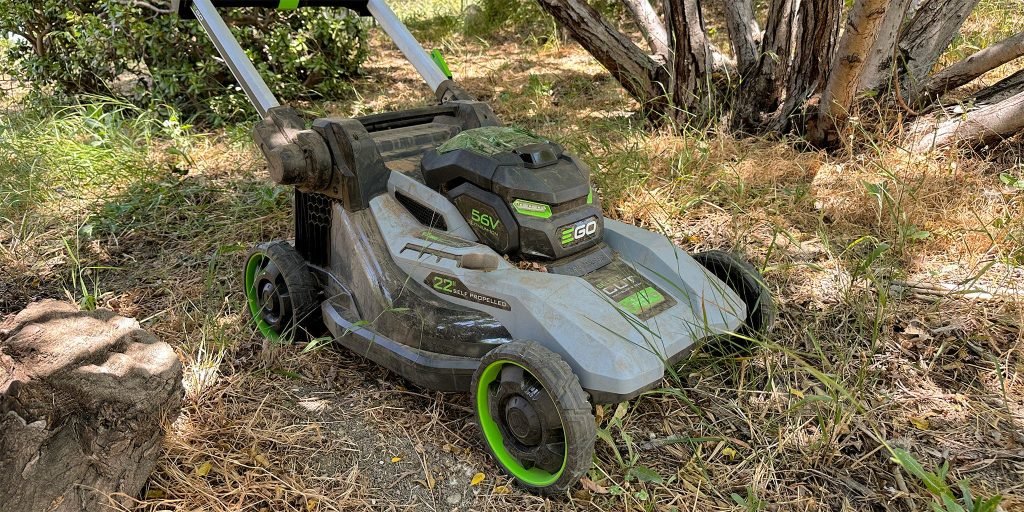
Best Electric Mower: EGO Power+ LM2142SP
The EGO Power+ LM2142SP shows how far battery mowers have come. It is quiet, emission-free, and strong enough for a normal suburban lawn. The self-propelled system handles slopes without straining, and the 21-inch deck keeps cutting time reasonable.
Battery life depends on grass conditions and how fast you walk. If your lawn is on the larger side, a second battery helps. The lack of gas, oil, and pull starts makes it an easy choice for anyone who wants a low-maintenance routine.

Modern battery mowers deliver a clean cut with far less noise and maintenance than older models.
Credit: www.bhg.com
Best Gas-Powered Mower: Craftsman M105
The Craftsman M105 is for anyone who wants solid gas performance without a complicated feature set. It starts reliably, cuts well, and gives you the long run times that gas mowers are known for.
Maintenance is simple, and the 21-inch deck handles most residential lots. It is not the flashiest mower on this list, but it is honest, durable, and easy to live with.
Best Riding Mower: John Deere E100
The John Deere E100 is a great first riding mower. It has a comfortable seat, straightforward controls, and a wide enough deck to make mowing a half-acre or more feel easy.
It is a traditional lawn tractor, so it shines on open ground rather than complex landscaping. If you have a bigger, flatter lawn and want maximum speed, compare it with the best flat-property zero-turn options.
Best Robotic Mower: Worx WR140 Landroid
The Worx WR140 Landroid automates the one chore you probably enjoy the least. After the boundary wire is installed, it mows on a schedule, handles most of your lawn automatically, and returns to its charger when finished.
It works best on medium-sized, open lawns with moderate obstacle density. You will still need to trim around edges by hand, but the weekly cutting burden almost disappears.
Best Lightweight Mower: Black+Decker BESTA512CM
This Black+Decker model exists for people who want mowing without the heavy lifting. It is compact, easy to steer, and simple to carry when you need to move it around the house or into storage.
The trade-off is smaller cutting power and a narrower deck. It suits small yards, apartments with tiny lawns, or anyone who finds standard mowers too heavy to handle.
Best for Tough Terrain: Husqvarna HU800AWDH
Slopes, ruts, and uneven ground punish ordinary mowers. The Husqvarna HU800AWDH uses all-wheel drive to keep moving where two-wheel-drive machines slip and stall.
It also has a sturdy frame, large rear wheels, and enough engine power to push through thick grass. If your yard is more hill than flat, this is the mower that will save you from frustration every week.
Maintenance Tips for Longevity
A good mower can last a decade or more with regular care. The following steps are essential.
Keep the Blade Sharp
A dull blade shreds grass instead of cutting it. Torn grass tips turn brown and invite disease. Sharpen the blade at least once or twice per season, or immediately after hitting a rock or root.
Remove the blade, file or grind the edge evenly, and check that it is balanced before reinstalling. A balanced blade prevents vibration and protects the mower deck.
Clean the Undercarriage
Grass clippings build up under the deck and cause rust and poor cutting. After each mowing session, let the mower cool, then scrape away wet clippings. Many mowers now include a washout port that connects to a garden hose.
Pay special attention to cleaning the underside before long-term storage. Caked-on grass shortens the life of the deck and makes starting harder.
Take Care of the Engine
Gas mowers need basic engine attention to start easily year after year. Check the oil level before each season, change it at the interval recommended in your manual, and clean or replace the air filter when it looks dirty.
The spark plug is also a wear item. Replacing it annually gives you easier starts and smoother idle. Remove grass and debris from around the engine so it does not overheat.
Battery Care for Electric Models
Battery mowers need less maintenance, but the battery needs respect. Store it indoors in a cool, dry place during winter, and avoid leaving it at zero percent charge for long periods.
Clean the contact points with a dry cloth and check for swelling or cracks. If you notice shorter run times, the battery may be reaching the end of its life.
Store the Mower Properly
A sheltered location is the cheapest insurance you can buy. Store the mower off damp concrete if possible, cover it to keep off dust, and run the engine dry or add a fuel stabilizer before winter.
Before the first cut of spring, do a quick service: check the oil, inspect the blade, verify the air filter, and make sure all cables move freely.
Safety Tips When Mowing
Lawn mowers are powerful machines. They deserve basic respect every time you use them.
Wear the Right Clothing and Gear
- Sturdy shoes with closed toes, not sandals.
- Long pants to protect your legs from thrown debris.
- Safety glasses or goggles to shield your eyes.
- Hearing protection for extended sessions, especially with gas mowers.
- Gloves to improve grip and protect your hands.
Do a Pre-Mow Check
Walk the yard first and remove stones, sticks, toys, hoses, and anything else that could become a projectile. Inspect the blade and fuel system before you start. If anything looks loose or damaged, fix it before mowing.
Follow Safe Operating Practices
Keep children and pets inside while you mow. Never let a passenger ride on a walk-behind or tractor unless there is a designated seat. Push mowers forward only, and avoid pulling them backward. On slopes, mow across the hill with a walk-behind and up and down with a riding mower.
For confined spaces, small-lot mowing safely is just as important as it is on large acreage. Always stop the engine before clearing clogs, checking the blade, or leaving the mower unattended.
Handle Fuel and Batteries Safely
Refuel only when the engine is cool, and store gasoline in a container designed for fuel. Clean up spills immediately and never fill the tank all the way to the top. Follow U.S. Environmental Protection Agency guidance on fuel storage and disposal to keep yourself and the environment safe.
For battery mowers, charge batteries on a dry, ventilated surface and inspect them regularly for damage. Never smoke near fuel or while charging.
Know What to Do in an Emergency
Every mower has a way to stop it quickly. Learn where the blade control, emergency brake, or safety switch is before your first mow. Keep a first aid kit nearby and your phone within reach. If a cut is deep or bleeding heavily, apply pressure and get medical help immediately.
Frequently Asked Questions
What is the best lawn mower for a small yard?
A compact corded or battery mower is usually the best choice for a small yard. Look for a deck width around 14 to 20 inches, a lightweight frame, and easy storage. The Sun Joe MJ401E-PRO and Black+Decker BESTA512CM are both strong options for tight spaces.
Is a battery mower as powerful as a gas mower?
Battery mowers have improved dramatically in recent years. For a typical suburban lawn, a modern 21-inch battery mower can deliver a cut quality that matches gas. The main limitation is runtime on thick, wet, or tall grass. If your yard fits within one charge, battery power is often the more convenient choice.
How wide a deck do I need?
For a small yard under ¼ acre, a deck around 14 to 20 inches is easy to handle. For a medium lawn, 21 inches is the standard that balances speed and maneuverability. For half an acre or more, consider a 30-inch walk-behind or a riding mower with a 42-inch or wider deck.
Are robotic mowers worth it?
Robotic mowers are worth it if you value time more than physical exercise and your lawn is relatively flat and open. They cut a little every day, which keeps grass short and eliminates most of your regular mowing sessions. You still need to trim edges, but the main chore disappears.
How often should I sharpen the mower blade?
Sharpen the blade once or twice per season under normal use. If you mow on sandy soil, mow frequently through the summer, or hit obstacles often, sharpen it more regularly. A sharp blade makes a visible difference in how green and clean your lawn looks.
Conclusion
There is no perfect mower for everyone, but there is a perfect mower for your specific lawn. Start with your yard size and terrain, choose the right power source, then match the features that make mowing easier.
The ten mowers reviewed here represent the best in their categories in 2026. From budget corded models to premium battery machines and capable riding mowers, each one solves a specific problem. Pick the one that fits the way you live, take care of it properly, and your lawn will reward you with a clean, healthy cut all season long.





