Is your lawn mower leaving uneven cuts or tearing the grass instead of slicing it cleanly? Dull mower blades can make your lawn look messy and even harm your grass.
But don’t worry—you don’t need expensive tools or a professional to fix this. Learning how to sharpen mower blades by hand is easier than you think, and it will save you time and money while giving your lawn the fresh, crisp cut it deserves.
Keep reading, and you’ll discover simple, effective steps to bring your mower blades back to life quickly and safely.

Credit: www.youtube.com
Tools Needed
Sharpening mower blades by hand requires a few simple tools. These tools help you work safely and efficiently. Having the right equipment makes the job easier and gives better results. Below is a list of necessary tools for hand sharpening.
Essential Sharpening Tools
- Flat File: A coarse metal file for sharpening the blade edges.
- Bench Vise: Holds the mower blade steady while you work.
- Wire Brush: Cleans dirt and rust from the blade before sharpening.
- Wrench or Socket Set: Removes and reattaches the blade from the mower.
- Marker: Marks the cutting edge for even sharpening.
- Work Gloves: Protect your hands from sharp edges during handling.
Safety Equipment
- Safety Glasses: Protect your eyes from metal filings and debris.
- Dust Mask: Prevents inhalation of dust and rust particles.
- Sturdy Gloves: Guard against cuts and scrapes while working.
- Closed-Toe Shoes: Protect feet from falling tools or blades.

Credit: mowingmagic.com
Preparing The Mower
Preparing the mower is an important first step before sharpening the blades. Proper preparation ensures safety and makes the process easier. Take your time to get everything ready. This will help you avoid accidents and protect your mower parts.
Start by making sure the mower is on a flat surface. This keeps it stable during work. Also, gather the tools you need, such as a wrench and gloves. Wearing gloves protects your hands from sharp edges and dirt.
Disconnecting The Spark Plug
Disconnect the spark plug wire to stop the mower from starting. This is a key safety step. Find the spark plug on the engine and gently pull the wire off. This prevents the blade from moving while you work.
Keep the wire away from the spark plug to avoid accidental contact. This simple action can prevent serious injuries. Never skip this step before handling the blade.
Removing The Blade
Use a wrench to loosen the bolts holding the blade in place. Turn the bolts counterclockwise to remove them. Keep the bolts safe; you will need them later to reattach the blade.
Hold the blade firmly with one hand while loosening the bolts. This stops the blade from spinning and causing injury. After removing the bolts, carefully take off the blade. Check the blade for damage before sharpening.
Cleaning The Blade
Cleaning the mower blade is a crucial step before sharpening. Dirt, grass clippings, and rust can hide damage and dull the edge further if not removed. Taking the time to clean the blade thoroughly sets you up for a safer and more effective sharpening process.
Removing Dirt And Grass
Start by wearing sturdy gloves to protect your hands from sharp edges. Use a stiff brush or an old toothbrush to scrub away stuck-on grass and dirt. You can also use a putty knife or a plastic scraper to gently pry off tough debris without damaging the blade.
If the buildup is stubborn, soak the blade in warm, soapy water for 10-15 minutes before scrubbing. This softens hardened grass and soil, making removal easier. Dry the blade completely with a clean rag to prevent rust.
Checking For Damage
Once clean, closely inspect the blade for any cracks, bends, or deep nicks. Even small damage can affect cutting performance and safety. Hold the blade up to the light or feel along the edge with your gloved hand to identify any irregularities.
If you find cracks or severe bends, it’s safer to replace the blade rather than sharpen it. Minor nicks can be smoothed out during sharpening, but hidden damage can cause the blade to break while mowing. Have you ever ignored damage only to regret it later?
Sharpening Techniques
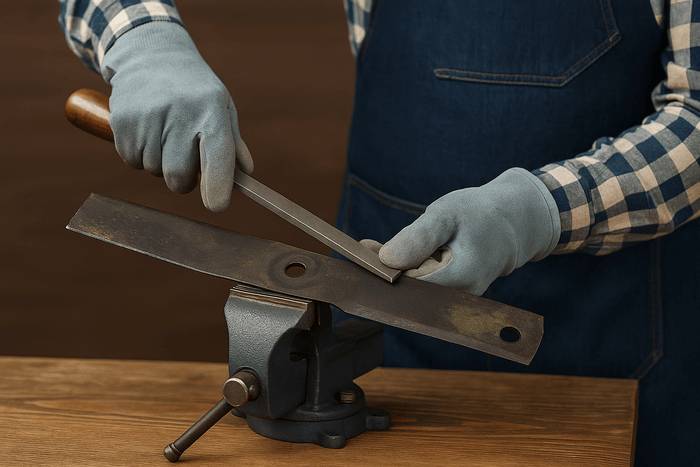
Sharpen mower blades by hand using a file or sharpening stone to restore their cutting edge. Secure the blade, then carefully file along the blade’s angle with smooth, even strokes. Check for a sharp, clean edge before reattaching the blade to your mower.
Sharpening your mower blades by hand can be a rewarding task that ensures your lawn mower performs at its best. Understanding the right techniques can save you money and extend the life of your mower. Let’s dive into the essential techniques to sharpen your mower blades effectively.Choosing The Right File
Selecting the correct file is crucial. A mill file, usually about 10 to 12 inches long, is ideal for this task. It offers a good balance of control and efficiency, allowing you to sharpen the blade without too much effort. It’s important to ensure the file is clean and free from rust. A rusty file won’t sharpen effectively and could damage the blade.Proper Filing Angle
Achieving the right filing angle is key to maintaining blade sharpness. Aim for a 45-degree angle when filing the blade. This angle ensures the blade cuts grass cleanly and efficiently. Keeping the angle consistent as you file is important. You might find it helpful to mark the angle on the blade as a guide.Maintaining Blade Balance
After sharpening, check the balance of the blade. An unbalanced blade can cause vibration and damage to your mower. To test balance, hang the blade on a nail or a blade balancer. If one side dips lower, file more material from that side until it balances evenly. Maintaining balance not only extends your mower’s lifespan but also improves cutting performance. How often do you check your blade balance? It might be time to add it to your routine.Reinstalling The Blade
Reinstalling the mower blade might seem straightforward, but it requires care and precision. A blade not installed properly can cause uneven cuts or even damage your mower. Paying close attention during this step ensures your mower runs smoothly and safely.
Securing The Blade Correctly
Start by aligning the blade with the mounting hole on the mower. Make sure the sharp edges face the right direction—usually downward toward the grass. Holding the blade firmly, insert the bolt and hand-tighten it to prevent cross-threading.
Use a wrench to tighten the bolt securely. Avoid over-tightening by feel alone; the blade should be snug but not forced. If you have a blade holder or block, use it to keep the blade steady while tightening to avoid injury or damage.
Torque Specifications
Each mower model has a recommended torque setting for blade bolts, often found in the owner’s manual. Applying the correct torque is crucial because too little can let the blade loosen, while too much can strip the threads or warp the blade.
If you don’t have a torque wrench, consider borrowing or investing in one. Setting the bolt to the exact torque specified—often between 30 and 60 ft-lbs—ensures a safe and secure fit. Have you checked your mower’s manual recently to verify this number?
Testing The Mower
Testing the mower after sharpening the blades is essential. This step ensures the blades cut cleanly and work safely. A quick test run helps spot any issues early. Checking how the mower performs guides further adjustments. This process saves time and improves lawn health.
Checking Cut Quality
Start by mowing a small patch of grass. Look closely at the cut edges. Sharp blades create neat and even cuts. Ragged or torn grass means the blades need more sharpening. Uneven cutting height can also show blade problems. Check for any unusual sounds or vibrations during mowing. These signs help identify blade or mower issues fast.
Adjusting If Needed
If the cut is uneven or rough, stop the mower. Turn off the engine and wait for blades to stop moving. Inspect the blades for dull spots or damage again. Use a sharpening stone or file to fix rough edges. Balance the blades by placing them on a nail or blade balancer. Uneven weight causes vibrations and uneven cuts. Reattach the blades firmly and repeat the test. Continue adjusting until the mower cuts cleanly and runs smoothly.
Maintenance Tips
Keeping your mower blades sharp is key to a clean, healthy lawn. However, knowing how to maintain those blades between sharpenings can save you time and keep your mower running smoothly. Paying attention to these maintenance tips will help you get the most from your blades and avoid unnecessary wear.
When To Sharpen Again
How do you know it’s time to sharpen your mower blades again? Look for uneven grass cuts or torn edges instead of clean slices. If your mower struggles to cut through thick grass or you notice vibration while mowing, it’s a sign your blades are dull.
Check the blades after every 20-25 hours of mowing or about once a mowing season. But if you mow rough terrain or hit rocks and sticks frequently, you may need to sharpen them sooner. Keeping a sharp blade schedule prevents damage to your lawn and mower motor.
Storing Blades Safely
After sharpening, how you store your blades matters. Always wipe blades clean and dry them thoroughly to prevent rust. Rust can weaken the metal, reducing blade life and cutting effectiveness.
Store blades in a dry, cool place away from moisture. You can wrap them in a cloth or place them in a sealed container to keep them protected. Avoid leaving them on concrete or bare metal surfaces that encourage corrosion.
Have you ever found rusty blades ready to replace before the season even started? Taking a few extra minutes to store blades properly can save you the hassle and expense of early replacements.

Credit: www.youtube.com
Frequently Asked Questions
How Often Should Mower Blades Be Sharpened By Hand?
Mower blades should be sharpened every 20-25 hours of use. Regular sharpening ensures clean cuts and promotes lawn health. Check blades frequently for dullness or damage to maintain optimal performance.
What Tools Do I Need To Sharpen Mower Blades By Hand?
You need a metal file, safety gloves, and a clamp or vise. A metal file effectively sharpens blades, while gloves protect your hands. A clamp holds the blade steady for safe, precise sharpening.
Can I Sharpen Mower Blades Without Removing Them?
Yes, you can sharpen blades without removing them using a file. However, removing blades allows better access and a more thorough sharpening. Always disconnect the spark plug before sharpening to ensure safety.
How Do I Maintain Balance After Sharpening Mower Blades?
Check blade balance with a blade balancer or by hanging the blade. Remove metal from the heavier side if imbalance occurs. Balanced blades prevent vibrations and protect mower parts during operation.
Conclusion
Sharpening mower blades by hand keeps your lawn healthy and neat. Regular blade care helps your mower cut grass evenly. Dull blades tear grass, causing damage and stress. Using simple tools, you can sharpen blades safely at home. Take your time and follow steps carefully for best results.
Clean, sharp blades save fuel and extend mower life. Try this easy task to improve your lawn’s look today. Keep your mower blades sharp and enjoy a greener lawn.