Are you ready to keep your lawn looking lush and healthy even as fall approaches? Mowing your lawn during fall overseeding can be tricky, but it’s one of the most important steps to ensure new grass grows strong.
If you mow too short or too often, you could harm the fresh seeds you just planted. On the other hand, letting the grass grow wild may block sunlight and slow down growth. You’ll discover simple, practical tips that make mowing during fall overseeding easy and effective.
By the end, you’ll know exactly how to care for your lawn so it thrives all season long. Keep reading to learn how to protect your investment and enjoy a greener lawn next spring!
Preparing Your Lawn For Fall Overseeding
Fall overseeding works best during cooler weather. The soil stays warm, helping seeds sprout quickly. Aim to seed after the hottest days pass but before the first frost.
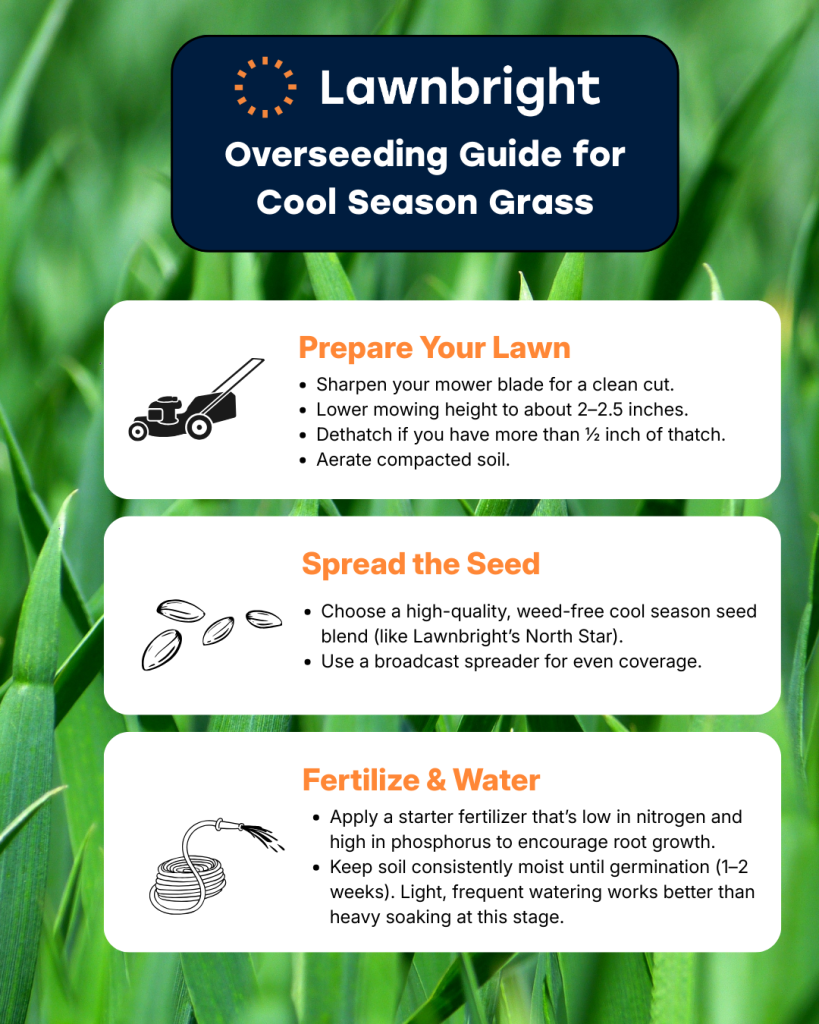
Choosing the right grass seed depends on your lawn type and climate. Use cool-season grasseslike ryegrass, fescue, or bluegrass for fall. These seeds grow well in cooler temperatures and create a thick lawn.
Testing your soil helps find nutrient needs. A simple soil test kit can check pH and nutrient levels. Adjust soil by adding lime or fertilizer based on test results. Prepare soil by raking to remove debris and loosen the surface for better seed contact.
Mowing Techniques Before Overseeding
Optimal mowing heighthelps prepare the lawn for overseeding. Set the mower to about 2 to 2.5 inches. This height keeps the grass healthy and ready to grow new seeds. Avoid cutting too short because it can stress the grass.
Frequency of mowingshould be reduced before overseeding. Mow only when the grass grows taller than usual. This gives the new seeds space to settle and grow roots. Over-mowing can disturb seeds and slow growth.
Collecting clippingsis important to clear the lawn. Remove grass clippings after mowing to avoid blocking seeds. Clippings can create a barrier that stops seeds from reaching the soil. Use a bagger or rake to gather them well.
Mowing Practices After Overseeding
Adjust the mower height to keep the new grass safe. Set the blade high to avoid cutting young seedlings. A high blade helps protect fragile roots and leaves. Lower the mower gradually as the grass grows stronger.
Wait for the grass to grow about 3 inches before mowing for the first time. This helps the seedlings develop a good root system. Use a sharp blade to make clean cuts and avoid pulling the grass out.
- Keep mower blades sharp to prevent damage.
- Do not mow when the grass is wet; it can harm seedlings.
- Mow gently to avoid uprooting new grass.
- Leave grass clippings on the lawn to add nutrients.
Credit: www.lawnstarter.com
Maintaining Lawn Health Throughout Fall
Keep the soil moist for seed growth. Water early in the morning. This helps avoid evaporation. Use a light spray to prevent seed wash away. Water twice daily if it’s dry. Adjust based on weather conditions. Check soil moisture with your finger.
Choose a balanced fertilizer for fall. Apply after mowing the lawn. Spread evenly across the grass. Follow the package instructions carefully. Avoid fertilizing before a big rain. This can wash nutrients away. Fertilizing boosts grass strength and color.
Remove weeds by hand for small areas. Use a gentle weed killer for larger lawns. Apply in early fall for best results. Follow the product instructions closely. Avoid using too much chemical. Healthy grass can fight weeds better. Regular mowing helps control weed growth.
Common Mistakes To Avoid
Mowing too shortcan stress new grass seedlings. Keep your mower blade higher to protect young roots and leaves. Short cuts expose soil to sun and dry air, which may stop grass growth. Let grass grow to about 3 inches before mowing again. This helps seeds stay moist and healthy.
Watering is tricky. Overwateringcan cause seed rot and fungus. Underwateringdries out seeds and stops them from growing. Use a light, even watering schedule to keep soil moist but not soaked. Check soil every day to adjust watering.
| Soil Condition | Impact | Tip |
|---|---|---|
| Compacted Soil | Blocks root growth and water absorption | Loosen soil before overseeding |
| Poor Drainage | Causes water to pool, harming seeds | Improve drainage with sand or organic matter |
| Low Nutrients | Weakens new grass growth | Use balanced fertilizer before overseeding |

Credit: www.reddit.com

Credit: www.youtube.com
Frequently Asked Questions
How Often Should I Mow After Fall Overseeding?
Mow your lawn once the grass reaches about 3 inches. Keep mowing weekly at a height of 2 to 2. 5 inches. Avoid cutting more than one-third of the grass blade each time to protect new seedlings.
What Mowing Height Is Best During Fall Overseeding?
Set your mower blade to 2 to 2. 5 inches. This height encourages strong root growth and protects young grass. Avoid cutting too short, as it stresses new seedlings and slows establishment.
When Is The Best Time To Mow After Overseeding?
Mow when the grass blades reach 3 inches tall. Early morning or late afternoon mowing reduces stress on grass. Avoid mowing wet grass to prevent soil compaction and damage to seedlings.
Should I Change Mowing Frequency During Fall Overseeding?
Yes, mow less frequently to allow seedlings to establish. Gradually increase mowing as the grass thickens. Avoid frequent mowing that can uproot young grass and hinder growth.
Conclusion
Mowing your lawn carefully helps new grass grow strong. Keep mower blades sharp for clean cuts. Avoid cutting too short to protect seeds and roots. Regular mowing keeps weeds away and sunlight reaching grass. Watch the weather and mow when dry for best results.
Patience matters; grass needs time to fill in. Follow these tips for a healthy, green lawn after overseeding. Your fall lawn will thank you with thick, vibrant growth. Simple steps make a big difference. Give your lawn the care it deserves.





