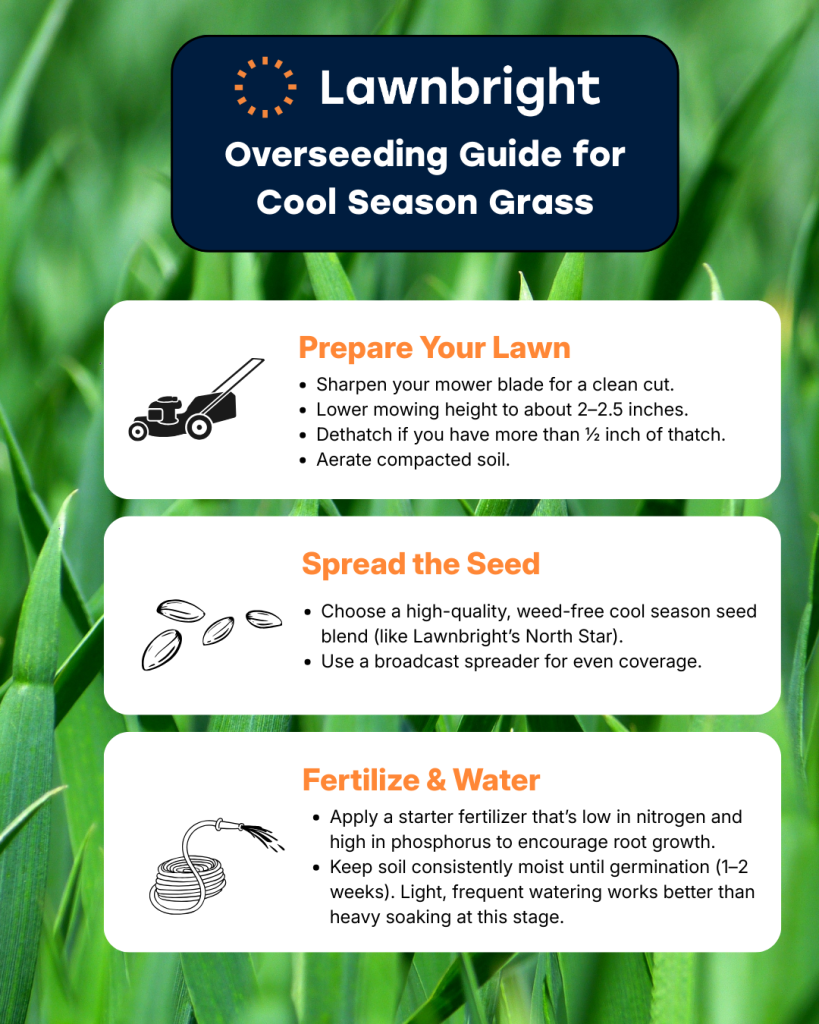
Getting your lawn ready for overseeding in the fall is a smart way to keep your grass thick and healthy. But before you spread those seeds, there’s one important step you can’t skip: mowing.
How you mow your grass right before overseeding can make a big difference in how well your new grass grows. If you want to give your lawn the best chance to thrive this season, understanding the right mowing techniques is key.
Keep reading to discover simple, effective tips that will help you prepare your lawn perfectly for overseeding and ensure a lush, green yard next spring.
Preparing Your Lawn
Set the mower height to about 2 to 2.5 inches. This height helps the grass stay strong and healthy. Avoid cutting too short; it can stress the grass and slow seed growth.
Clear leaves, sticks, and old grass clippings from your lawn. This step lets sunlight and water reach the soil easily. It also helps new seeds make good contact with the ground.
Check if your lawn feels slightly damp but not wet. Moist soil helps seeds sprout better. Too much water can cause seeds to rot, while dry soil stops growth.
Mowing Techniques For Fall
Cut the grass gradually shorterover several mowings. This helps the lawn adjust without stress. Avoid cutting more than one-third of the grass height at once.
Use a sharp mower blade. Dull blades tear grass, causing damage and disease. Sharp blades make a clean cut, helping grass heal faster.
- Do not mow too short before overseeding.
- Keep grass height between 2.5 to 3 inches for best results.
- Water the lawn lightly after mowing to reduce stress.
Reducing stress on the lawn is key. Avoid mowing during very hot or dry days. This keeps grass healthy for new seeds to grow strong.
Timing Your Mowing
Mowing grassat the right time helps new seeds grow well. Cut the grass 3 to 5 days before overseeding. This gives grass time to heal and seeds a better chance to settle. Avoid mowing too close to overseeding day.
Choose dry weather for mowing. Wet grass can clog the mower and cause uneven cuts. Dry grass also reduces the risk of spreading diseases.
| Best Time of Day | Reason |
|---|---|
| Early Morning | Grass is dry, cooler temperatures |
| Late Afternoon | Grass has dried from dew, less heat stress |

Credit: au.mowrator.com
Post-mowing Lawn Care
After mowing, rakeyour lawn to remove grass clippings and debris. This helps grass seeds reach the soil better. Thatchingremoves dead grass layers that block water and nutrients. Use a dethatcher or rake gently.
Soil aerationis important before overseeding. It makes small holes in the soil. This lets air, water, and nutrients reach the roots. Aeration helps seeds grow strong and healthy.
| Fertilizer Type | Purpose | Timing |
|---|---|---|
| Starter Fertilizer | Feeds new grass seeds | Just before overseeding |
| Slow-Release Fertilizer | Feeds lawn over time | After seeds start growing |
Fertilizing before overseeding gives seeds the nutrients they need. It helps grass grow faster and stronger.
Common Mistakes To Avoid
Mowing the grass too short can harm your lawn. It stresses the grass and makes it weak. Short grass invites weeds and pests. Always leave some height for a healthy look. This helps the lawn to stay strong and green.
Dull blades tear the grass instead of cutting it. This can cause damage and brown tips. Sharpen blades regularly for a clean cut. Clean blades also prevent disease spread. Proper maintenance keeps the lawn looking neat and tidy.
A healthy lawn needs more than just mowing. Check for pests and weeds often. Water the lawn deeply, but not too often. Use the right fertilizer for your grass type. Healthy lawns grow better and look great.

Credit: au.mowrator.com

Credit: au.mowrator.com
Frequently Asked Questions
How Short Should Grass Be Before Overseeding?
Mow grass to about 1 to 1. 5 inches before overseeding. This height allows seeds to reach soil easily. It also reduces competition from existing grass. Short grass improves seed-to-soil contact, promoting better germination and growth in fall overseeding.
When Is The Best Time To Mow Before Overseeding?
Mow your lawn one to two days before overseeding in fall. This timing ensures grass is short and dry. It also prevents soil compaction and seed displacement. Proper timing enhances seed absorption and lawn recovery after overseeding.
Why Is Mowing Important Before Overseeding In Fall?
Mowing removes excess grass, allowing seeds to contact soil directly. It reduces thatch and improves seed germination rates. Proper mowing prepares the lawn for uniform seed distribution. This step boosts overseeding success and healthier grass growth.
How Often Should I Mow Before Overseeding?
Mow your lawn regularly in the weeks before overseeding. Keep grass at recommended height consistently to ensure even growth. Frequent mowing thins out tall grass, making seeding easier. This practice helps create ideal conditions for new seeds.
Conclusion
Mowing grass before overseeding helps seeds reach the soil better. Cut the grass short but not too low. This lets sunlight and water help new seeds grow. Clean up clippings to avoid blocking seeds. Taking these steps improves your lawn’s chances to fill in.
A healthy lawn starts with good preparation. Follow these tips for a green, thick yard next spring. Simple actions now lead to great results later. Give your lawn the care it needs to thrive.