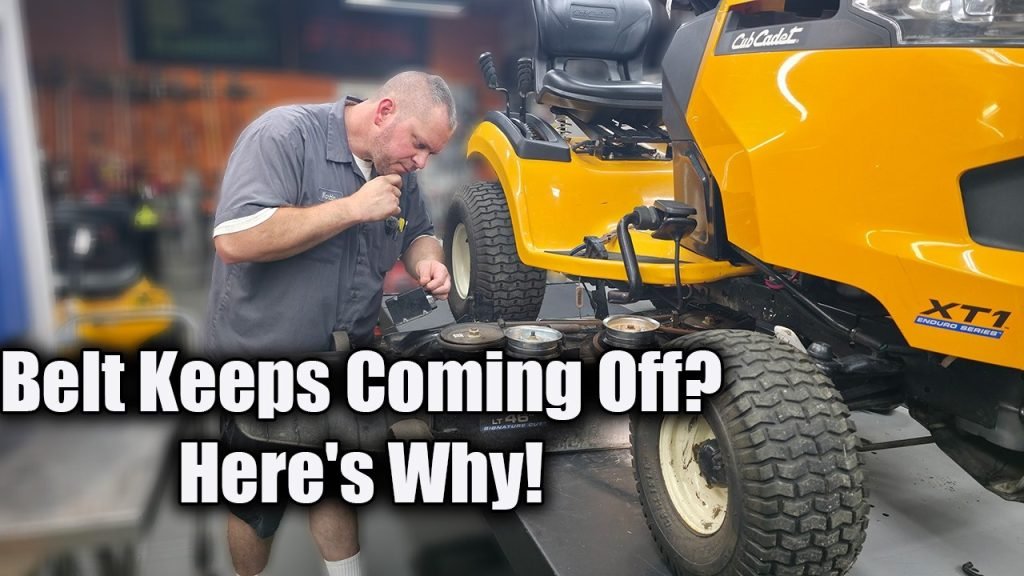
Is your mower belt constantly slipping off the pulley? It’s frustrating when your mower won’t work right, and it can stop your yard work in its tracks.
But don’t worry—you can fix this problem yourself. Understanding why the belt jumps off and learning simple steps to fix it will save you time and money. Keep reading to discover easy tips that will get your mower running smoothly again.
Common Causes Of Belt Slippage
Belt slippage is a common issue that causes your mower belt to jump off the pulley, disrupting your mowing session. Understanding what leads to this problem can help you fix it faster and prevent future troubles. Let’s look at some common causes that might be behind your slipping mower belt.
Worn Or Damaged Belt
Over time, mower belts wear out and lose their grip. Cracks, fraying, or glazing on the belt surface reduce friction, making it easier for the belt to slip off.
If your belt looks shiny or has visible damage, it’s a clear sign that replacement is needed. Have you checked your belt’s condition recently? It might be time to swap it out to restore proper function.
Misaligned Pulleys
Pulleys that are not properly aligned can cause the belt to track incorrectly and slip off. Even a small angle off can lead to repeated belt jumping.
Check if the pulleys line up straight along the belt’s path. If they don’t, adjusting or repositioning them can make a big difference in keeping the belt secure.
Loose Tensioner
The tensioner keeps the belt tight enough to grip the pulleys without slipping. If it’s loose or weak, the belt won’t stay in place during operation.
Try pressing on the belt to see if it feels slack. Tightening or replacing a worn tensioner can restore proper tension and stop the belt from slipping off.
Debris And Dirt Build-up
Dirt, grass clippings, and debris can accumulate around the pulleys and belt, reducing friction and causing slippage. This buildup can also affect pulley rotation and belt tracking.
Regular cleaning of these components is essential. Have you noticed any grass or debris caught around your pulleys? Clearing it out might be the quick fix your mower needs.

Credit: www.mytractorforum.com
Tools And Materials Needed
Fixing a mower belt that keeps jumping off the pulley requires the right tools and materials. Preparing these items before starting makes the job easier and faster. A few common tools and supplies help ensure the belt fits correctly and runs smoothly.
Having everything ready also prevents interruptions and frustration during repair. This section lists the essential tools and materials needed to get the mower belt back on track.
Basic Hand Tools
- Screwdrivers (flathead and Phillips) for removing covers and guards
- Socket wrench set to loosen and tighten bolts
- Pliers to grip and hold parts firmly
- Utility knife for trimming or cutting belts if needed
- Torque wrench to apply correct tension on bolts
Replacement Belt Options
- OEM belts designed specifically for your mower model
- Universal belts that fit multiple mower brands and sizes
- Heavy-duty belts for tougher or commercial mower use
- Check the belt size and type before purchasing
- Quality belts last longer and reduce slipping issues
Cleaning Supplies
- Rags or shop towels to wipe dirt and grease
- Brushes to clean pulleys and belt grooves
- Degreaser or mild soap solution for removing oil
- Compressed air to blow out dust and debris
- Gloves to protect your hands during cleaning
Step-by-step Belt Inspection
Inspecting the mower belt carefully can prevent it from jumping off the pulley. A thorough check ensures the belt and pulley work smoothly together. This inspection reveals worn parts or alignment problems. Follow these key checks to maintain your mower’s belt system.
Checking Belt Condition
Look closely at the belt for cracks, frays, or glazing. A worn belt slips easily and causes issues. Feel the belt for stiffness or brittleness. Replace the belt if it looks damaged or old. A healthy belt grips the pulley firmly.
Examining Pulley Alignment
Check if the pulleys line up straight. Misaligned pulleys push the belt off track. Use a straight edge or ruler to verify alignment. Adjust the pulleys until they are parallel. Proper alignment keeps the belt centered during operation.
Assessing Tensioner Functionality
Test the tensioner to ensure it holds the belt tight. A loose tensioner lets the belt slip or jump off. Press the tensioner and listen for smooth movement. Replace or repair the tensioner if it feels stuck or weak. Correct tension keeps the belt in place.

Credit: www.youtube.com
Fixing Belt Alignment Issues
Fixing belt alignment issues is crucial for a smooth mowing experience. Misaligned belts can cause unnecessary wear and tear. This guide helps in realigning pulleys and adjusting the belt position. Follow these simple steps to get your mower running efficiently.
Realigning Pulleys
Pulleys need proper alignment for the belt to stay in place. Check if the pulleys are in line with each other. Use a straight edge to assess their alignment. If they’re not aligned, loosen the bolts holding the pulley. Adjust it until the pulleys are in a straight line. Tighten the bolts to secure the pulley in place.
Adjusting Belt Position
The belt must be placed correctly on the pulleys. Remove the belt and inspect its condition. Check for any twists or kinks in the belt. Position the belt evenly on each pulley. Ensure it sits in the grooves without any slack. Turn the pulley by hand to see if the belt stays in place. If it jumps, adjust the tension or reposition the belt.
Adjusting Belt Tension
Adjusting the belt tension is crucial to stop your mower belt from jumping off the pulley. Too loose, and the belt slips; too tight, and it wears out quickly. Finding the right balance ensures smooth operation and extends the life of your mower parts.
Tensioner Adjustment Techniques
Start by locating the tensioner on your mower—it’s often a spring-loaded arm or an adjustable bolt. Loosen the mounting bolts slightly to allow movement. Then, either push the tensioner arm to increase tension or release it to reduce tension.
Check the belt’s tightness by pressing down on it midway between pulleys. It should have about half an inch of give. If it’s too loose or too tight, adjust the tensioner again and retest.
Have you noticed your mower belt slipping only when the grass is thick? This usually means your tension isn’t strong enough to handle the extra load. Adjusting the tensioner can solve this issue quickly without replacing parts.
Replacing Faulty Tensioners
Sometimes, no amount of adjustment fixes the problem because the tensioner itself is worn out or broken. Signs include squealing noises, constant belt slipping, or visible damage to the tensioner arm or spring.
Replacing a faulty tensioner often requires basic tools and a new tensioner specific to your mower model. Make sure to disconnect the spark plug before starting for safety.
After installation, adjust the new tensioner to the correct belt tension and test your mower. A fresh tensioner can restore proper belt alignment and prevent future slipping problems.
Cleaning And Maintenance Tips
Proper cleaning and maintenance are essential to keep your mower belt from jumping off the pulley. Dirt and grime build-up can cause the belt to slip. Regular care improves mower performance and extends belt life.
Removing Dirt And Debris
Start by turning off the mower and disconnecting the spark plug. Use a brush or compressed air to clear dirt around the pulley and belt area. Remove grass clippings and dust stuck in tight spots. Check the belt for cracks or wear and clean it gently with a dry cloth. Keeping these parts clean prevents slipping and ensures smooth rotation.
Lubricating Moving Parts
Lubricate the mower’s moving parts to reduce friction and wear. Apply a small amount of lubricant to the pulley bearings and spindle shafts. Avoid getting oil on the belt or pulley surfaces, as this can cause slipping. Use a light machine oil or a spray designed for lawn equipment. Regular lubrication helps the belt stay in place and improves overall mower efficiency.
When To Replace The Belt
Knowing the right time to replace your mower belt is key to keeping your lawnmower running smoothly. A worn or damaged belt can cause it to slip off the pulley, interrupting your work and risking further damage. Paying attention to certain signs and choosing the correct replacement can save you time and money.
Signs Of Wear And Tear
Look closely at your mower belt for cracks, fraying, or glazing. These signs show the belt is losing grip and strength. If the belt feels loose or slips off the pulley repeatedly, it’s a strong indicator it’s past its prime.
Listen for unusual squealing noises during operation. This often means the belt is slipping or not fitting right. You might also notice your mower struggling to cut evenly or slowing down, which can point to belt issues.
Choosing The Right Replacement
Not all belts are created equal. Check your mower’s manual for the exact belt size and type recommended. Using the wrong belt can lead to more slipping and wear, undoing your efforts to fix the problem.
When buying a new belt, consider the quality and brand reputation. A durable belt made from strong materials lasts longer and performs better. Don’t just grab the cheapest option; think about how often you use your mower and the conditions it faces.
Have you ever replaced a mower belt only to have it fail quickly? Choosing the right belt the first time helps avoid that frustration and keeps your mower working perfectly season after season.
Preventing Future Belt Issues
Preventing future belt issues is essential for keeping your mower running smoothly. Proper care helps avoid frequent belt problems like slipping or jumping off the pulley. Simple habits and regular checks extend the belt’s life and improve mower performance.
Regular Maintenance Schedule
Check the mower belt often for signs of wear or damage. Look for cracks, fraying, or stretching. Replace the belt at the first sign of trouble to avoid bigger issues. Clean the pulleys regularly to remove dirt and debris that cause belt slipping. Tighten the belt to the right tension; a loose belt can jump off the pulley. Follow the mower manufacturer’s maintenance guide to stay on track.
Proper Storage Practices
Store your mower in a dry, covered area to protect the belt from moisture. Avoid leaving the mower outside in harsh weather. Cold and damp conditions can weaken the belt material. Keep the mower off the ground using a stand or platform. This prevents moisture buildup and damage to the belt and pulleys. Before storage, clean the mower thoroughly to remove grass clippings and dirt. This reduces the risk of belt wear during idle times.

Credit: www.reddit.com
Frequently Asked Questions
Why Does My Mower Belt Keep Jumping Off The Pulley?
A mower belt jumps off due to misaligned pulleys, worn belts, or loose tension. Check pulley alignment and belt condition to fix this issue quickly.
How Can I Realign Mower Pulleys Correctly?
To realign pulleys, loosen mounting bolts, adjust pulley position, and retighten bolts securely. Proper alignment prevents belt slipping and extends mower life.
What Maintenance Prevents Mower Belt From Slipping?
Regularly clean pulleys, inspect belts for wear, and maintain correct tension. Proper upkeep ensures smooth operation and prevents belt jumping off the pulley.
When Should I Replace A Mower Belt?
Replace the mower belt if it shows cracks, fraying, or excessive wear. Timely replacement avoids breakdowns and keeps mowing efficient.
Conclusion
Fixing a mower belt jumping off the pulley takes patience and care. Check the belt for wear and proper tension. Clean the pulley to remove dirt or debris. Adjust the belt alignment to keep it steady. Regular maintenance helps avoid future problems.
Small fixes can save you time and money. Keep your mower running smoothly all season. Stay safe and enjoy a well-kept lawn.