If your mower isn’t running smoothly, the problem might be right under the hood—misaligned belt pulleys. When these pulleys aren’t lined up correctly, your mower can lose power, wear down faster, or even break down completely.
But don’t worry—you can fix this yourself. You’ll learn simple, step-by-step ways to check and align your mower belt pulleys. By the end, you’ll know exactly how to keep your mower working like new and save money on repairs. Ready to get started?
Let’s dive in.
Mower Belt Pulley Basics
Mower belt pulleys come in different typesthat fit various machines. Common types include flat pulleys, V-belt pulleys, and serpentine pulleys. Each type holds a specific belt shape. This helps the mower work smoothly and efficiently.
Flat pulleys use a simple, flat belt. V-belt pulleys have a V-shaped groove for better grip. Serpentine pulleys guide a long, multi-ribbed belt around many parts.
| Type | Shape | Use |
|---|---|---|
| Flat Pulley | Flat Belt | Simple mower models |
| V-Belt Pulley | V-shaped Belt | Most common for riding mowers |
| Serpentine Pulley | Multi-ribbed Belt | Complex machines with many parts |
Common alignment issues include belts slippingor wearing out fast. Misaligned pulleys cause noiseand reduce mower power. It may also lead to belt damageand machine breakdown.
- Belt rides off pulley edge.
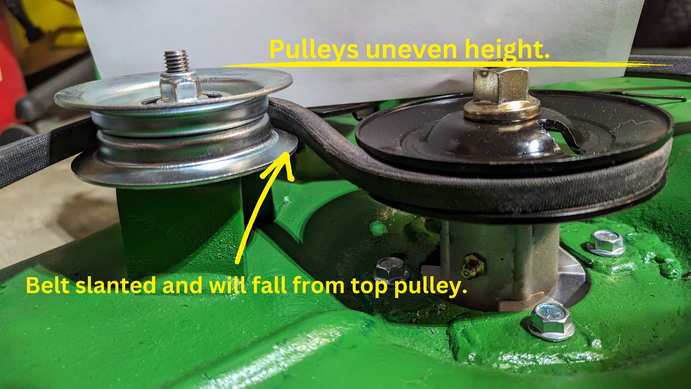
- Pulleys not in the same plane.
- Loose or too tight belts.
- Worn or damaged pulleys.
Tools Needed For Alignment
To align mower belt pulleys correctly, certain toolsare needed. A wrench sethelps loosen and tighten bolts. A screwdriveris useful for adjusting small screws. A straight edge or rulerchecks pulley alignment. A tension gaugemeasures belt tightness to avoid slipping or damage.
Using the right toolsmakes the job easier and more accurate. Keep all tools within reach before starting.
- Wrenchesfor bolts
- Screwdriversfor fine adjustments
- Straight edgeor ruler for alignment
- Tension gaugefor belt tension
Safety gear is important. Wear glovesto protect hands from sharp parts. Safety glasses guard eyes from debris. Avoid loose clothing to prevent accidents. Always work on a turned-offmower to stay safe.
Preparing The Mower
Ensure the mower is turned off and cooled down before starting. Remove debris and check the belt for wear. Align pulleys carefully to prevent belt slipping and ensure smooth operation.
Cleaning The Pulley Area
First, turn off the mower. Make sure it is cool. Remove any debris around the pulleys. Use a small brush for this task. It helps remove dust and dirt. Clean pulleys work better. They also last longer. Keep the work area tidy. This makes it safer. It also helps you work faster.
Checking Belt Condition
Inspect the belt carefully. Look for cracks or wear. A damaged belt won’t work well. It can break easily. Replace it if needed. A new belt is important. It helps the mower run smoothly. Check the belt tension too. It should not be too loose or tight. Proper tension helps the mower perform better.

Credit: www.reddit.com
Step-by-step Alignment Process
Loosen the belt by turning the tensioner bolt counterclockwise. This reduces tensionand allows the belt to move freely. Be careful not to remove the belt completely.
Adjust the pulleys so they line up in a straight path. Use a ruler or straight edge to check the alignment. The pulleys should be parallel and levelto each other. Move them slightly until the belt can run smoothly without slipping.
Tighten the belt by turning the tensioner bolt clockwise. Ensure the belt is firm but not too tight. Check the belt’s tension by pressing it with your finger; it should have a little give but not be loose.
Testing Pulley Alignment
Start by carefully examining the pulleys for any visible signs of wear or damage. Check that the belts sit evenly on the pulleys without slipping or twisting. Look closely to see if the pulleys line up straight. Misaligned pulleys cause belts to wear out quickly.
Turn the mower on and listen for unusual noises like squealing or grinding. Watch the belt as it moves. It should run smoothly without wobbling or jumping off the pulleys. Notice if the belt stays centered on the pulleys during operation.
- Check belt tension; it should be firm but not too tight.
- Ensure pulleys rotate freely without resistance.
- Look for belt fraying or cracks as a sign of poor alignment.
Small adjustments to the pulley position can fix alignment issues. Realign by loosening bolts, moving pulleys slightly, and retightening. Repeat the visual and running tests until the belt moves smoothly and quietly.

Credit: www.reddit.com
Troubleshooting Common Problems
Belt slippagehappens when the belt does not grip the pulleys well. This causes poor mower performance and can damage the belt. Check if the belt is loose, worn, or oily. Tighten the belt or replace it if needed.
Noisy operationoften signals pulley misalignment or worn belt parts. Listen for squeaking or grinding sounds. Clean the pulleys and belt. Lubricate moving parts and make sure the belt fits properly on the pulleys.
Uneven wearshows that the belt or pulleys are not aligned straight. This wears out the belt faster on one side. Adjust the pulleys to be parallel and in line with each other. Replace any damaged parts.
Maintenance Tips For Longevity
Regular checks keep the mower belt pulleys in perfect alignment. Misalignment causes uneven wearand belt slipping. Use a straight edge or string to check pulley alignment. Always inspect the belt for cracks, fraying, or stretching. Replace damaged belts promptly to avoid further damage.
Proper belt care extends the mower’s life. Keep belts clean and free from dirtand oil. Store belts in a cool, dryplace. Avoid bending or twisting belts sharply. Lubricate pulley bearings to reduce frictionand wear. Regular maintenance saves time and repair costs.

Credit: www.tractorforum.com
Frequently Asked Questions
How Do I Check Mower Belt Pulley Alignment?
To check pulley alignment, visually inspect if pulleys are parallel and belts sit evenly. Use a straight edge or laser tool for accuracy. Proper alignment prevents belt wear and ensures efficient mower operation.
What Tools Are Needed For Pulley Alignment?
Common tools include a straight edge, socket wrench, screwdriver, and laser alignment tool. These help adjust pulleys precisely for optimal belt tension and alignment, improving mower performance and belt longevity.
Why Is Pulley Alignment Important For Mower Belts?
Proper pulley alignment prevents belt slippage, uneven wear, and damage. It ensures smooth power transfer from the engine to blades, enhancing mower efficiency and extending the belt’s lifespan.
How Often Should Mower Pulley Alignment Be Checked?
Check pulley alignment at least once per mowing season or after replacing belts. Regular checks maintain performance, prevent unexpected breakdowns, and save repair costs over time.
Conclusion
Aligning mower belt pulleys keeps your mower running smoothly. Check the belts often for wear and tear. Tighten or adjust the pulleys as needed. This simple task saves time and money on repairs. A well-aligned mower cuts grass evenly every time.
Take a little time to keep your mower in good shape. Your lawn will look neat, and your mower will last longer. Small efforts bring big results. Keep your mower pulley belts aligned and enjoy a better mowing experience.





