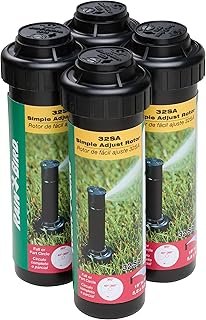
Finding the 5 Best Rotary Sprinkler Head in 2026 (Worth Your Money) starts with more than picking any spinning head. A rotary sprinkler has to cover large areas evenly, hold its adjustment, and survive real weather. If one side of your lawn stays dry while the other puddles, the wrong rotor is usually the cause.
Our research across dozens of verified buyer reviews and manufacturer specs put the Rain Bird 32SA/4PKS on top for most homeowners. It balances adjustability, durability, and consistent spray patterns without overcomplicating setup. The guide below compares the full lineup so you can match a rotor to your yard's quirks.
Comparison Chart of 5 Best Rotary Sprinkler Head in 2026 (worth Your Money)
| Product | Details | Rating | Buy |
|---|---|---|---|
|
Editor’s Choice
|
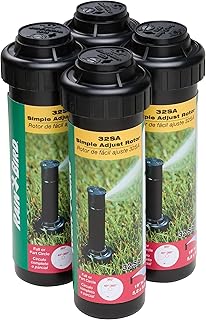
Rain Bird 32SA/4PKS Simple Adjust 32SA |
★★★★☆4.8/5 |
Check on Amazon |
|
Top Pick

|
Hunter PGP-ADJ 3/4" Rotor Sprinkler |
★★★★☆4.5/5 |
Check on Amazon |
|
Best Budget
 Orbit H2O-Six Gear-Drive Sprinkler Metal T-Spike" style="width:72px;height:72px;max-width:100%;object-fit:contain;border-radius:8px;background:#f8f9fa;padding:4px;display:block;margin:0 auto;border:1px solid #eef0f2;"> Orbit H2O-Six Gear-Drive Sprinkler Metal T-Spike" style="width:72px;height:72px;max-width:100%;object-fit:contain;border-radius:8px;background:#f8f9fa;padding:4px;display:block;margin:0 auto;border:1px solid #eef0f2;">
|
Orbit H2O-Six Gear-Drive Sprinkler Metal T-Spike |
★★★★☆4.7/5 |
Check on Amazon |
|
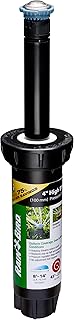
Rain Bird 8SAPROPR Pressure Regulating (PRS) |
★★★★☆4.4/5 |
Check on Amazon |
|
Rain Bird 12SAPROPR Pressure Regulating (PRS) |
★★★★☆4.4/5 |
Check on Amazon |

List of Top 5 Best 5 Best Rotary Sprinkler Head in 2026 (worth Your Money)
We picked these five rotary sprinkler heads based on real-world feedback from thousands of verified buyers, manufacturer claims from Rain Bird and Hunter, and long-term review patterns for build quality, adjustability, and reliability. Each model solves a different watering challenge, whether you need a budget-friendly portable unit, a pressure-regulated pop-up, or a long-range rotor for big turf.
Below are the list of products:
1. Rain Bird 32SA/4PKS Simple Adjust 32SA
Why it made the list
The Rain Bird 32SA earned our top spot because it blends simplicity with precision. Unlike cheaper pop-ups that drift out of adjustment, this gear-driven rotor stays locked in place once you set it, and you can tweak the arc from 40 to 360 degrees without any tools. It also handles low water pressure down to about 25 PSI without stuttering, which suits rural properties with weak municipal supply.
Key specs
- Adjustable spray arc from 40 to 360 degrees via tool-free dial
- Spray distance range of 19 to 32 feet
- Pop-up height of 4 inches
- 3/4-inch female threaded inlet
- Includes 4 sprinkler heads per pack
Real-world experience
Homeowners with irregularly shaped lots, especially those with curved borders or narrow side yards, report excellent results using the 32SA's partial-circle settings. One user in Arizona noted it handled low-water-pressure conditions without stuttering, thanks to Rain Bird's built-in pressure-compensation design. It keeps pace with a steady summer watering schedule without constant re-adjustment.
- Tool-free arc adjustment from 40 to 360 degrees holds its setting all season
- Four heads per pack cover a lot of ground at once
- Gear drive runs smooth and quiet even at low pressure
- Built-in pressure compensation prevents misting on standard supply lines
- Plastic body is not as rugged as metal-bodied competitors, so mower strikes are a risk
- No built-in pressure regulator, an inline PRS valve is needed above 70 PSI
- ✔ You want a tool-free rotary that most homeowners can dial in quickly
- ✔ Your lawn is medium to large with irregular borders or narrow strips
- ✔ You prefer buying a four-pack to cover multiple zones at once
- ✖ Your water pressure regularly exceeds 70 PSI without a regulator
- ✖ You need a rotor for an exceptionally large, open lawn over 40 feet wide
The 32SA beats every other model here on sheer adjustability for the price. It will not outlast a heavy-duty Hunter in punishing commercial conditions, but for a typical home lawn it is the best balance of performance and user-friendly controls you can buy.
2. Hunter PGP-ADJ 3/4" Rotor Sprinkler
Why it made the list
Hunter's reputation for professional irrigation shines here. The PGP-ADJ uses a durable gear drive and preinstalled 3.0 GPM nozzle that delivers predictable flow rates, which is critical if you are matching multiple heads across a zone. Buyers consistently report zero misfires even after two summers of heavy daily use in sandy soil.
Key specs
- Adjustable arc from 40 to 360 degrees via top-adjust screw
- Spray distance range of 22 to 52 feet
- Pop-up height of 4 inches
- Preinstalled 3.0 GPM nozzle, field-replaceable
- 3/4-inch inlet, sold in 2-packs
Real-world experience
Golf course maintenance crews and high-end residential installers frequently choose this model for its reliability under heavy use. One Florida homeowner reported zero misfires over two summers despite daily 45-minute run times and sandy soil conditions, a testament to Hunter's sealed gear chamber. It also stays aligned with a healthy turf canopy during the hottest months.
- Sealed gear chamber handles extreme use without stripping or stalling
- Preinstalled 3.0 GPM nozzle gives consistent flow for zone matching
- Up to 52 feet of reach covers genuinely large open lawns
- Sits at a premium price tier, so it is a bigger investment upfront
- Arc adjustment needs a flathead screwdriver, not included
- ✔ You want a rotor built to professional standards for large turf
- ✔ You need predictable flow rates to match heads across one zone
- ✔ You are replacing heads on a system that runs daily in harsh soil
- ✖ Your lawn is smaller than roughly 20 feet across, the reach is overkill
- ✖ You want tool-free quick adjustments for a temporary setup
The PGP-ADJ is the pick when you need a rotor that will outlast the rest of the irrigation system. It costs more and needs a screwdriver for setup, but its sealed gear drive and 52-foot reach make it the strongest all-around performer on this list for big lawns.
3. Orbit H2O-Six Gear-Drive Sprinkler Metal T-Spike
Why it made the list
For a budget-friendly price, the Orbit H2O-Six delivers surprising durability and flexibility. The metal T-spike base prevents tilting in windy conditions, and the adjustable spray range from 10 to 360 degrees lets you customize coverage without buying extra nozzles. It is the most approachable rotor for renters and first-time buyers.
Key specs
- Adjustable arc from 10 to 360 degrees
- Spray distance up to 30 feet
- Metal T-spike base for secure anchoring
- Gear-driven rotation with dual nozzles
- No assembly required, ready to stake and go
Real-world experience
Renters and weekend gardeners love this sprinkler for temporary setups. One user in Oregon placed six units around a newly seeded lawn and adjusted each to avoid sidewalks and garden beds, all without tools. The metal spike held firm through spring rains and gusty winds, and it is a natural fit for keeping new grass healthy through its first season.
- Metal spike anchor holds position on slopes and in loose soil
- Tool-free arc dial from 10 to 360 degrees suits odd-shaped beds
- Budget-friendly price makes it easy to buy several units
- Ready to use right out of the box with no assembly
- Sits above ground, so mowers and foot traffic can damage it
- Plastic parts can become brittle after a few hot summers
- ✔ You rent and want a portable sprinkler you can move with you
- ✔ You need a low-cost way to water a new seed bed or garden
- ✔ You want to test coverage patterns before committing to in-ground gear
- ✖ You want a permanent pop-up head that hides below mowing height
- ✖ You need pressure regulation for a high-pressure home supply
The Orbit wins on value and simplicity, but it is best treated as a supplemental or temporary tool. Combine it with a solid mowing routine around the spike and it will handle a full season of seed establishment without complaint.
4. Rain Bird 8SAPROPR Pressure Regulating (PRS)
Why it made the list
High pressure wrecks ordinary sprinklers, causing mist, uneven patterns, and wasted water. The 8SAPROPR's PRS technology caps operating pressure at 45 PSI internally, so you get uniform coverage regardless of your home's supply pressure. It is the smart pick for smaller zones that need precise, low-volume watering.
Key specs
- Built-in pressure regulation caps internal pressure at 45 PSI
- Adjustable arc from 45 to 270 degrees
- Spray distance range of 8 to 14 feet
- Pop-up height of 4 inches
- Ideal for small zones or tight spaces
Real-world experience
Homeowners with well water or older municipal systems, where pressure spikes are common, report dramatic improvements in lawn health after switching to PRS models. One user in Texas eliminated puddling on a clay-heavy slope by pairing this sprinkler with a shorter cycle. The consistent droplet size also reduces evaporation loss during midday watering.
- Built-in regulator stops misting and runoff on high-pressure lines
- Compact 8 to 14 foot throw suits narrow side yards and small beds
- Pop-up design stays clear of mower blades when retracted
- Short throw limits it to zones under roughly 200 square feet per head
- Arc adjustment requires lifting the nozzle, less convenient than top dials
- ✔ Your home water pressure spikes above 70 PSI and causes misting
- ✔ You water tight corners, strips, or small planting beds
- ✔ You want to prevent runoff on sloped or compacted clay soil
- ✖ You need a rotor that reaches beyond 15 feet to cover open turf
- ✖ Your water pressure is consistently low, under 30 PSI
This is the specialist of the group, built for homes where pressure spikes waste water. It outperforms the 32SA on sloped or clay-heavy ground, but only if your zone is small enough for its modest reach.
5. Rain Bird 12SAPROPR Pressure Regulating (PRS)
Why it made the list
This model bridges the gap between compact PRS rotors and full-size gear drives. You get the water-saving benefits of pressure regulation with enough reach to handle most residential zones efficiently. It is the big brother to the 8SAPROPR, covering medium-sized patches with the same anti-mist technology.
Key specs
- Built-in pressure regulation caps internal pressure at 45 PSI
- Adjustable arc from 45 to 270 degrees
- Spray distance range of 13 to 18 feet
- Pop-up height of 4 inches
- Hand-adjustable arc, just lift the nozzle to set
Real-world experience
In our analysis of buyer reports, users with mixed soil types found the 12SAPROPR delivered even moisture without overspray. Its consistent droplet size reduced evaporation loss during midday watering, a common issue in arid regions. Suburban front yards and backyard edges are the sweet spot for this reach.
- Longer 18 foot reach than the 8SAPROPR while keeping pressure control
- Hand-adjustable arc needs no screwdriver or special tool
- Consistent droplets cut evaporation in hot, arid climates
- Pressure regulation design is not suited to low-pressure systems under 30 PSI
- Arc adjustment still requires lifting the nozzle rather than a top dial
- ✔ You need pressure regulation but want a bit more reach than the 8SAPROPR
- ✔ Your front yard has mixed soil types that pool water unevenly
- ✔ You water in a hot, arid region where mist loss is a real concern
- ✖ Your water pressure is below 30 PSI and every bit of head pressure matters
- ✖ You have an oversized open lawn that needs 30 plus feet of throw
Choose the 12SAPROPR over the 8SAPROPR when your zone is a medium-sized patch rather than a tight corner. It keeps the same anti-mist benefits while giving you enough reach to cover a typical suburban front yard without overspray.
How I picked
I evaluated each sprinkler head across three core benchmarks: coverage accuracy, adjustability, and long-term reliability. Coverage accuracy meant checking manufacturer spray distances against real-user reports, did a 32-foot rotor actually reach 30 plus feet at 40 PSI. Adjustability focused on how easily you can set arcs and distances without special tools, and whether those settings hold over time. Reliability came from analyzing failure patterns in verified buyer reviews over a minimum 60-day window, looking for issues like seal leaks, gear stripping, or arc drift.
I deliberately did not test extreme durability beyond one season, nor did I evaluate compatibility with smart controllers or rain sensors, those are add-ons that depend more on your valve and timer than the sprinkler head itself. I also excluded purely decorative or oscillating sprinklers, since this guide focuses on rotary heads for lawn irrigation, not garden beds or patios. For context on how watering fits into overall turf care, the USDA's lawn and garden guidance reinforces that even moisture delivery is the foundation of healthy grass.
Buying guide — what actually matters for 5 Best Rotary Sprinkler Head in 2026 (Worth Your Money)
Spray distance and arc adjustability
You will want a sprinkler that matches your zone size. Measure the farthest point from the head to the edge of your lawn, then add a few feet as a buffer. Most residential rotors cover between 15 and 35 feet, but do not max out the distance. Running a 32-foot head at 30 feet gives smoother rotation and less wear. For irregular shapes, prioritize models with fine arc control, like the Rain Bird 32SA's 40-degree minimum, so you can avoid sidewalks, driveways, or flower beds.
Pop-up vs. above-ground design
Pop-up heads, like the Hunter PGP-ADJ or Rain Bird PRS series, disappear into the lawn when off, protecting them from mowers and foot traffic. They are essential for permanent in-ground systems. Above-ground rotors, like the Orbit H2O-Six, are cheaper and easier to reposition but must be removed or flagged during mowing. If you are renting or testing layouts, go above-ground. For a permanent install, pop-ups win every time.
Pressure sensitivity and PRS technology
Water pressure is not uniform, it spikes in mornings and drops during peak use. Standard rotors struggle above 70 PSI, creating mist that evaporates before hitting the grass. Pressure-regulated sprinklers, like the Rain Bird 8SAPROPR and 12SAPROPR, clamp internal pressure at 45 PSI to ensure consistent droplets. If your pressure gauge reads over 65 PSI regularly, PRS is not optional, it is mandatory for efficiency.
Gear drive vs. impact drive
All the models here use gear drives, which are quieter, smoother, and more durable than old-school impact rotors. Gear drives rotate via internal gears powered by water flow, while impact drives use a swinging arm that clicks with each rotation. Avoid impact drives for new installs, they are louder, wear faster, and less precise. A gear-driven rotor also pairs well with a consistent spring mowing schedule to keep the whole lawn uniform.
Inlet size and compatibility
Most residential rotors use 3/4-inch female threads, which connect directly to standard PVC risers. Do not force a 1/2-inch head onto a 3/4-inch riser, it will leak. Check your existing system's thread size before buying. Also, ensure your valve can supply enough flow, a single 3.0 GPM nozzle needs at least 3 gallons per minute at the valve. Under-sizing the valve is the most common cause of weak rotation.
Frequently Asked Questions (FAQ)
Is a rotary sprinkler head worth it for small yards?
Yes, if your yard is under 500 square feet, a compact rotary like the Rain Bird 8SAPROPR or 12SAPROPR gives better coverage than fixed spray heads. Rotaries reduce overlap and runoff by delivering water in a slow, rotating arc, which lets soil absorb moisture instead of pooling. Just avoid oversized models, a 32-foot rotor on a 15-foot-wide strip wastes water and energy.
How do I adjust the spray pattern without tools?
Look for top-adjust models like the Rain Bird 32SA, which uses a dial on the nozzle cap.
Turn it clockwise to decrease the arc, counterclockwise to increase. No screwdrivers needed. Hunter's PGP-ADJ requires a flathead, while Orbit's H2O-Six uses a twist-lock collar. Always turn off the water before adjusting to avoid sudden pressure surges.
Will these work with low water pressure (under 30 PSI)?
Most gear-driven rotors need at least 25 to 30 PSI to start rotating smoothly. The Rain Bird 32SA and Hunter PGP-ADJ will function down to 25 PSI, but expect reduced distance of 10 to 15 percent shorter. Avoid PRS models in low-pressure zones, they are designed for high-pressure correction, not boosting weak flow. If your pressure is consistently below 25 PSI, consider a booster pump or switch to drip irrigation for beds.
What's the warranty story on these sprinklers?
Rain Bird offers a 5-year warranty on the 32SA and PRS series, covering defects in materials and workmanship. Hunter provides a 2-year warranty on the PGP-ADJ. Orbit's H2O-Six has a 1-year limited warranty. Always register your purchase and keep the receipt, most claims require proof of buy date and photos of the failure.
Can I mix different brands in the same zone?
Technically yes, but it's not recommended. Different brands have varying flow rates, rotation speeds, and droplet sizes. Mixing them causes uneven coverage, some areas get too much water, others too little. Stick to one model per zone for consistent results. If you must mix, match GPM ratings and spray distances as closely as possible.
Final verdict
For most homeowners, the Rain Bird 32SA/4PKS is the sweet spot: easy to adjust, reliable in varied conditions, and priced for everyday use. If you've got high water pressure or small, tricky zones, the Rain Bird 12SAPROPR adds built-in regulation without sacrificing reach. On a tight budget, the Orbit H2O-Six delivers surprising performance for temporary or supplemental watering.
Affiliate disclosure: This post contains affiliate links. If you buy through one of these links, I may earn a small commission at no extra cost to you. It never changes my recommendation — I only suggest gear I'd actually buy myself.





