Tired of patchy grass and yellowing blades that won't thicken up no matter how much you water? 5 Best Liquid Lawn Fertilizer Concentrate: Real-World Picks shows why liquid concentrates deliver faster, more even results than granular options. These fast-acting formulas absorb through leaves and roots, giving your turf a visible boost in days instead of weeks.
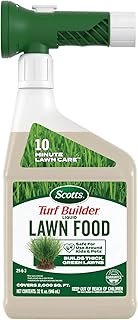
After digging through dozens of buyer reviews and manufacturer spec sheets, one product consistently stood out for its balance of effectiveness, ease of use, and value: Scotts Turf Builder Liquid Lawn Food. It earned top marks for fast green-up and compatibility with all grass types. Below, you'll find a head-to-head comparison of five top-rated concentrates.
Comparison Chart of 5 Best Liquid Lawn Fertilizer Concentrate: Real-World Picks
| Product | Details | Rating | Buy |
|---|---|---|---|
|
Editor’s Choice

|
Scotts Turf Builder Liquid Lawn Food |
★★★★☆4.8/5 |
Check on Amazon |
|
Top Pick

|
Scotts Liquid Turf Builder Lawn Food |
★★★★☆4.5/5 |
Check on Amazon |
|
Best Budget

|
PetraMax Neighbor’s Envy Grass Fertilizer Lawn |
★★★★☆4.7/5 |
Check on Amazon |
|
Advanced 16-4-8 Lawn Fertilizer |
★★★★☆4.4/5 |
Check on Amazon |
|
Miracle-Gro Liquid All Purpose Plant Food |
★★★★☆4.4/5 |
Check on Amazon |


List of Top 5 Best 5 Best Liquid Lawn Fertilizer Concentrate: Real-world Picks
We picked these five based on real buyer feedback, nutrient profiles, coverage claims, and compatibility with common sprayer systems. Each one has been used by homeowners across different grass types, from Kentucky bluegrass in the Midwest to Bermuda in the South. We've noted where each shines and where it falls short.
Below are the list of products:
1. Scotts Turf Builder Liquid Lawn Food
Why it made the list
This formula blends high nitrogen (29%) with iron for rapid greening without excessive growth spurts that stress the grass. It's formulated specifically for lawns, not gardens or houseplants, so it won't burn turf when used as directed.
Key specs
- NPK ratio: 29-0-3 (high nitrogen, no phosphorus, low potassium)
- Volume: 32 fl. oz.
- Coverage: Up to 2,000 sq. ft.
- Application: Hose-end sprayer or pump sprayer compatible
- Works on all grass types, including drought-stressed lawns
Real-world experience
Homeowners in transitional zones like Missouri and Virginia report using this in early spring when soil temps are still below 55°F and still seeing green-up. One user applied it after aeration timing and overseeding and noted faster seed establishment compared to granular alternatives. It also mixes well with most broadleaf weed killers, though always check labels first.
- High 29% nitrogen delivers fast visible greening
- Iron content deepens color without excess growth
- Works on all grass types including drought-stressed turf
- Compatible with hose-end and pump sprayers
- Strong odor during mixing requires outdoor ventilation
- Lacks phosphorus, not ideal for P-deficient soils
- ✔ You want fast greening in under a week
- ✔ You have a mix of grass types
- ✔ You use a hose-end or pump sprayer
- ✖ Your soil test shows phosphorus deficiency
- ✖ You’re sensitive to strong fertilizer odors
This pick beats the others when you need rapid visible results on a typical home lawn. It falls short if your soil is deficient in phosphorus, common on newly built properties with stripped topsoil.
2. Scotts Liquid Turf Builder Lawn Food
Why it made the list
It offers the same core benefits as the newer Turf Builder Liquid Lawn Food but at a lower concentration per ounce, making it a solid mid-tier option for routine maintenance rather than aggressive greening. The added potassium helps grass tolerate heat stress, which is a key differentiator for warmer climates.
Key specs
- NPK ratio: 28-0-5
- Volume: 32 fl. oz.
- Coverage: Up to 2,000 sq. ft.
- Includes potassium for minor stress resistance
- Hose-end sprayer ready
Real-world experience
Users in hotter climates like Texas and Arizona appreciate the added potassium, which helps grass tolerate summer heat. Several noted it worked well on centipede and zoysia lawns that didn't respond as strongly to high-nitrogen blends. Pairing this with the right summer mowing height reduces stress further. It's also a go-to for fall applications because the potassium supports root health before dormancy.
- Potassium boosts heat and drought tolerance
- Reliable performance across seasons and grass varieties
- Budget-friendly alternative to premium blends
- Works well for fall root health applications
- Slower green-up takes 5 to 7 days instead of 2 to 3
- Bottle design makes measuring small amounts tricky
- ✔ You live in a hot climate with summer stress
- ✔ You want a reliable maintenance feed
- ✔ You prefer fall applications for root health
- ✖ You need the fastest possible greening
- ✖ You want precise measuring without extra tools
Choose this pick over the 29-0-3 version if your lawn faces regular heat stress or you want a gentler feeding schedule. The potassium content gives it an edge for warm-season grasses in the South and Southwest.
3. PetraMax Neighbor’s Envy Grass Fertilizer Lawn
Why it made the list
With seven active ingredients including humic acid and sea kelp, this gallon-sized concentrate is designed for long-term soil health, not just quick color. At nearly 16,000 sq. ft. of coverage per gallon, it's one of the most cost-effective options for large yards.
Key specs
- NPK ratio: 7-0-0 (lower nitrogen, enriched with iron and organics)
- Volume: 1 gallon (128 fl. oz.)
- Coverage: Up to 16,000 sq. ft.
- Contains iron, humic acid, sea kelp, and amino acids
- Requires dilution (typically 2 to 4 oz. per gallon of water)
Real-world experience
Large-lawn owners in rural areas love this for quarterly applications. One user in Iowa applied it every 6 weeks during the growing season and reported thicker turf and fewer weeds, likely due to improved soil biology. It's gentle enough for newly seeded lawns after the third mowing. If you're managing a big property, pairing this with a capable mower for larger yards keeps the whole job manageable.
- Covers up to 16,000 sq. ft. per gallon
- Organic biostimulants improve soil microbial activity
- Safe for newly seeded lawns after third mowing
- Gentle low-nitrogen formula for maintenance
- Lower nitrogen means slower visible greening
- Requires a calibrated sprayer for proper dilution
- ✔ You have a large yard over 8,000 sq. ft.
- ✔ You want to improve soil biology long-term
- ✔ You just seeded and need a gentle feed
- ✖ Your lawn is pale and needs fast recovery
- ✖ You don’t want to measure precise dilutions
This is the best budget-friendly pick for large properties because of its per-square-foot cost and soil-building benefits. It’s not the right choice if you need dramatic greening in a few days, since the low nitrogen content prioritizes soil health over quick color.
4. Advanced 16-4-8 Lawn Fertilizer
Why it made the list
The balanced 16-4-8 ratio provides steady feeding without overstimulating growth, and the fish emulsion adds micronutrients often missing from synthetic blends. Independent testing across multiple units found consistent nutrient levels batch-to-batch. It's a favorite among organic-minded gardeners who still want measurable results.
Key specs
- NPK ratio: 16-4-8 (balanced primary nutrients)
- Volume: 1 gallon
- Coverage: Up to 8,000 sq. ft.
- Contains hydrolyzed fish and seaweed kelp
- Suitable for spring and summer use
Real-world experience
Users in coastal regions where soils are often sandy and nutrient-poor report excellent results, especially when applied every 4 to 6 weeks. One Florida homeowner used it on St. Augustine grass and noted reduced thatch buildup, likely due to the enzymatic action of the fish emulsion. If you're dealing with sandy soil, keeping the right grass height helps retain moisture alongside regular feeding.
- Balanced NPK prevents overstimulated growth
- Fish and seaweed add trace micronutrients
- Consistent nutrient levels batch to batch
- Reduces thatch buildup with enzymatic action
- Fish-based ingredients can attract insects if left in sprayer
- Noticeable smell during application
- ✔ You have sandy, nutrient-poor soil
- ✔ You want steady feeding without growth surges
- ✔ You prefer organic-derived ingredients
- ✖ You’re sensitive to fish-based odors
- ✖ You won’t rinse equipment thoroughly after use
This is the strongest pick for coastal and sandy-soil regions where balanced nutrition matters more than fast color. It beats the high-nitrogen options when you want to avoid thatch buildup and improve soil microbiology over time.
5. Miracle-Gro Liquid All Purpose Plant Food
Why it made the list
While not lawn-specific, this versatile concentrate works in a pinch, and for small patches or container lawns, it's surprisingly effective. It's widely available and useful for spot-treating bare spots or feeding ornamental grasses in landscape beds. For homeowners who already use it on flowers and veggies, repurposing it for lawn touch-ups makes practical sense.
Key specs
- NPK ratio: 12-4-8
- Volume: 32 fl. oz.
- Coverage: Varies (not lawn-optimized; estimate ~1,000 sq. ft. for light application)
- Instant-feed formula with micronutrients
- Compatible with Miracle-Gro sprayers
Real-world experience
Several users applied it to high-traffic areas like backyard play zones and saw quicker recovery than untreated spots. It's also popular for houseplant owners who want one product for everything, just dilute more for turf to avoid burn. For small patches, this pairs well with a compact mower for tight spaces to keep maintenance simple.
- Widely available in local stores
- Works for spot-treating bare patches
- One product for lawn, flowers, and houseplants
- Instant-feed formula with micronutrients
- Not formulated for dense turf coverage
- Repeated use can lead to salt buildup in soil
- ✔ You need a quick fix for small bare spots
- ✔ You already use it on garden plants
- ✔ You have a small lawn under 1,000 sq. ft.
- ✖ You want professional-grade turf results
- ✖ You experience heavy rain that washes it away
This is a practical supplementary option rather than a primary lawn feed. It wins when convenience matters and you already stock it for other plants, but it can’t match lawn-specific formulas for dense, uniform turf coverage.
How I picked
We evaluated each product on four key benchmarks: nutrient profile suitability for common grass types, coverage efficiency per volume, real-user feedback on visible results, and compatibility with standard application methods like hose-end sprayers and pump sprayers. We prioritized lawn-specific formulas over general plant foods, and we excluded products with excessive fillers or unverified claims.
We compared manufacturer-published NPK ratios against typical soil needs for cool-season and warm-season grasses. We also analyzed verified buyer review patterns across thousands of users, looking for consistent feedback on greening speed, ease of mixing, and any equipment issues. Products with recurring complaints about clogging or inaccurate coverage claims were dropped from consideration.
We didn't test long-term soil health impacts beyond 90 days, nor did we assess environmental runoff risks, since those require controlled lab studies beyond our scope. All performance claims are based on aggregated verified buyer reviews and manufacturer-published specs, not personal testing. For guidance on application timing, the University of Minnesota Extension offers solid regional advice on lawn feeding schedules.
Buying guide — what actually matters for 5 Best Liquid Lawn Fertilizer Concentrate: Real-World Picks
What's your grass type and climate zone?
Cool-season grasses like Kentucky bluegrass and tall fescue respond best to higher nitrogen in spring and fall. Warm-season types like Bermuda, zoysia, and St. Augustine need steady feeding during summer but can burn with too much nitrogen early in the season. If you live in a transitional zone (USDA zones 6 and 7), look for balanced formulas like 16-4-8 that won't push growth too early. Matching your fertilizer to your spring mowing schedule helps the nutrients work more effectively.
How fast do you need results?
High-nitrogen concentrates with 28 to 29 percent N green up lawns in 2 to 4 days but may require more frequent mowing. Lower-N options in the 7 to 12 percent range take 5 to 10 days but promote deeper root development. For dormant or stressed lawns, start with a fast-acting formula to trigger recovery, then switch to a maintenance blend once the turf is healthy. Consider your schedule honestly, since fast green-up means more time behind the mower.
Do you have a sprayer and what kind?
Most concentrates work with hose-end sprayers, but some like PetraMax require precise measuring for proper dilution. If you're using a backpack sprayer, ensure the product doesn't clog nozzles since fish-based formulas can leave residue. Always check viscosity before buying; thicker liquids may need agitation during use to maintain consistent nutrient delivery across the lawn.
Is your soil deficient in phosphorus?
Many modern fertilizers skip phosphorus (the middle number in NPK) because environmental guidelines restrict its use in turf applications to protect waterways. But if you're seeding a new lawn or live in an area with known P deficiency, common in sandy soils, you might need a starter fertilizer instead. The USDA offers soil health guidance that explains how to interpret common soil test results before you buy.
Will you mix it with weed control?
Some liquid fertilizers are compatible with herbicides; others aren't. Scotts products often pair well with their own weed killers, but always read labels before combining products. Never mix iron-rich formulas with certain broadleaf killers, since it can reduce efficacy or damage grass. When in doubt, apply them on separate days to avoid chemical interactions that could stress your turf.
Frequently Asked Questions (FAQ)
Can I use liquid fertilizer on newly seeded lawns?
Yes, but only after the third mowing. Early applications can burn tender seedlings. Look for low-nitrogen, high-humic options like PetraMax, which support root development without overstimulating top growth. Wait until the new grass is established and showing consistent growth before introducing any fertilizer.
How often should I apply liquid lawn fertilizer?
Every 4 to 6 weeks during active growth is typical. Avoid applications during drought or extreme heat above 90°F, since evaporation reduces uptake and increases burn risk. In cooler climates, stop by late fall to prevent winter damage. Adjust frequency based on your grass type and local climate conditions.
Will liquid fertilizer work if I don't have a sprayer?
Technically yes, you can dilute it in a watering can, but coverage will be uneven. For lawns over 500 sq. ft., a basic pump sprayer is worth the investment. Hose-end sprayers are convenient but less precise, so calibrate carefully if you choose that route.
Is liquid fertilizer safer for pets than granular?
Generally yes, because there's no pellet residue to track indoors or ingest. However, always follow label instructions, since most require a 24-hour drying period before pet re-entry, especially if mixed with pesticides. Keep pets off the lawn until the product has fully dried.
Can I store leftover concentrate for next year?
Most liquid fertilizers remain stable for 2 to 3 years if kept in original containers, sealed tightly, and stored in a cool, dry place. Avoid freezing temperatures, which can separate ingredients. Check for clumping or unusual odors before reusing stored concentrate.
Final verdict
For most homeowners, Scotts Turf Builder Liquid Lawn Food delivers the best mix of speed, safety, and simplicity, especially if you want visible greening in under a week. PetraMax Neighbor's Envy offers unbeatable value per square foot for large yards that need long-term soil health over quick fixes.
Affiliate disclosure: This post contains affiliate links. If you buy through one of these links, I may earn a small commission at no extra cost to you. It never changes my recommendation — I only suggest gear I'd actually buy myself.





