Short answer: yes, but with one important condition. Ryobi lawn mowers are genuinely good for many homeowners, especially those with small to medium yards who already use, or are willing to join, the 40V and 80V battery ecosystem. The decision gets more complicated if you have a huge property, heavy clay soil, or dense overgrown grass.
This guide looks at the good, the bad, and what you should actually buy.
Ryobi Brand Reputation in 2026
Where Ryobi Comes From
Ryobi started in Japan in 1943 as a machine tool company and moved into power tools in the 1960s. Today, in North America, the brand is owned by Techtronic Industries (TTI), the same parent company behind Milwaukee, Hoover, and Dirt Devil. That corporate backing matters because it means Ryobi’s battery platform benefits from TTI’s research and manufacturing scale, which is why their tools and mowers are stocked in virtually every Home Depot in the country. For more on this, see our guide on best gas lawn mower for large yard.
What Customers Actually Say
User feedback on Ryobi mowers is consistently more positive than negative. Owners frequently praise the instant push-button start, the quiet operation, and the convenience of swapping the same batteries between their mower, string trimmer, and leaf blower.
The most common complaints revolve around two things: plastic deck concerns and battery runtime on larger lawns. Neither is a dealbreaker for the right buyer, but both are worth knowing before you commit. For more on this, see our guide on best mower small lawn safe operation.
Warranty and Customer Support
Ryobi backs most of its mowers with a 3-year warranty, with some 80V models extending to 5 years on the mower body and battery. The warranty covers defects in materials and workmanship.
One of the strongest arguments for Ryobi is the support network. With Home Depot as the primary retail partner, you can bring a mower back to a physical store for warranty service rather than shipping it off and waiting weeks. That’s a practical advantage most online-only brands can’t match. For more on this, see our guide on best lawn mower for medium yard.
Types of Ryobi Lawn Mowers
Ryobi currently offers three main mower categories. Each targets a different yard size and mowing style.
Cordless Electric Models (40V and 80V)
Cordless models make up the majority of Ryobi’s mower lineup and are the brand’s biggest strength.
The 40V series is ideal for yards up to roughly a quarter acre. These mowers run on 40-volt lithium-ion batteries, are lightweight, and often feature folding handles for compact storage. The 80V series is heavier, more powerful, and designed for larger properties, delivering longer runtime and better torque for thick grass.
Most current models use brushless motors, which are more efficient, quieter, and longer-lasting than brushed alternatives. Features like single-lever height adjustment, mulching, bagging, and side discharge options are common across the range. For more on this, see our guide on best electric lawn mower for small yard.
Corded Electric Models
Ryobi still makes a few corded electric mowers, and for small lawns under 2,000 square feet with easy outlet access, they remain the most cost-effective option. They never run out of battery, are lighter than battery models, and cost less upfront.
The tradeoff is obvious: you’re tethered to a power cord. You must manage the cable to avoid running over it, and you’ll need a heavy-gauge extension cord to avoid voltage drop. For more on this, see our guide on best way to advertise lawn care.
Gas-Powered Options
Ryobi’s gas mower lineup is smaller and less prominent than their electric range, but they still offer several models in the 140cc to 160cc range. These are conventional steel-deck mowers with reliable Briggs & Stratton or Ryobi-sourced engines.
For the most part, if you need a gas mower, you have better options from Honda, Toro, or Craftsman at similar prices. Ryobi’s gas mowers are competent but don’t stand out. The real reason to buy Ryobi is the battery ecosystem.
Performance and Features
Cutting Power and Efficiency
Ryobi’s brushless motor models deliver genuine cutting power for their class. On a typical residential lawn with regular mowing, they produce clean, even cuts without bogging down. The 80V models especially handle thick Bermuda or tall fescue well, provided you mow on a schedule rather than letting the grass get away from you.
What you shouldn't expect is gas-equivalent torque for commercial-grade work or mowing through dense, wet, overdue grass. If your goal is reliable residential performance, these mowers are up to it. If you need to chew through jungle-like growth, you need to mow more often or buy something heavier.
Battery Life and Charging
Battery life is the single biggest factor when buying a cordless mower. Ryobi’s 40V mowers typically run 30 to 45 minutes on a 4Ah battery, which is generally enough for a quarter-acre lawn. The 80V mowers with 6Ah batteries can push past 60 minutes, with both ranges varying based on grass thickness, terrain, and whether you’re using self-propulsion.
Charging times range from roughly 45 minutes to 2 hours depending on the battery size and charger. The practical advice here is simple: buy a second battery. It doubles your runtime and eliminates the mid-mow charging anxiety completely.
Maneuverability and Design
Most Ryobi mowers use lightweight polymer decks, which keeps weight down and makes maneuvering significantly easier than steel-deck alternatives. The 40V push models weigh around 55–60 pounds, and the self-propelled versions add only slightly more.
The folding handle designs on many models are genuinely useful, allowing the mower to stand upright and take up minimal garage space. Adjustable cutting heights, typically from 1.5 to 4 inches, cover the range most lawns need.

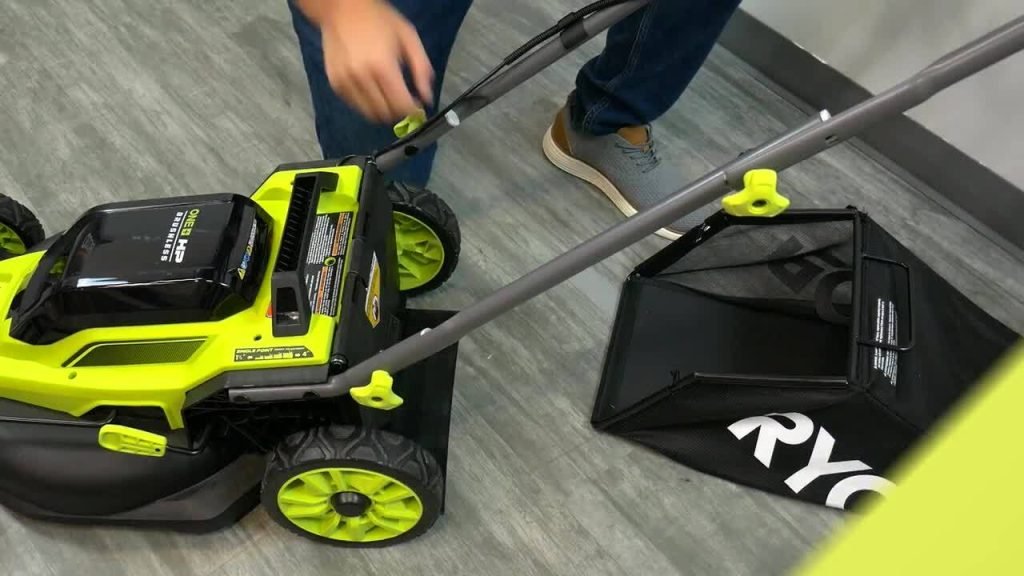
The Ryobi 40V mower in action, showing its compact profile and clean cut on a typical home lawn.
Credit: www.cnet.com
Comparison With Competitors
Price vs. Value
Ryobi positions itself as a value brand, and its pricing reflects that. A 40V brushless mower with battery and charger typically costs $350–$450. Comparable cordless mowers from EGO start around $450–$550, while Toro and Milwaukee often run $500–$700. For buying power that breaks your back, you have the exact numbers.
What you sacrifice for that savings is premium fit and finish. Ryobi uses more plastic and offers simpler controls than EGO or Toro. But for most homeowners, the lower price is worth the sacrifices.
Durability and Build Quality
The polymer decks are a double-edged sword. They keep weight down and never rust, which is a genuine advantage over steel. However, they’re more vulnerable to cracking if you hit rocks, stumps, or curbs hard enough.
Metal-deck competitors like Toro’s Recycler series or Honda’s HRX line handle rough treatment better. If your yard is full of embedded rocks and tree roots, you’ll need to be more careful with a Ryobi than you would with a steel-deck mower.
User Experience
Ryobi’s user experience is one of its biggest selling points. Everything is designed for simplicity: one-touch starting, obvious height adjustment levers, and a quick-release battery system that works across the entire Ryobi line.
If you already own Ryobi power tools, the battery compatibility alone is a genuinely strong reason to pick Ryobi over a competing brand. You’re not buying a new battery system; you’re extending the one you already own.
Buyer’s Guide Tips
Choosing the Right Model
Match the mower to your yard, not your wants. Here’s a quick decision framework:
- Yard under 2,000 sq ft: A corded model or a 40V with a single battery will be plenty.
- Yard from 2,000 to 6,000 sq ft: A 40V brushless model with a second battery is the sweet spot.
- Yard over 6,000 sq ft: Look at the 80V line, ideally a self-propelled model with a 6Ah or larger battery.
- Hilly or sloped yard: Choose a self-propelled model. Push mowing hills with a cordless mower is far harder than it looks.
- Obstacle-heavy yard: The lighter the mower, the easier it is to navigate. Choose a 40V push model over a 60-pound self-propelled mower if maneuverability is your priority.
Maintenance and Upkeep
The maintenance advantage of electric mowers is substantial. No oil changes, no spark plugs, no air filter replacements, no fuel stabilizer. If you want the full picture on routine upkeep, it’s worth understanding the correct fluid level isn't a concern for these mowers, but you should still care for the battery.
What you do need to do:
- Remove the battery and flip the mower over occasionally to clear grass and debris from the deck. The best way to clean mower deck surfaces is a quick scrape and rinse.
- Sharpen or replace the blade at least once per season. Dull blades tear grass and leave brown tips.
- Charge batteries fully before long-term storage.
- Keep the mower under cover. The plastic deck handles sun exposure better than steel, but the wiring and battery contacts don’t love year-round rain.
- Follow a consistent mowing schedule rather than cutting when grass gets out of hand. Keeping the correct mowing schedule in spring avoids many of the issues that strain the motor.
Safety Considerations
Electric mowers reduce certain hazards but introduce others. The blade still spins at high speed, and the motor torque means the blade doesn't stop instantly when you release the handle.
- Wear sturdy closed-toe shoes and eye protection.
- Remove the battery before cleaning, lifting, or tilting the mower.
- Keep children and pets at least 30 feet away while mowing.
- Avoid mowing in wet conditions. The mower can clog more easily, and traction suffers on slopes.
- Store batteries inside for winter at partial charge.
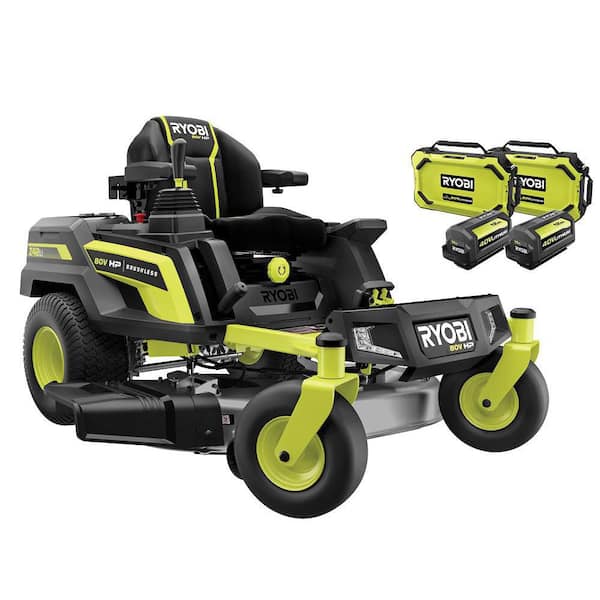
The Ryobi 80V model shown with its large battery pack, ready to be swapped or charged.
Credit: www.homedepot.com
Expert Opinions and Ratings
Industry Reviews
What reviewers consistently like about Ryobi mowers is the value-to-performance ratio. Publications like Consumer Reports and wirecutter-style reviews regularly place Ryobi in the "best value" or "best for small yards" category, praising the quiet operation and battery convenience.
The consistent critique is that Ryobi doesn't set the bar for power or build quality. It just gets closer to that bar for less money than the competition.
User Testimonials
The pattern of real user feedback is fairly stable across thousands of reviews:
What users love:
- Start reliability. No more pulling a cord.
- Battery sharing with other Ryobi tools.
- Quiet enough to mow early without waking the neighbors.
- Low maintenance compared to gas mowers.
What users complain about:
- Runtime is shorter than hoped on the smallest 40V batteries.
- Plastic deck concerns after hitting obstacles.
- Self-propelled drive can feel sluggish on steep hills.
Pros and Cons Summary
| Pros | Cons |
|---|---|
| Affordable, especially with battery included | Plastic deck less durable than steel |
| Push-button start and quiet operation | Battery life limited on larger lawns |
| Battery compatibility across Ryobi tool lineup | Gas mowers in the lineup are unremarkable |
| Low maintenance, no oil or spark plugs | Self-propelled models add weight and cost |
| Excellent dealer network via Home Depot | Not designed for commercial or heavy-duty use |
If you have a small to medium lawn and want a dependable, low-maintenance tool at a fair price, Ryobi is one of the strongest recommendations I can make.
Frequently Asked Questions
Are Ryobi lawn mowers reliable for home use?
Yes, for typical residential lawns under half an acre, Ryobi mowers are reliable and consistent. They start every time, cut well, and require minimal maintenance. The 3-year warranty adds further peace of mind. They aren't built for commercial use, but they hold up to weekly residential mowing.
How long do Ryobi lawn mower batteries last?
Runtime depends on the battery size and mower type. A 40V mower with a 4Ah battery typically runs 30–45 minutes; an 80V model with a 6Ah battery usually gets 45–75 minutes. A second battery is the best way to eliminate range anxiety entirely.
Are Ryobi lawn mowers easy to maneuver?
Yes. The polymer decks keep weight low, and the folding handle designs allow the mower to stand upright for compact storage in tight garages or sheds.
Do Ryobi lawn mowers require much maintenance?
Less than any gas mower. No oil changes, no spark plugs, no air filter replacements. The primary tasks are keeping the blade sharp and clearing grass from the underside of the deck.
The Final Verdict
Ryobi mowers are the right choice for homeowners who prioritize convenience, low cost, and low maintenance over raw power and premium build quality. They shine on small to medium, relatively flat lawns, and they become especially attractive if you already own Ryobi batteries or other tools from the same ecosystem.
They are not the right choice for professional landscapers, owners of large uneven properties, or anyone who regularly tackles thick, neglected grass.
For the vast majority of everyday homeowners, a Ryobi mower isn’t just good enough; it’s genuinely good. Pair it with the right battery, maintain the blade, and it will give you years of reliable service without the frustration that comes with gas engines, cords, or constant servicing. If that sounds like your lawn care reality, Ryobi deserves your money.





