Have you ever wondered if your lawn mower needs oil? If you’re like many homeowners, you might not think much about the maintenance of your trusty grass-cutting machine.
However, understanding the importance of oil can be the difference between a mower that runs smoothly and one that leaves your grass in shambles. We’ll uncover why oil is essential for your lawn mower, how it affects performance, and what you need to do to keep your equipment in top shape.
By the end, you’ll know exactly how to care for your lawn mower, ensuring it lasts season after season. Stay with us, and discover the simple steps that can save you time, money, and frustration.
Why Oil Matters
Oil plays a vital role in keeping a lawn mower running smoothly. It helps protect the engine parts from damage and keeps everything working efficiently. Without proper oil, the mower can face serious problems quickly. Understanding why oil matters can help you maintain your mower better and avoid costly repairs.
Role Of Oil In Lawn Mowers
Oil lubricates the engine parts, reducing friction and wear. It creates a thin layer between moving parts to stop them from rubbing together. This prevents overheating and damage inside the engine. Oil also helps cool the engine by carrying heat away from key components. It keeps dirt and debris trapped, which protects the engine from harmful buildup. Clean oil ensures the mower runs quietly and lasts longer.
Effects Of Low Or No Oil
Running a lawn mower with low or no oil can cause severe damage. The engine parts may rub and grind, leading to overheating and failure. You might hear strange noises or notice the mower losing power. The engine can seize up, which means it stops working completely. Repairing or replacing an engine is costly and time-consuming. Regularly checking and changing oil avoids these problems and keeps the mower reliable.
Credit: www.slashgear.com
Types Of Oil For Lawn Mowers
Lawn mowers need oil to run smoothly and last longer. Using the right type of oil helps protect the engine from wear and tear. Different oils suit different mower engines. Choosing the correct oil keeps your mower in good shape and prevents damage.
Synthetic Vs Conventional Oil
Synthetic oil is made in labs for better engine protection. It flows well in cold and hot weather. Synthetic oil lasts longer and helps the engine run cleaner.
Conventional oil is made from natural crude oil. It is cheaper but breaks down faster. It works well in mild climates and for older engines.
Both oils protect engines, but synthetic offers stronger performance. Check your mower’s manual to see which oil is best.
Recommended Oil Grades
Oil grade shows how thick or thin the oil is. Lawn mowers often use 10W-30 oil. This grade works well in most temperatures.
Some mowers need 5W-30 or 30 weight oil. Use the grade listed in your mower’s manual. Using the wrong grade can harm the engine.
- 10W-30: Common for gas lawn mowers.
- 5W-30: Better for cold weather starts.
- 30 weight: Used in warmer climates.
Always choose oil designed for small engines. This keeps your mower running strong and reliable.
How To Check Oil Levels
Checking the oil level in your lawn mower is a simple but important task. It helps keep the engine running smoothly. Regular checks prevent damage and costly repairs. You can do this quickly with just a few tools. Here is how to check the oil level safely and correctly.
Tools Needed
- Clean cloth or paper towel
- Flat surface to park the mower
- Owner’s manual (optional for reference)
- Funnel (if oil needs adding)
Step-by-step Checking Process
- Park the mower on a flat surface. Turn off the engine.
- Wait a few minutes for the oil to settle in the engine.
- Locate the oil dipstick or oil fill cap. It usually has a yellow handle.
- Remove the dipstick and wipe it clean with a cloth.
- Insert the dipstick back fully into the oil tube.
- Pull the dipstick out again and check the oil level.
- The oil should be between the “Full” and “Add” marks on the dipstick.
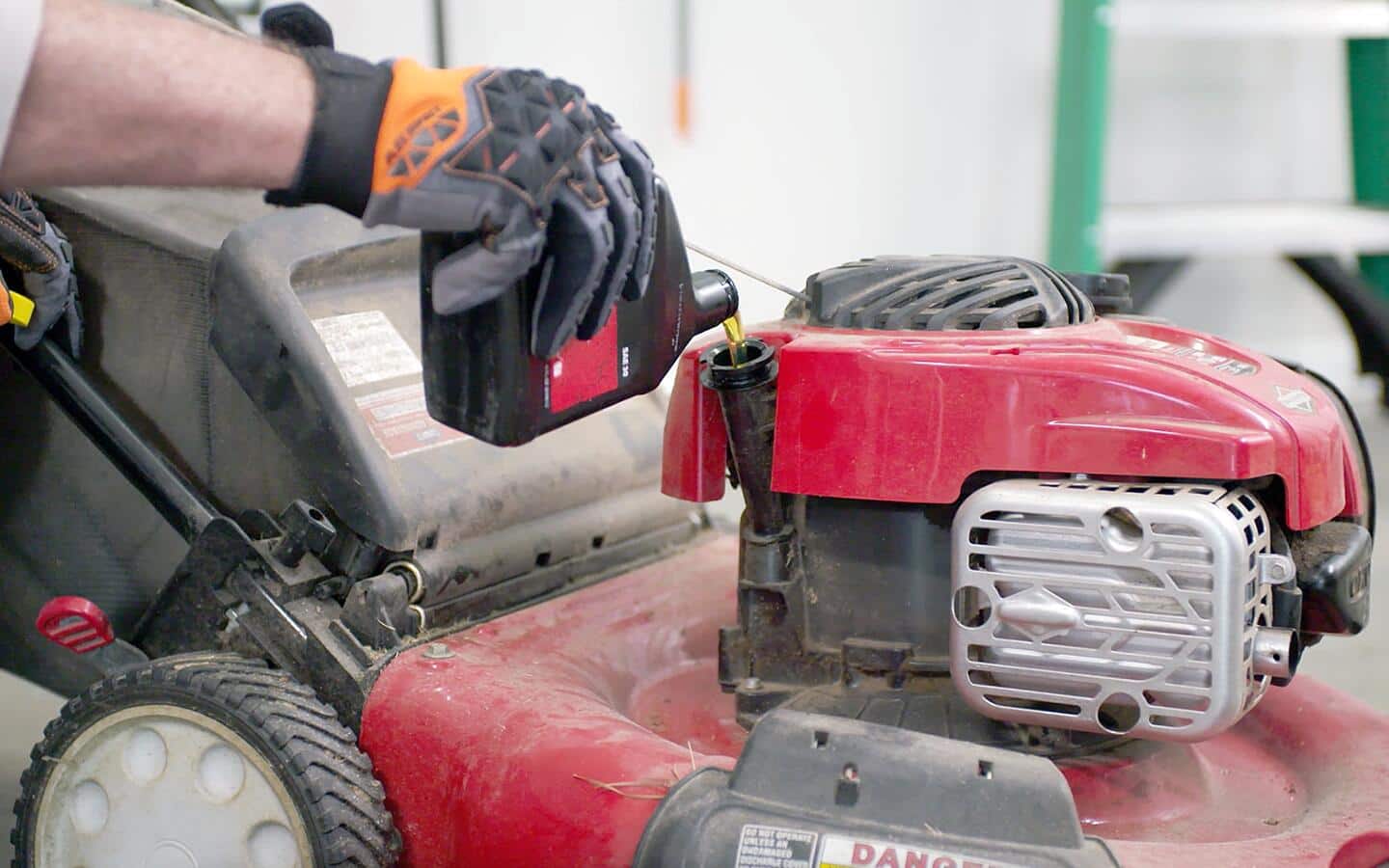
- If low, add the correct type of oil slowly using a funnel.
- Recheck the oil level after adding to avoid overfilling.
- Replace the dipstick and tighten the oil cap securely.
Credit: www.homedepot.com
When To Change Lawn Mower Oil
Knowing when to change your lawn mower oil is key to keeping your machine running smoothly. Old or dirty oil can harm your engine, but changing it too often wastes time and resources. Understanding the right signs and following your mower’s guidelines can help you find the perfect balance.
Signs Of Old Or Dirty Oil
Check your oil regularly by pulling out the dipstick or opening the oil fill cap. If the oil looks dark, thick, or gritty, it’s time for a change. Clean oil should be amber and clear; anything cloudier means contaminants have built up.
Have you noticed your mower running louder or struggling to start? These can also be signs that the oil isn’t doing its job anymore. Ignoring these signals might lead to costly repairs down the line.
Manufacturer Guidelines
Your lawn mower’s manual is your best source for oil change intervals. Most manufacturers suggest changing the oil after the first 5 hours of use for new mowers, then every 25 to 50 hours of operation afterwards.
Following these recommendations protects your warranty and ensures your mower performs well. If you don’t have the manual, many brands post their maintenance schedules online—checking there can save you a lot of guesswork.
Changing Oil In Your Lawn Mower
Changing the oil in your lawn mower is one of the most important maintenance tasks you can do to keep it running smoothly. Fresh oil helps reduce engine wear and ensures better performance. Skipping this step could lead to costly repairs or a mower that won’t start when you need it most.
Preparation And Safety Tips
Before you start, gather all the necessary tools: a wrench, oil drain pan, funnel, and fresh oil recommended by your mower’s manual. Make sure the engine is cool to avoid burns from hot oil or parts.
Work in a well-ventilated area and wear gloves to keep your hands clean and protected. Have some rags handy for any spills—you’ll thank yourself later. Remember, safety isn’t just about avoiding injury; it also keeps your workspace organized and efficient.
Draining And Refilling Oil
Begin by locating the oil drain plug or removing the oil fill cap, depending on your mower’s design. Position the drain pan underneath and carefully loosen the plug to let the old oil flow out completely.
Once drained, tighten the plug securely to prevent leaks. Use a funnel to pour in the new oil slowly, checking the level with the dipstick to avoid overfilling. How often do you check your oil level? Regular checks can alert you to leaks or engine problems early.
Dispose of the old oil properly by taking it to a recycling center or an auto shop that accepts used oil. This step protects the environment and follows local regulations. Changing oil might seem like a chore, but it’s a simple act that extends your mower’s life and saves you money in the long run.
Common Oil-related Problems
Oil plays a vital role in the smooth operation of lawn mowers. Ignoring proper oil care leads to several common problems. These issues can reduce the mower’s performance and lifespan. Understanding these problems helps maintain your mower better and avoid costly repairs.
Oil Leaks And Causes
Oil leaks occur when oil escapes from the mower’s engine. The common causes include:
- Worn or damaged seals and gaskets
- Loose oil drain plug or filter
- Cracks in the engine housing
- Overfilling the oil reservoir
Leaks not only waste oil but also cause dirt buildup. This can damage engine parts and reduce efficiency.
Engine Damage From Poor Oil Maintenance
Failing to change or check oil harms the mower’s engine. Old or dirty oil loses its ability to lubricate. This leads to:
- Increased friction and heat
- Worn engine parts
- Engine overheating
- Reduced engine power and efficiency
Regular oil changes keep the engine clean and running smoothly. Neglecting oil care shortens the mower’s life and raises repair costs.
Tips For Maintaining Oil Quality
Maintaining the quality of lawn mower oil is key to keeping your machine running smoothly. Clean, fresh oil protects the engine from wear and tear. It also helps the mower perform better and last longer. Follow simple tips to keep the oil in top shape and avoid engine problems.
Proper Storage Of Oil
Store lawn mower oil in a cool, dry place. Keep the container tightly sealed to prevent dirt and moisture from entering. Avoid exposing oil to extreme temperatures, which can break down its quality. Use original containers or clean, sealed bottles for storage. Always check the oil’s expiration date before use. Old or contaminated oil can harm the engine.
Regular Maintenance Schedule
Change the oil regularly based on the mower’s manual. Fresh oil keeps the engine parts lubricated and clean. Running the mower with dirty oil can cause damage. Check the oil level before each use and add oil if needed. Drain and replace old oil completely during scheduled maintenance. A regular schedule helps your mower work efficiently and last longer.

Credit: www.slashgear.com
Frequently Asked Questions
Do Lawn Mowers Need Oil To Run Properly?
Yes, lawn mowers need oil for engine lubrication. Oil reduces friction, prevents overheating, and ensures smooth operation. Regular oil changes keep the mower efficient and prolong its lifespan.
How Often Should You Change Lawn Mower Oil?
Change lawn mower oil after every 20-50 hours of use or once per mowing season. Frequent oil changes maintain engine health and improve performance.
What Type Of Oil Is Best For Lawn Mowers?
Use SAE 30 oil for warm weather and 10W-30 for cooler climates. Always check your mower’s manual for recommended oil type to ensure optimal engine function.
Can A Lawn Mower Run Without Oil?
Running a lawn mower without oil damages the engine quickly. Lack of oil causes overheating and severe engine wear, leading to costly repairs or replacement.
Conclusion
Lawn mowers do need oil to work well. Oil keeps the engine parts moving smoothly. Without oil, the mower can break quickly. Check the oil level often and change it as needed. Using the right oil helps the mower last longer.
Taking care of your mower saves money and time. Remember, a well-oiled mower cuts grass better and easier. Keep your mower healthy, and it will serve you well every season. Simple steps make a big difference in mower care.





