Have you ever been cruising down the road when suddenly that dreaded check engine light flickers on? Your mind races through potential problems, and you wonder if it might be something as small as your spark plugs.
Will bad spark plugs throw a code? It’s a question many drivers like you face, and the answer might surprise you. Understanding this simple component can save you time, money, and stress in the long run. So, if you’ve ever found yourself puzzled by this situation, keep reading to discover how spark plugs can affect your engine’s performance and what you can do about it.
By the end of this article, you’ll be equipped with the knowledge to tackle this issue head-on, ensuring your car runs smoothly and efficiently.

Credit: www.myjeepcompass.com
How Spark Plugs Affect Engine Performance
Your engine’s performance hinges on several key components, and spark plugs play a crucial role. These small parts ignite the air-fuel mixture inside the cylinders, powering your vehicle. If your spark plugs aren’t working well, you’ll notice a drop in efficiency, power, and overall smoothness.
Role Of Spark Plugs In Combustion
Spark plugs create the spark that ignites the fuel-air mixture in your engine’s combustion chamber. This ignition causes a controlled explosion, which pushes the piston down and generates power. Without a strong and consistent spark, your engine can misfire, stall, or run inefficiently.
Each spark plug must produce a spark at the right moment. Timing and strength matter because they affect how cleanly and completely the fuel burns. Poor combustion leads to wasted fuel and increased emissions.
Signs Of Worn Or Faulty Spark Plugs
How can you tell if your spark plugs need attention? Watch for these common signs:
- Engine Misfires:Noticeable jerking or hesitation during acceleration.
- Rough Idling:Your engine shakes or sounds uneven when stopped.
- Reduced Fuel Efficiency:You’re filling up more often without changing your driving habits.
- Difficulty Starting:The engine cranks longer or struggles to start.
Sometimes, a faulty spark plug won’t immediately throw a trouble code, which can make diagnosis tricky. Have you ever experienced a sluggish engine but no warning lights? That’s often a sign spark plugs are slipping under the radar. Paying attention to performance changes before a code appears can save you from bigger problems down the road.
Credit: www.rzrforums.net
Common Error Codes Linked To Spark Plugs
Common error codes linked to spark plugs reveal engine problems quickly. These codes appear when the engine control unit detects misfires or ignition issues. Understanding these codes helps identify spark plug faults before they cause serious damage.
Faulty spark plugs often trigger error codes related to engine misfires or poor combustion. Mechanics use these codes to pinpoint the exact cylinder with spark issues. Early detection prevents rough idling, poor fuel economy, and engine hesitation.
What Obd-ii Codes Indicate Spark Plug Issues
OBD-II codes provide clear clues about spark plug problems. Codes like P0300 to P0312 are common indicators. These codes mean the engine misfires in one or more cylinders.
- P0300:Random or multiple cylinder misfire detected.
- P0301 – P0312:Specific cylinder misfire detected (e.g., P0301 means cylinder 1 misfire).
- P0325:Knock sensor circuit malfunction, sometimes related to poor ignition.
- P0350 – P0362:Ignition coil primary/secondary circuit issues that affect spark plugs.
These codes often appear if spark plugs are worn, fouled, or damaged. Replacing or inspecting spark plugs is the first step after seeing these codes.
Interpreting Misfire Codes
Misfire codes point to cylinders where combustion failed. Spark plugs play a major role in causing these failures. A misfire happens when the spark plug does not ignite the fuel-air mix properly.
- Misfire can cause rough engine running and loss of power.
- Repeated misfires may damage the catalytic converter.
- Misfire codes help locate the troubled cylinder quickly.
Simple spark plug checks can often fix misfire issues. Look for signs like carbon buildup, cracks, or worn electrodes. Cleaning or replacing spark plugs usually clears the misfire codes.
Symptoms Of Bad Spark Plugs Without Codes
Bad spark plugs don’t always trigger a check engine light or throw an error code. You might not see a warning on your dashboard, but your car could still be struggling. Recognizing the symptoms early can save you from costly repairs and keep your vehicle running smoothly.
Engine Hesitation And Rough Idling
Have you ever felt your car hesitate just as you press the accelerator? This lag can be a sign of worn-out spark plugs not firing properly. Rough idling is another clue—your engine might feel shaky or uneven when stopped.
These issues happen because bad spark plugs cause incomplete combustion. Your engine struggles to ignite the fuel-air mixture efficiently, leading to jerks or vibrations. If you notice these symptoms, check your spark plugs before assuming it’s a bigger problem.
Decreased Fuel Efficiency
Are you filling up your gas tank more often than usual? Poor fuel economy is a common symptom of faulty spark plugs. When plugs misfire, your engine burns more fuel to compensate for the lack of power.
This not only hits your wallet but also increases emissions. Paying attention to how many miles you get per gallon can help spot spark plug issues early. Don’t ignore a sudden drop in fuel efficiency—it might be your car’s way of telling you something’s wrong.
Testing Spark Plugs For Faults
Testing spark plugs for faults helps find engine problems early. Faulty spark plugs can cause rough idling, poor fuel economy, and misfires. Checking spark plugs regularly keeps your car running smoothly.
Visual Inspection Tips
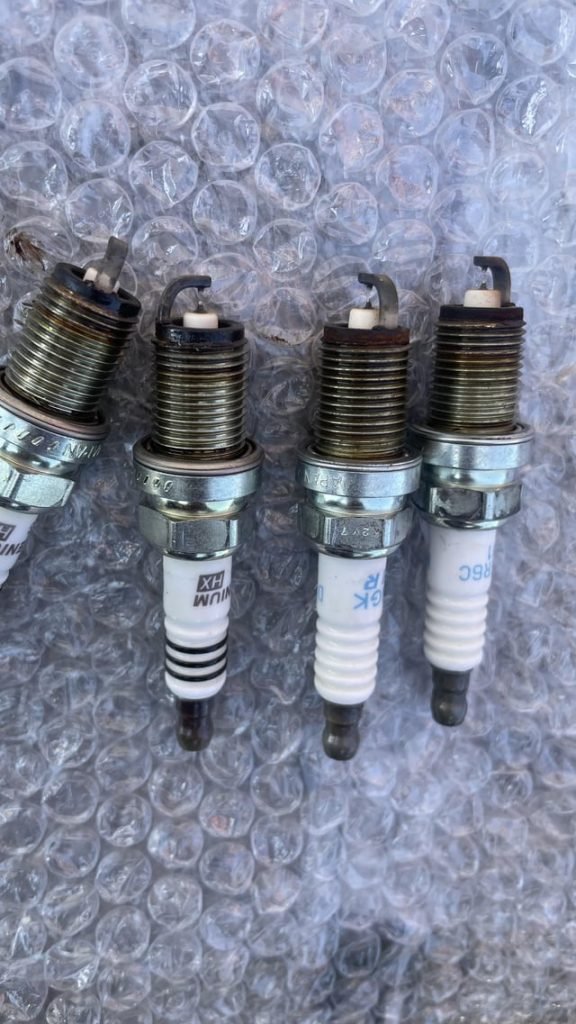
Start by removing the spark plug carefully. Look for cracks or chips on the ceramic insulator. Check the electrode for wear or heavy deposits. A black, oily deposit means engine oil leaks. A white, blistered tip indicates overheating. Brown or gray color usually shows normal wear. Use a magnifying glass for a closer look. Compare both spark plugs for any differences. Replace plugs that show serious damage or heavy buildup.
Using Diagnostic Tools
Use a spark plug tester to check spark strength. This tool simulates engine conditions safely. A strong blue spark means good performance. Weak or no spark signals a faulty plug. A multimeter can check plug resistance. Set the meter to ohms and test the plug’s electrode. High resistance means the plug might fail soon. Scan your car’s computer with an OBD-II reader. Error codes like P0300 or P0301 can point to spark plug issues. This tool helps find misfires caused by bad plugs.
Replacing And Maintaining Spark Plugs
Replacing and maintaining spark plugs is key to keeping your engine running smoothly and avoiding unexpected error codes. Spark plugs ignite the fuel-air mixture in your engine, so any issue with them can trigger performance problems and even throw diagnostic codes. Staying on top of their condition helps you catch problems early and keeps your vehicle in top shape.
Choosing The Right Spark Plugs
Not all spark plugs are created equal, and picking the right one depends on your vehicle’s make and model. Check your owner’s manual or consult with a trusted mechanic to find the recommended type and heat range. Using the wrong spark plug can cause misfires or damage to your engine, which might lead to a check engine light.
Consider the material too—copper plugs are cheaper but wear out faster, while iridium or platinum plugs last longer and perform better. I once switched to iridium plugs on my car, and the difference in fuel efficiency was noticeable. Have you ever wondered if a simple spark plug upgrade could save you money at the pump?
Best Practices For Installation
Proper installation is just as important as choosing the right spark plug. Always start by cleaning the area around the spark plug to prevent dirt from falling into the cylinder. Hand-thread the spark plug first to avoid cross-threading, then tighten it to the manufacturer’s specified torque using a torque wrench.
Over-tightening can strip the threads or damage the plug, while under-tightening might cause poor performance or even spark plug blowout. Don’t forget to check and adjust the spark plug gap if necessary, as the right gap ensures optimal spark and combustion. Have you ever experienced engine trouble only to find out the spark plugs weren’t installed correctly?
Credit: www.piloteers.org
Frequently Asked Questions
Can Bad Spark Plugs Trigger An Engine Code?
Yes, bad spark plugs can trigger engine codes. They cause misfires, which the car’s computer detects and logs as trouble codes.
What Engine Codes Indicate Faulty Spark Plugs?
Common codes include P0300 (random misfire) and P0301-P0308 (cylinder-specific misfires). These codes often suggest spark plug issues.
How Soon Do Spark Plugs Throw Error Codes?
Error codes can appear soon after spark plugs degrade. Misfires become noticeable, prompting the engine control unit to log codes quickly.
Can A Car Run With Bad Spark Plugs Without Codes?
Sometimes, a car runs poorly without codes initially. However, prolonged spark plug issues usually generate error codes over time.
Conclusion
Bad spark plugs can cause engine problems and trigger error codes. Your car’s computer detects misfires or poor performance. This often leads to a check engine light turning on. Regular spark plug checks help avoid these issues. Replacing worn plugs keeps your engine running smoothly.
Don’t ignore strange engine sounds or poor fuel economy. A quick spark plug test saves time and money. Stay alert to signs your car shows. Good spark plugs mean a happier, healthier engine.





