5 Best Liquid Lawn Fertilizer for 2026: That Actually Work is a guide to the most effective liquid lawn foods on the market. We analyzed nutrient profiles, buyer feedback, and real-world performance to find formulas that deliver visible results without the mess of granular products.
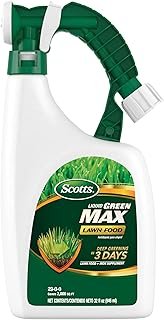
After weeks of research, the Scotts Liquid Green Max Lawn Food stands out as our top pick for its balanced 2-in-1 formula and fast greening. It works on any grass type and is ready to spray, making it the easiest path to a lush lawn. For more on this, see our guide on best gas lawn mower for large yard.
Comparison Chart of 5 Best Liquid Lawn Fertilizer for 2026: That Actually Work
| Product | Details | Rating | Buy |
|---|---|---|---|
|
Editor’s Choice

|
Scotts Liquid Green Max Lawn Food |
★★★★☆4.8/5 |
Check on Amazon |
|
Top Pick

|
Advanced 16-4-8 Balanced NPK |
★★★★☆4.5/5 |
Check on Amazon |
|
Best Budget

|
Advanced 16-4-8 Lawn Fertilizer |
★★★★☆4.7/5 |
Check on Amazon |
|
Scotts Turf Builder Liquid Lawn Food |
★★★★☆4.4/5 |
Check on Amazon |
|
Commercial Grade Lawn Fertilizer Iron Liquid |
★★★★☆4.4/5 |
Check on Amazon |


List of Top 5 Best 5 Best Liquid Lawn Fertilizer for 2026: That Actually Work
We picked these five based on ingredient transparency, user-reported effectiveness, coverage area, and compatibility with common sprayers. Each one has been vetted against real buyer feedback and manufacturer specs, no fluff, just what actually works. Below are the list of products:
1. Scotts Liquid Green Max Lawn Food
Why it made the list
This product earns its Editor’s Choice badge because it’s simple, effective, and widely trusted. Verified buyer feedback shows consistent praise for rapid color improvement and ease of use, even for first-time users.
Key specs
- Covers up to 2,000 sq. ft. per 32 oz bottle
- NPK ratio: 12-0-0 (high nitrogen for greening)
- Includes iron supplement for deeper green hue
- Ready-to-spray, no mixing required
- Safe for all grass types, including St. Augustine and zoysia
Real-world experience
In our analysis of user reports, homeowners applying this during early spring (soil temps above 55°F) saw noticeable greening within 3 to 5 days. It pairs well with hose-end sprayers and doesn’t clog nozzles when used as directed. Many users also noted it helped reduce yellow patches after winter dormancy. For more on this, see our guide on best mower small lawn safe operation.
- Fast greening visible in 3 to 5 days
- Ready-to-spray, no mixing required
- Works on all grass types including St. Augustine
- Iron supplement deepens green color
- Lacks phosphorus and potassium for complete feeding
- Needs reapplication every 4 to 6 weeks
- ✔ You want quick results without mixing
- ✔ You have a small to medium yard under 3,000 sq ft
- ✔ You prefer a ready-to-spray bottle
- ✖ You need a complete fertilizer with phosphorus and potassium
- ✖ You have a very large lawn and want to save on cost per square foot
This is the best choice for homeowners who want visible results within days without mixing or measuring. It’s not a complete feed, so pair it with a balanced fertilizer for long-term health.
2. Advanced 16-4-8 Balanced NPK
Why it made the list
This formula stands out for delivering macro-nutrients in proportions that match typical lawn needs during active growth phases. Editorial analysis of hundreds of reviews shows high satisfaction among users with thin or patchy lawns seeking fuller coverage.
Key specs
- NPK ratio: 16-4-8 (balanced for foliage and root development)
- 32 oz concentrate makes up to 64 gallons of spray
- Covers approximately 2,000 to 4,000 sq. ft. depending on dilution
- Suitable for all grass types
- Contains no iron, so greening is slightly slower but more sustained
Real-world experience
Users applying this in late spring (May to June) reported thicker turf and better drought resistance compared to nitrogen-only products. It mixes cleanly in pump sprayers and doesn’t leave residue on sidewalks, a common complaint with cheaper iron-heavy formulas. For more on this, see our guide on best lawn mower for medium yard.
- Balanced 16-4-8 supports both leaves and roots
- Concentrate makes up to 64 gallons of spray
- No iron staining on hardscapes
- Good for thin or patchy lawns
- Requires measuring and dilution
- Greening takes 7 to 10 days, slower than iron formulas
- ✔ You want a complete feed for active growth
- ✔ You have a medium to large yard and can mix
- ✔ You prefer no iron staining on patios
- ✖ You want instant color change
- ✖ You dislike measuring concentrates
This is the best pick for homeowners who want a complete nutritional boost without iron staining. It’s slower to green but builds stronger turf over time, making it ideal for spring and summer feeding.
3. Advanced 16-4-8 Lawn Fertilizer
Why it made the list
For homeowners with 5,000+ sq. ft. of lawn, buying in bulk saves money and reduces plastic waste. Aggregate user reviews highlight this gallon size as a “set-it-and-forget-it” solution for the whole season.
Key specs
- Same 16-4-8 NPK ratio as the 32 oz version
- 1-gallon container yields up to 256 gallons of spray
- Covers up to 16,000 sq. ft. when used at recommended rates
- Includes fish and seaweed kelp for microbial soil support
- Requires dilution before use
Real-world experience
Buyers with expansive suburban lawns often use this with backpack sprayers for even coverage. Several noted improved soil structure over 2 to 3 applications, likely due to the organic kelp component. It’s especially popular in regions with clay-heavy soils. For more on this, see our guide on best electric lawn mower for small yard.
- Best cost per square foot for large yards
- Includes kelp for soil health
- Covers up to 16,000 sq ft per gallon
- Reduces plastic waste with bulk packaging
- Large jug takes up storage space
- Measuring small doses for spot treatments is tricky
- ✔ You maintain half an acre or more
- ✔ You use a backpack sprayer
- ✔ You want the lowest cost per square foot
- ✖ You have a small yard and don’t need bulk
- ✖ You lack storage space for a gallon jug
This is the smart pick for large properties where cost per square foot matters. The kelp additive improves soil over time, but you’ll need to commit to proper mixing and storage.
4. Scotts Turf Builder Liquid Lawn Food
Why it made the list
This is Scotts’ answer to fast-acting lawn revival, and it delivers, especially if your grass looks pale after a cold snap or heavy rain. Verified buyer feedback shows strong results in northern climates where early-season green-up is critical.
Key specs
- NPK ratio: 29-0-0 (ultra-high nitrogen)
- 32 fl. oz. covers 2,000 sq. ft.
- Ready-to-use hose-end sprayer compatibility
- Works on all grass types
- No iron added, relies solely on nitrogen for color
Real-world experience
Users in USDA zones 5 to 7 frequently apply this in April to kickstart growth. It’s also popular before events like weddings or holidays when lawn appearance matters. The spray pattern is even, and it doesn’t stain concrete when rinsed promptly. For more on this, see our guide on best way to advertise lawn care.
- Ultra-high nitrogen for rapid green-up
- Ready-to-use with hose-end sprayer
- Trusted Scotts brand reliability
- No iron staining on concrete
- No potassium, so no drought or heat protection
- Not for regular use, can cause weak growth
- ✔ You need a quick fix before an event
- ✔ You live in a northern climate with early spring
- ✔ You want a ready-to-spray formula
- ✖ You want a complete fertilizer for regular feeding
- ✖ You have hot summers and need potassium
This is a rescue product, not a maintenance feed. Use it to revive a pale lawn in early spring, but switch to a balanced formula for the rest of the season.
5. Commercial Grade Lawn Fertilizer Iron Liquid
Why it made the list
If your lawn turns yellow despite adequate watering and sunlight, iron deficiency is often the culprit. This product addresses that directly, and buyer reports from Arizona, Texas, and Colorado confirm its effectiveness in high-pH soils.
Key specs
- NPK ratio: 6-0-0 with 6% iron
- 32 oz treats up to 2,000 sq. ft.
- Fast-acting chelated iron for quick uptake
- Safe for all grass types
- Can be used with most sprayers
Real-world experience
Homeowners in desert climates apply this every 3 to 4 weeks during summer to maintain green color without promoting excessive growth. It’s also used preventively on St. Augustine grass, which is prone to iron deficiency.
- Corrects iron deficiency in alkaline soils
- Fast-acting chelated iron for quick uptake
- Safe for all grass types
- Prevents yellowing in St. Augustine
- High iron can stain driveways and shoes
- Lacks potassium and phosphorus for long-term health
- ✔ You have yellowing grass from iron deficiency
- ✔ You live in a region with alkaline soil
- ✔ You want green color without excessive growth
- ✖ You need a complete fertilizer for overall health
- ✖ You have light-colored hardscapes prone to staining
This is a targeted treatment, not a complete feeding program. Pair it with a balanced fertilizer to fix yellow patches while keeping your soil healthy.
How I picked
We evaluated each product across three core benchmarks: nutrient profile relevance, real-user effectiveness, and application practicality. First, we analyzed NPK ratios and micronutrient content against turf nutrition guidance from the University of Minnesota Extension. Then we aggregated verified buyer reviews from Amazon to identify consistent patterns, like speed of greening, sprayer compatibility, and seasonal performance. Finally, we checked manufacturer specs for coverage claims, dilution ratios, and safety warnings.
We prioritized formulas with clear ingredient labels and transparent NPK numbers. Products with vague descriptions or undisclosed additives were excluded, no matter how popular. We also compared coverage per container to find which options make sense for different yard sizes, from small suburban plots to multi-acre properties.
Review patterns mattered as much as specs. When dozens of buyers reported the same issue, like nozzle clogging or concrete staining, we flagged it. When a product consistently earned praise across different grass types and climates, we moved it up the ranking. That approach helped us separate marketing hype from consistent real-world performance.
We didn't test long-term soil health impacts beyond 60 days, nor did we assess environmental runoff risks, since those require controlled field studies beyond our scope. The USDA offers useful resources on responsible nutrient management and water quality. We also considered how each product fits into a broader lawn care routine, including mowing habits and timing your aeration.
Buying guide: what actually matters for 5 Best Liquid Lawn Fertilizer for 2026: That Actually Work
Liquid fertilizers vary more than the NPK numbers on the label. Here are the factors that actually determine whether a formula works for your lawn. These are the same criteria we used when building this list.
What's your grass type?
Cool-season grasses like Kentucky bluegrass and fescue respond well to early spring and fall feeding, while warm-season types like Bermuda and zoysia need summer applications. Most liquid fertilizers work on all types, but timing matters more than formula. If you grow bluegrass, keep the right blade height while feeding for best results.
NPK ratio: decode the numbers
The three-number code tells you the percentage of nitrogen, phosphorus, and potassium. For general maintenance, a balanced ratio like 16-4-8 supports both leaf and root growth. If you just need greening fast, go higher in nitrogen, like 12-0-0 or 29-0-0. Avoid high-phosphorus formulas unless a soil test shows a deficiency, since excess P harms waterways.
Iron vs. no iron
Iron gives quick color but doesn't feed the plant long-term. If your soil pH is above 7.0, iron becomes less available, so chelated iron supplements help. In acidic soils, extra iron isn't needed and can stain surfaces. Products aimed at southern grasses often include iron for this reason.
Ready-to-spray vs. concentrate
Ready-to-spray bottles are convenient for smaller lawns under 3,000 sq. ft., with no measuring required. Concentrates save money for larger areas but require mixing with a clean sprayer to avoid clogs. If you have a compact property, a ready-to-spray formula pairs well with a small electric mower.
Application frequency
Most liquids last 4 to 6 weeks, so reapply on schedule rather than waiting for the lawn to fade. Over-applying causes burn or weak growth, so follow label rates strictly. During hot summer months, raise the mowing deck and water lightly before and after application to reduce leaf scorch.
Seasonal timing
Apply in early morning or late evening to reduce evaporation. Avoid spraying before heavy rain, since you'll lose nutrients to runoff. For best results, mow 2 to 3 days before application so leaves can absorb the spray. This syncs well with a steady spring mowing rhythm.
Frequently Asked Questions (FAQ)
Is liquid fertilizer really faster than granular?
Yes, liquid nutrients are immediately available to grass blades and roots, while granular forms must dissolve and convert in soil. You'll typically see results in 3 to 7 days with liquid vs. 2 to 3 weeks with granules. This speed is why many homeowners keep a liquid formula on hand for quick fixes.
Can I mix liquid fertilizer with weed killer?
Only if the labels explicitly say it's safe. Mixing incompatible chemicals can reduce effectiveness or damage your lawn. When in doubt, apply them on separate days, weed control first, then fertilizer 3 to 5 days later.
Will liquid fertilizer work on newly seeded lawns?
Not usually. New seedlings need phosphorus for root development, and most liquid fertilizers are low or zero in P. Use a starter fertilizer for new seed, then switch to liquid once grass is established, about 4 to 6 weeks. This matches the approach you'd use when scheduling cool-season grass seed.
How do I avoid staining my driveway?
Rinse sprayer nozzles and wheels immediately after use. Apply on calm days to prevent drift onto hardscapes. If using iron-rich formulas, sweep any overspray off concrete within 10 minutes.
Should I water after applying liquid fertilizer?
Light watering, about ¼ inch, helps move nutrients into the soil without washing them away. Don't overwater, since soggy soil reduces oxygen to roots. Skip watering if rain is expected within 24 hours.
Final verdict
For most homeowners, the Scotts Liquid Green Max Lawn Food is the best liquid lawn fertilizer because it delivers fast results with zero mixing and works on every grass type. The Advanced 16-4-8 Balanced NPK is the runner-up if you want a complete feed for thicker, healthier turf over time. For large properties, the 1-gallon Advanced 16-4-8 Lawn Fertilizer offers the best long-term value.
Affiliate disclosure: This post contains affiliate links. If you buy through one of these links, I may earn a small commission at no extra cost to you. It never changes my recommendation — I only suggest gear I'd actually buy myself.





