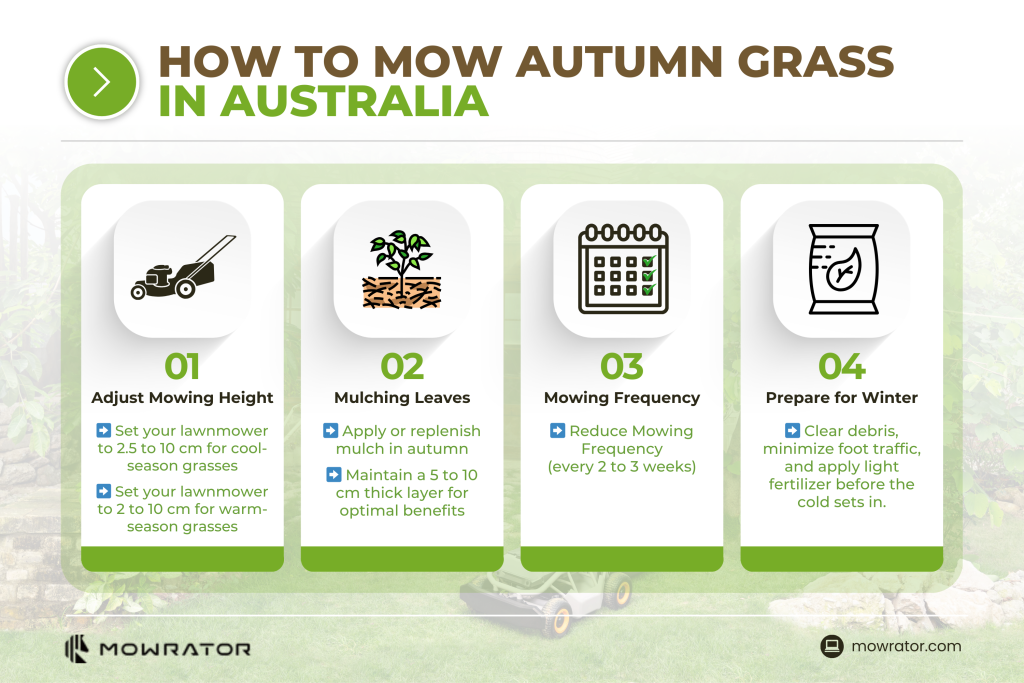
Your lawn needs special care as the seasons change, and fall is no exception. Mowing your lawn the right way this season can keep your grass healthy and ready to bounce back in spring.
If you want a lush, green yard next year, knowing the best tips for mowing your lawn in fall is key. Keep reading to discover simple, effective tricks that will make your lawn look great and save you time and effort.
Your perfect fall lawn starts here!

Credit: au.mowrator.com
Preparing Your Mower For Fall
Keeping your mower ready for fall helps it work better and last longer. Sharpening the bladeis key. A sharp blade cuts grass cleanly, which helps the lawn stay healthy. Check the blade for nicks or dull edges and sharpen or replace it as needed.
Check the fuel and oilbefore mowing. Old fuel can cause the mower to run poorly. Use fresh fuel and change the oil if it looks dark or thick. Proper oil keeps the engine running smoothly.
Cleaning the mower deckremoves grass clippings and dirt. This stops rust and helps the mower cut better. Use a brush or hose to clean under the deck after each use. Make sure the mower is off and cool before cleaning.

Credit: getlawnbright.com
Adjusting Mowing Height
Raising the cutting height helps keep grass stronger during fall. Taller grass blades catch more sunlight. This lets the grass make food better. It also protects roots from cold weather. Taller grass holds moisture longer, which helps in dry fall periods.
Short grass can get weak and brown faster. Keeping grass a bit taller means less stress on it. Grass with longer blades also stops weeds from growing easily. It creates shade that weeds do not like.
Here are key benefits of taller grass in fall:
- Better root growthfor winter survival.
- More moisture retentionhelps during dry days.
- Less weed growthdue to shade.
- Stronger grass bladesresist cold damage.
Mowing Frequency In Fall
During fall, grass grows slower than in summer. Mow the lawn about once every 10 to 14 days. This schedule helps keep the grass healthy without stressing it.
Keep the mower blades sharp for a clean cut. Cutting too often can damage the grass and soil. Avoid mowing when the grass is wet to prevent clumping and disease.
- Set mower height to around 2.5 to 3 inches.
- Remove no more than one-third of the grass blade length each time.
- Wait for dry days to mow.
Managing Fallen Leaves
Fallen leaves can be a great resource. Use a mulching mower to chop them up. This helps them break down faster. Leaves turn into natural fertilizer for your lawn. They enrich the soil with nutrients. Mulching leaves saves time and effort. No need to bag or remove them. It’s an eco-friendly choice.
Use a wide rake for faster work. Gather leaves into piles. It makes them easier to manage. Wear gloves to protect your hands. Rake in one direction to avoid missing spots. Work in sections to make the job easier. Use a tarp to move large piles. This saves time and energy.
Dealing With Wet Grass
Wet grass can clog your mower and cause uneven cuts. Wait until the lawn dries or use a mower designed for damp conditions. Mowing slowly helps prevent damage and keeps your fall lawn healthy.
Risks Of Mowing Wet Lawns
Mowing wet grasscan cause many problems. It often leads to uneven cutsbecause the blades stick together. Wet grass clippings can clumpand clog the mower. This clumping can smother the lawnand cause diseases. The lawn mower may also slipon wet ground, which is dangerous. Wet grass blades can tearrather than cut cleanly. This makes the lawn look ragged. Mowing wet lawns can also spread fungiand other diseases more easily.
Best Practices
- Wait until the grass is drybefore mowing.
- Use a mower with sharp blades for clean cuts.
- Set the mower blade to a highersetting to avoid stress on grass.
- Clear clippings from the mower deck often.
- Wear shoes with good grip to avoid slipping.
- Mow slowly and carefully on wet ground.
- Remove any visible clumps after mowing.
Post-mowing Lawn Care
Fertilizing your lawn in fall helps roots grow strong before winter. Use a fertilizer with higher phosphorusand potassiumfor better root health. Avoid too much nitrogen, which can cause weak growth. Fertilize about two weeks after the last mowing for best results.
Aeration is key to a healthy lawn. It creates small holes that let air, water, and nutrientsreach the roots. Aerate lawns with compacted soil or heavy traffic. This helps grass grow thick and green in spring.
Preparing Lawn For Winter
Cutting the lawn shorter in fall helps prepare it for winter. A final mow should leave grass about 2 to 2.5 inches tall. This height stops the grass from getting too long and helps prevent disease. Avoid cutting too short to protect grass roots from cold weather.
Keeping grass roots safe is important. Thick grass blades act like a blanket. They keep the soil warmer and stop frost damage. Grass with strong roots grows better in spring.
- Remove leaves and debris before the final mow.
- Use sharp mower blades for a clean cut.
- Do not cut more than one-third of the grass height at once.
- Leave grass clippings on the lawn for natural fertilizer.

Credit: getlawnbright.com
Frequently Asked Questions
How Often Should I Mow My Lawn In Fall?
Mow your lawn once every 1-2 weeks in fall. This frequency prevents stress and keeps grass healthy before winter dormancy.
What Is The Ideal Grass Height For Fall Mowing?
Keep grass height between 2. 5 to 3 inches in fall. This length protects roots and conserves moisture during cooler months.
Should I Change Mower Blade Settings In Fall?
Yes, set mower blades higher in fall. A higher cut reduces lawn stress and helps grass store nutrients for winter.
Can Mowing Too Short Harm Fall Lawn Health?
Mowing too short weakens grass and invites disease. Maintain recommended height to ensure your lawn stays strong and resilient in fall.
Conclusion
Mowing your lawn in fall helps keep it healthy through winter. Cut the grass a little shorter but not too short. Remove leaves and debris to let sunlight reach the grass. Regular mowing stops weeds and keeps your lawn neat.
Take care with your mower and check blades often. A well-maintained lawn in fall grows stronger next spring. Simple steps can make a big difference for your yard. Keep these tips in mind for a green, healthy lawn year-round.





